A roof leak is often a detail problem, not an open-field problem
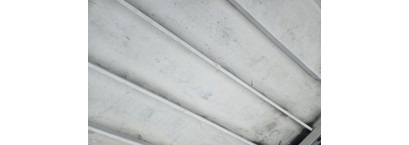
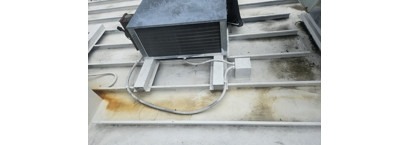
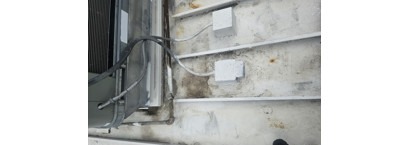
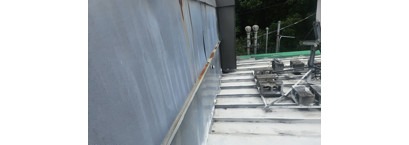
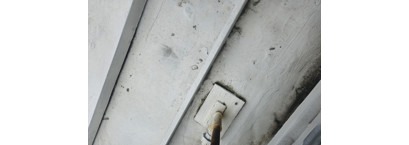
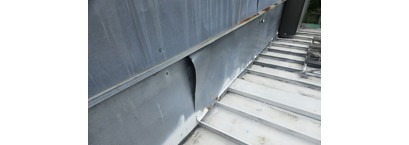
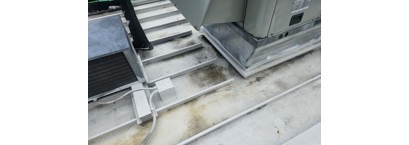
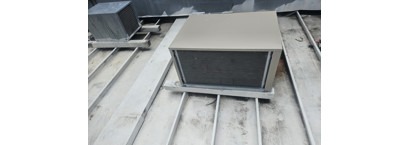
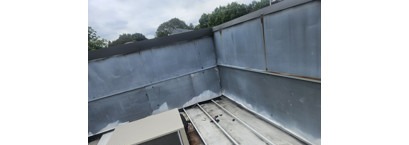
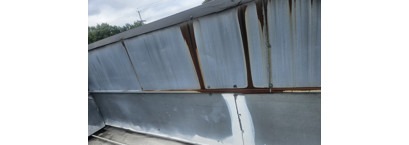
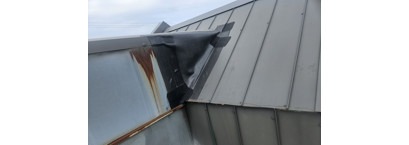
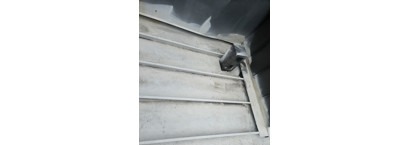
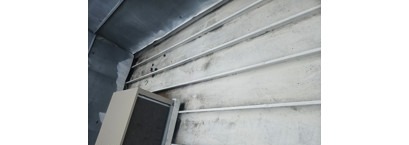
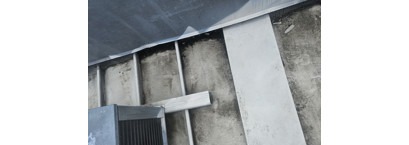
The inspection concentrated on the parts of a commercial metal roof where materials change direction or meet another component. The photo record shows panel seams, metal wall transitions, equipment curbs, a roof-edge channel and fastener lines. Each one can move water differently from the main roof field.
For a convenience store, a leak can interrupt daily operations quickly. The right first step is not to assume every water mark comes from one hole. It is to identify the roof details that need to be tested, sealed, repaired or incorporated into a broader corrective scope.
Panel laps and wall transitions need a deliberate repair detail
Several observed areas involved raised seams and roof-to-wall connections. Those joints expand, contract and collect debris differently than a flat membrane surface. A repair at one lap should account for the adjacent panels, metal closures, fasteners and the path water takes at the vertical transition.
The field photographs provide a practical basis for a roofer to define the affected work area. They do not replace a final scope, moisture investigation or water test where conditions call for more confirmation.
Equipment curbs and drainage are part of the same leak conversation
Rooftop equipment and curb details were documented alongside the panels. Penetrations, supports and nearby seams are common places for water to bypass the visible roof field. The roof-edge and drainage details also deserve attention because standing debris and restricted flow can keep a transition wet longer than intended.
A useful next scope should state which curb and perimeter conditions are being corrected, how water will be shed from the area and what remains outside the work. That clarity helps ownership compare a focused repair with a wider maintenance or replacement plan.
Give ownership choices without hiding the limits
CRA approaches a leak assessment as a decision tool. A targeted repair may be the right move when the condition is isolated and the surrounding roof is still serviceable. When repeated seam, transition and equipment issues point to a larger pattern, the owner should also see the case for a phased corrective program or replacement planning.
The goal is a clear path: protect the building now, identify what still needs confirmation and choose an investment that fits the roof's actual condition and the business's operating needs.