Planned Upkeep
Most commercial roofs do not fail because the membrane wore out on schedule. They fail early, at penetrations and flashings that a routine inspection would have caught, because nobody was looking until water reached a tenant's ceiling. A roof maintenance contract is the discipline that prevents that outcome: scheduled inspections, documented minor repairs, and a record that keeps the manufacturer's warranty enforceable. We structure and oversee maintenance programs on the owner's behalf, so that planned upkeep actually happens, is performed to standard, and is documented in a way that protects the asset rather than simply generating invoices.
Why Reactive Roof Spending Costs More
The economics of roof maintenance are not subtle. A loose lap seam, an open pitch pocket, or a backed-up drain costs very little to correct when it is found during a scheduled visit. The same defect, left undiscovered, lets water into the insulation, and once the substrate is saturated the repair is no longer a sealant detail but a section of tear-off. Reactive ownership pays for the small problem anyway, plus the interior damage, plus the tenant disruption, plus the accelerated replacement of a roof whose insulation is now wet.
A maintenance contract converts that unpredictable, escalating exposure into a known annual cost. It does not eliminate roof spending, but it moves the spending forward to the cheapest moment in the failure curve and removes the worst surprises from the capital plan. For owners measuring returns across a hold period, that predictability is often worth more than the raw repair savings.
What a Sound Maintenance Program Includes
A maintenance contract is only as good as its scope. Vague language about periodic inspection invites a quick walk and a clean invoice with nothing actually corrected. We define scope concretely so the work performed is the work that matters.
- Semiannual inspections, typically spring and fall, plus inspection after major storm events that can lift edge metal or puncture membrane.
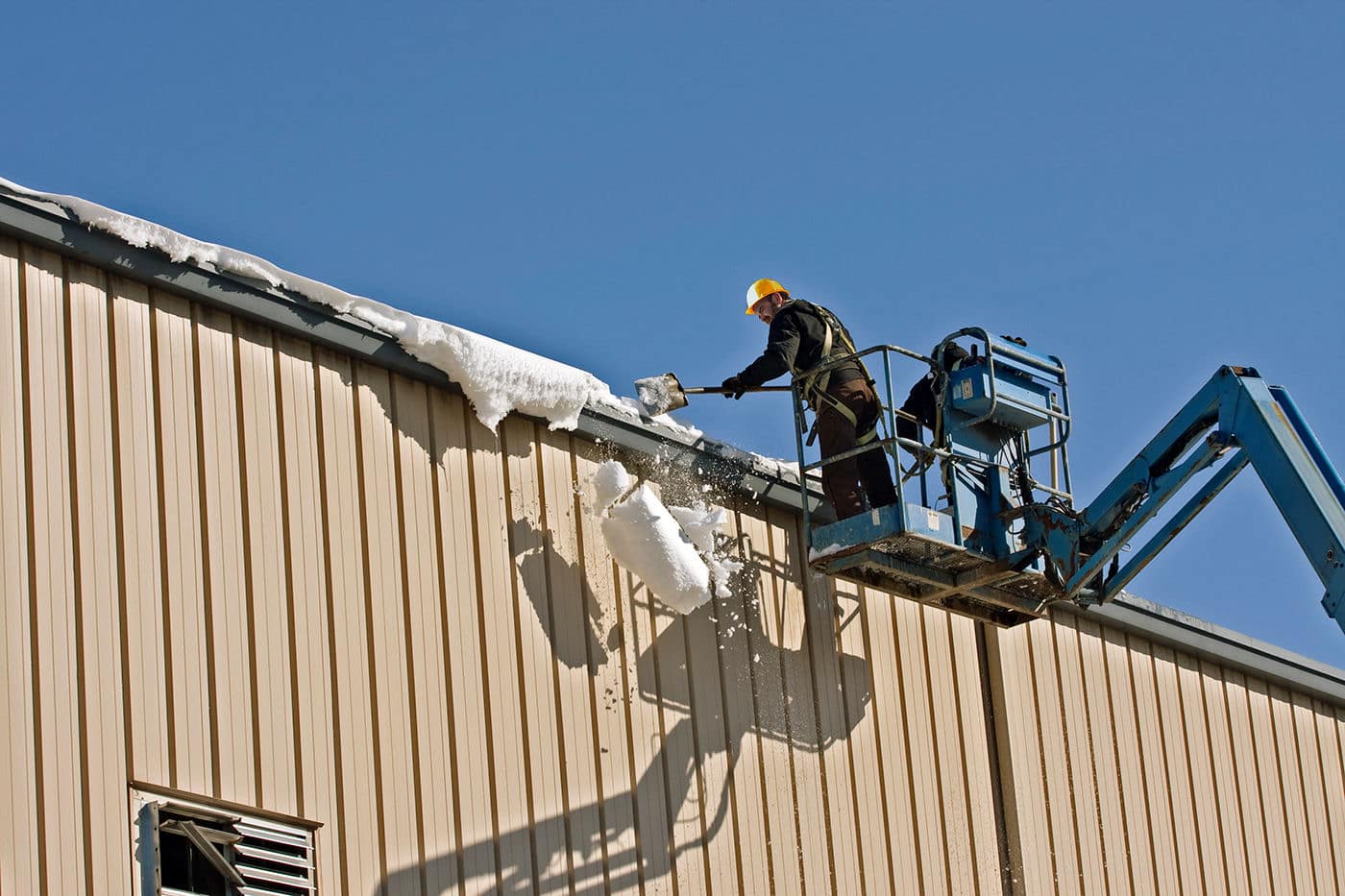
- Clearing of drains, scuppers, gutters, and overflow provisions, since blocked drainage is a leading cause of ponding and premature failure.
- Resealing and repair of flashings, pitch pockets, pipe boots, and termination bars before they open further.
- Inspection of seams and welds appropriate to the membrane, TPO and PVC welds, EPDM laps, and modified bitumen and BUR plies.
- Removal of debris, and documentation of damage caused by rooftop trades and equipment service so responsibility can be assigned.
- A written report with photographs after each visit, noting conditions corrected and conditions to monitor.
Protecting the Warranty You Already Paid For
Manufacturer warranties on commercial membranes commonly carry maintenance and inspection conditions, and many also require that any repair or rooftop alteration be performed by an approved applicator. Owners routinely void coverage without realizing it, when an HVAC contractor cuts the membrane to run a new line, when a tenant mounts equipment without proper flashing, or simply when no inspection records exist to demonstrate the roof was maintained. By the time a leak triggers a warranty claim, the absence of documentation has already weakened the owner's position.
A properly run maintenance program preserves that coverage. The inspection record demonstrates compliance with the warranty's upkeep conditions, the use of approved applicators for any membrane work keeps the warranty intact, and the documentation of third-party damage establishes who is responsible when something is cut, punctured, or improperly attached. We treat warranty preservation as a core function of the program, not an afterthought.
Vetting Contractors and Holding Them Accountable
A maintenance contract is a relationship with a contractor, and the owner's interest is not automatically aligned with the contractor's. The contractor benefits from the roof eventually needing replacement, and from billing for work whether or not it was necessary. Owner-side oversight closes that gap. We review the contractor's qualifications and manufacturer approvals, scrutinize the scope and pricing so it reflects the building rather than a generic template, and verify that the inspection reports describe real conditions and that noted repairs were actually completed.
That verification is the part owners most often lack. A report that says all conditions satisfactory on every visit is a warning sign, not reassurance, because no roof is flawless year after year. We read these reports critically and push back when the documentation does not match the building's age and exposure.
Maintenance Across a Portfolio
For owners holding multiple properties, maintenance becomes a program rather than a series of one-off arrangements. Standardizing scope, inspection cadence, and reporting format across the portfolio makes the buildings comparable, so an asset manager can see which roofs are stable, which are trending toward replacement, and where repair spending is creeping upward in a way that signals a larger problem. Consolidated reporting also feeds the capital plan, because the same inspections that catch small defects are early evidence of which roofs will need replacement and when.
- Uniform inspection cadence and reporting so condition is comparable building to building.
- Consolidated tracking of repair history, which flags roofs whose rising repair cost signals approaching end of life.
- Coordinated scheduling that keeps maintenance from being deferred and forgotten across a large portfolio.
How We Help Owners
We run the maintenance program from the owner's chair. We define a scope that fits the specific roof, vet and oversee the contractor performing the work, keep the inspection and repair documentation that protects your warranty and your asset, and read the reports critically so problems are caught while they are still inexpensive. For owners with several buildings, we standardize the program across the portfolio so maintenance is consistent, comparable, and feeding directly into capital planning. The objective is straightforward: get the full service life you paid for out of every roof, and never be surprised by a failure that a scheduled inspection should have caught.
What to Require in a Commercial Roof Maintenance Contract
A commercial roof maintenance contract should define more than a visit frequency. It should identify the roof areas to inspect, the drainage and perimeter details to check, the minor repairs included, the documentation required, and the process for escalating a condition that needs capital. It should also state who may alter the membrane, how emergency calls are handled, and how warranty obligations are preserved.
For a multi-building owner, the contract should produce comparable reports from every site. That consistency makes it easier to spot repeat defects, compare contractor performance, schedule seasonal work, and separate routine upkeep from a genuine replacement recommendation.
The strongest programs also create a feedback loop. Repeated leak locations, clogged drains, recurring seam repairs, and damage from rooftop trades should change the next inspection plan and the capital forecast. Maintenance is not just a cost to record; it is operating evidence about how the roof is performing.
The contract should make the owner less dependent on one person's memory. Store the inspection date, photographs, findings, completed repairs, open recommendations, and next visit in a consistent record that can be reviewed by facilities, ownership, and finance.
Turn the visit into a usable next step
After this scope, the record should advance to a service agreement that remains active while larger repair or replacement projects are scoped separately. Carrying the same roof-zone names and evidence forward prevents the next visit from starting with an empty file. A persistent roof file connects dates, weather, symptoms, findings, repairs, costs, and follow-up. Trends become visible: recurring locations, growing wet areas, drainage issues, or a rising frequency of unrelated failures. The result is more than a completed patch or proposal. It is a controlled sequence from immediate response to documented condition, from condition to an appropriate option, and from that option to scheduled stewardship of the roof asset.
A useful response starts before roof access
The first conversation about a roof that is still serviceable but needs scheduled eyes on drainage, flashings, seams, penetrations, traffic areas, sealants, previous repairs, and developing defects should establish the property address, contact on site, roof-access method, affected interior area, when water was first observed, whether entry is active, and any immediate safety concern. The caller should not be asked to diagnose the assembly from the floor. A short description of timing, location, volume, affected equipment, and previous occurrences is more useful than guessing which roof product failed. Clear intake notes reduce wasted roof time and prevent the handoff from losing urgent details. They also create the first event in the roof history that later inspections and repair records can reference.
Price the known work without hiding the unknowns
Pricing is easier to evaluate when the scope shows which conditions were measured, which were observed but not opened, and which remain concealed. Unit prices or allowances can address uncertainty without pretending the quantity is already known. Schedule assumptions also belong beside price: weather windows, material lead time, permits, shutdowns, tenant coordination, daily dry-in, and access restrictions. An unexplained low number can become an expensive sequence of changes if these constraints are omitted. Closeout requirements should be priced as part of the work: final photographs, repair locations, warranty or material records, open punch items, and the next recommended inspection. Those documents keep the completed scope connected to the roof plan.
How operating conditions shape the review
Local weather exposure combines seasonal rainfall, wind, rooftop temperature movement, and changing access conditions. The timing of that exposure can reveal a weak detail, yet the weather event and the leak source are not automatically the same thing. Start with the room, ceiling grid, equipment, wall line, and time of entry, then carry those coordinates to the roof. Comparing high and low points, rooftop details, prior patches, and flow paths is more reliable than standing over the first wet-looking surface. A useful report does not hide uncertainty. It names the unverified areas, explains why they were inaccessible, and states which follow-up observation or test would resolve the question.
Build a roof record another decision-maker can use
The core deliverable is a record of inspection dates, roof-zone photographs, open items, completed repairs, drain-cleaning records, storm observations, warranty information, and the next planned visit. Commercial Roofing Advisors should be able to hand that record to ownership, a facility manager, or another contractor without a separate verbal explanation. During the visit, the technician should inspect on a repeatable schedule, clear accessible drainage, document changes, prioritize minor repairs, and preserve a usable history for every roof area. Wide views, detail views, measurements, markings, and interior references make the findings reproducible instead of dependent on memory. Observed facts, recommended actions, completed work, and open items should never share one unlabeled list. Separating them lets an off-site approver see exactly what was authorized and what still needs a decision.
Do not force different roof systems into one repair assumption
A detail that is repairable on modified bitumen may require different preparation or materials on coated roof areas or metal roof areas. Existing layers, surfacing, attachment, and earlier repair products matter before new materials are selected. The scope should name the membrane or surface that was actually observed, identify unknown construction, and check compatibility before mastics, primers, membranes, or coatings are specified. Core information may be necessary when layers and attachment affect the option set. The final comparison should show which materials can accept repair or restoration, which areas need removal, and which unknowns could change the scope. Product preference comes after those conditions are established.
Keep the occupied building in the scope
A technically correct detail is only part of the job at commercial properties such as warehouses, occupied commercial facilities, and office buildings. The plan also has to protect people, inventory, equipment, and normal access below the roof. The pre-work review should locate safe access, occupied areas, shutdown constraints, fire or security procedures, rooftop equipment, pedestrian controls, and interior protection. The building contact should know which decisions are needed before mobilization. Wet-weather work may stop at stabilization because permanent materials need a clean, dry substrate and a workable forecast. Daily closeout should state what was opened, completed, and left under temporary protection.
Use condition thresholds instead of sales pressure
Before pricing becomes the focus, ownership needs an answer to which defects are routine service, which require a separate repair scope, and when the condition trend should trigger restoration or capital planning. That answer should define the boundary between service work and a capital project. The option matrix should address present failure, remaining risk, investigation still required, installation disruption, anticipated service interval, and future maintenance. Unknown inputs should be visible rather than buried in an allowance. This prevents an urgent call from becoming an automatic reroof pitch. It also prevents endless patches from consuming money on a roof whose moisture, failures, or lifecycle cost has crossed a reasonable replacement threshold.
Owner decision checklist
- Map the interior symptom to a named roof area before selecting a repair detail.
- Record temporary measures separately from permanent work and list every open item.
- Verify drainage, penetrations, walls, edges, earlier repairs, and transitions around the affected area.
- State the observed roof assembly, unknown construction, access limits, and testing assumptions.
- Connect the recommendation to repair, restoration, replacement, maintenance, or capital-planning thresholds.
- Set the next inspection or follow-up date so the roof history continues after this visit.
Commercial roof decision questions
Does this condition automatically mean the roof must be replaced?
No. The review should establish which defects are routine service, which require a separate repair scope, and when the condition trend should trigger restoration or capital planning. Replacement becomes a defensible recommendation only when the field evidence, moisture, assembly condition, repair history, deck or attachment concerns, and lifecycle comparison support it.
What should the roof scope document?
It should document inspection dates, roof-zone photographs, open items, completed repairs, drain-cleaning records, storm observations, warranty information, and the next planned visit. It should also label temporary and permanent work separately, state assumptions and exclusions, and identify the inspection or service step that follows the current scope.
How does an urgent call become a maintenance or capital plan?
The immediate visit creates the first roof-area record. A follow-up inspection establishes condition and priorities. Completed repairs, recurring observations, drain service, warranties, and future recommendations are then retained so maintenance stays scheduled and larger work can be placed into the appropriate capital year.
From service call to roof plan
Use the next decision, not the biggest sale.
Stabilize the problem, document the roof, compare the viable paths, and keep the resulting roof history active.