A coating system only works when the roof is prepared for it
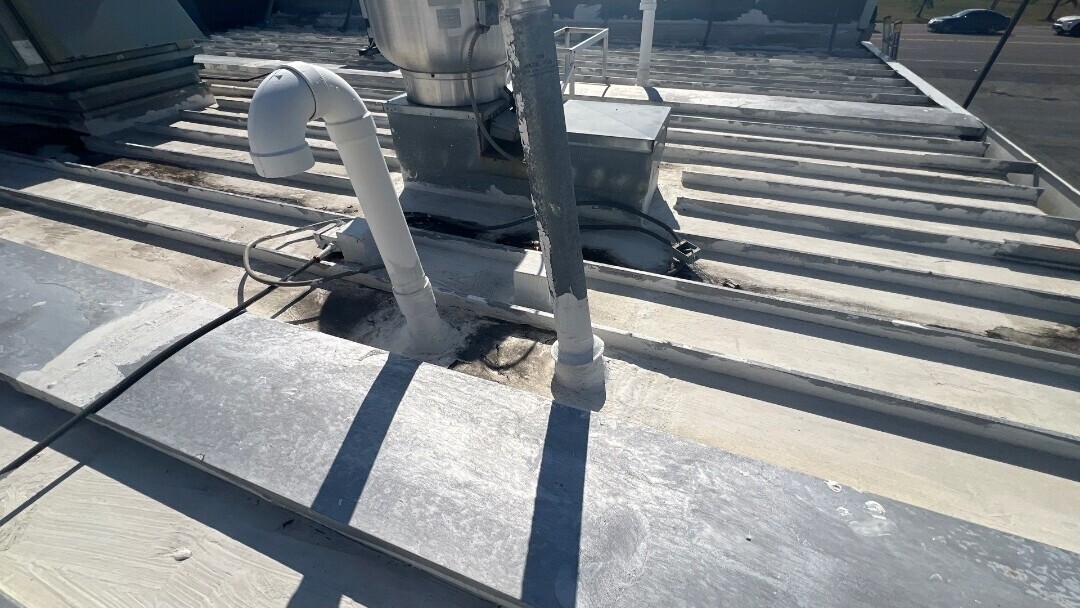
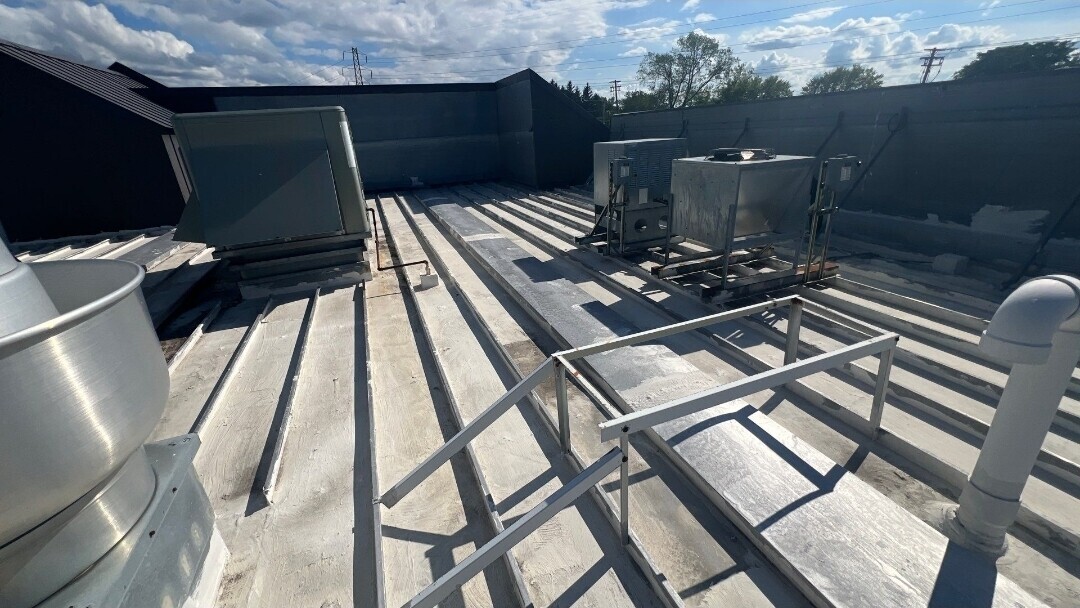
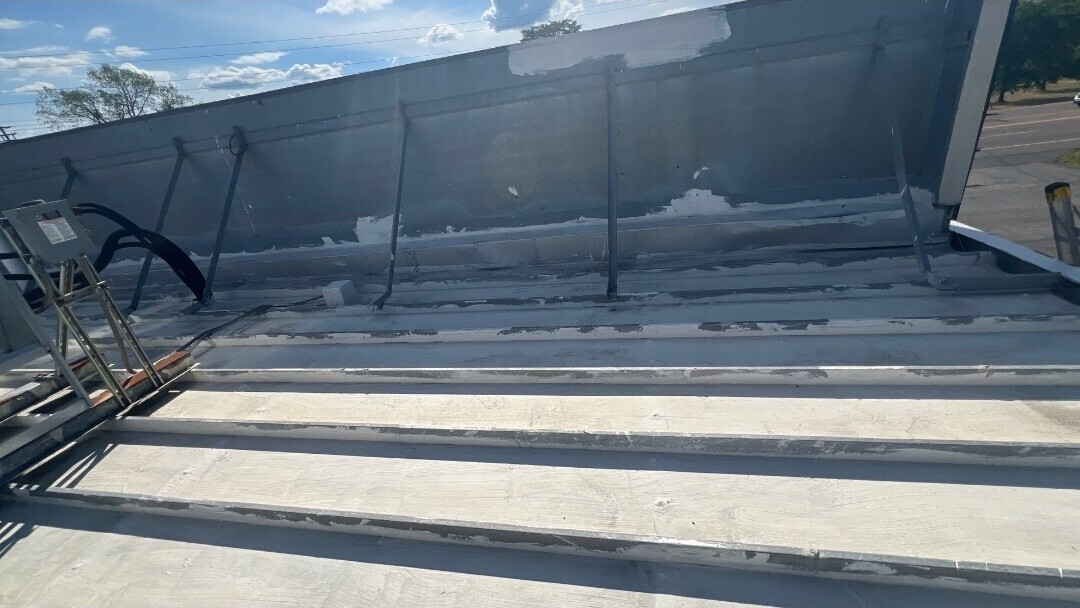
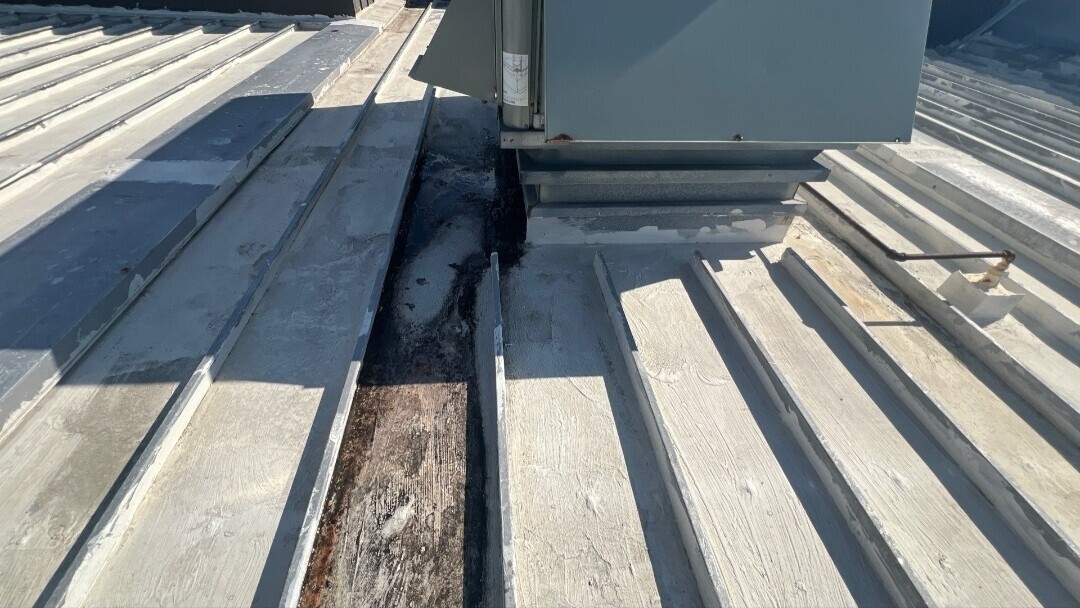
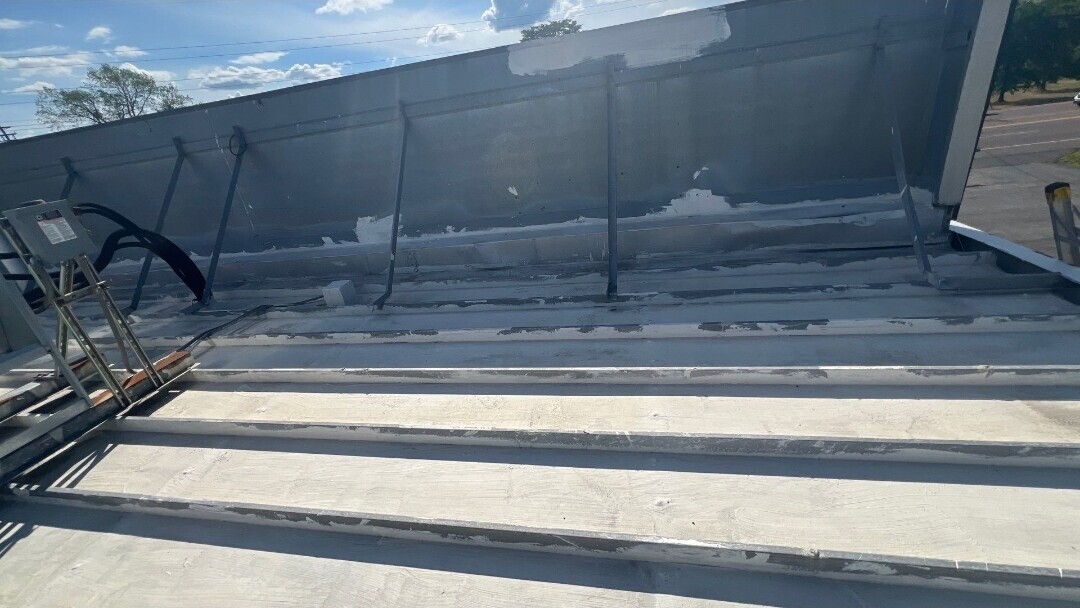
The roof documentation showed an older low-slope surface with existing patches, exposed detail work and areas of standing water. A coating can extend the life of a suitable roof assembly, but it cannot make loose material, failed transitions or an incompatible surface disappear. The proposed approach begins with cleaning, preparation and a review of the roof's readiness for the selected system.
That preparation phase is what protects the value of a restoration decision. The roof must be evaluated as a system before coverage begins, especially at areas where prior repairs, drainage and rooftop equipment have already concentrated risk.
Ponding and penetration details need direct attention
Standing water and deteriorated flashing were documented around roof penetrations and equipment areas. Those are not cosmetic observations. Water that remains at a weak detail can accelerate failure at seams, bases and patches, while rooftop equipment creates edges that need continuous waterproofing from the field surface up the curb or penetration.
The proposal calls for localized repairs and reinforced treatment of seams, penetrations and transitions before the full roof coating is applied. That sequence gives the coating system a sounder base and creates a clear scope for the details that cause the most concern.
A full-roof restoration path can preserve a serviceable assembly
The proposed silicone roof coating is intended to renew the existing roof surface after preparation and targeted repairs. It is a restoration path, not a claim that every existing component can remain without review. Final coverage rates, substrate condition, access, weather and the product requirements all need confirmation before the work can be scheduled.
For an active fuel and convenience site, that kind of plan can be useful because it organizes the roof work around existing operations. The owner can evaluate a defined restoration scope while still understanding that a coating is appropriate only if the roof is eligible and the details can be properly addressed.
This is a proposed restoration, not a completed project
This case study records the roof conditions and the coating proposal issued for this Liverpool site. It does not represent completed work, a final material approval, an installed warranty or a confirmed project schedule. Those items depend on final field confirmation and written authorization.
CRA gives commercial owners options that make the long-term decision clearer. In this case, the proposed restoration path explains what has to be corrected first, what the coating is designed to accomplish and what needs to be verified before an owner commits to the work.