
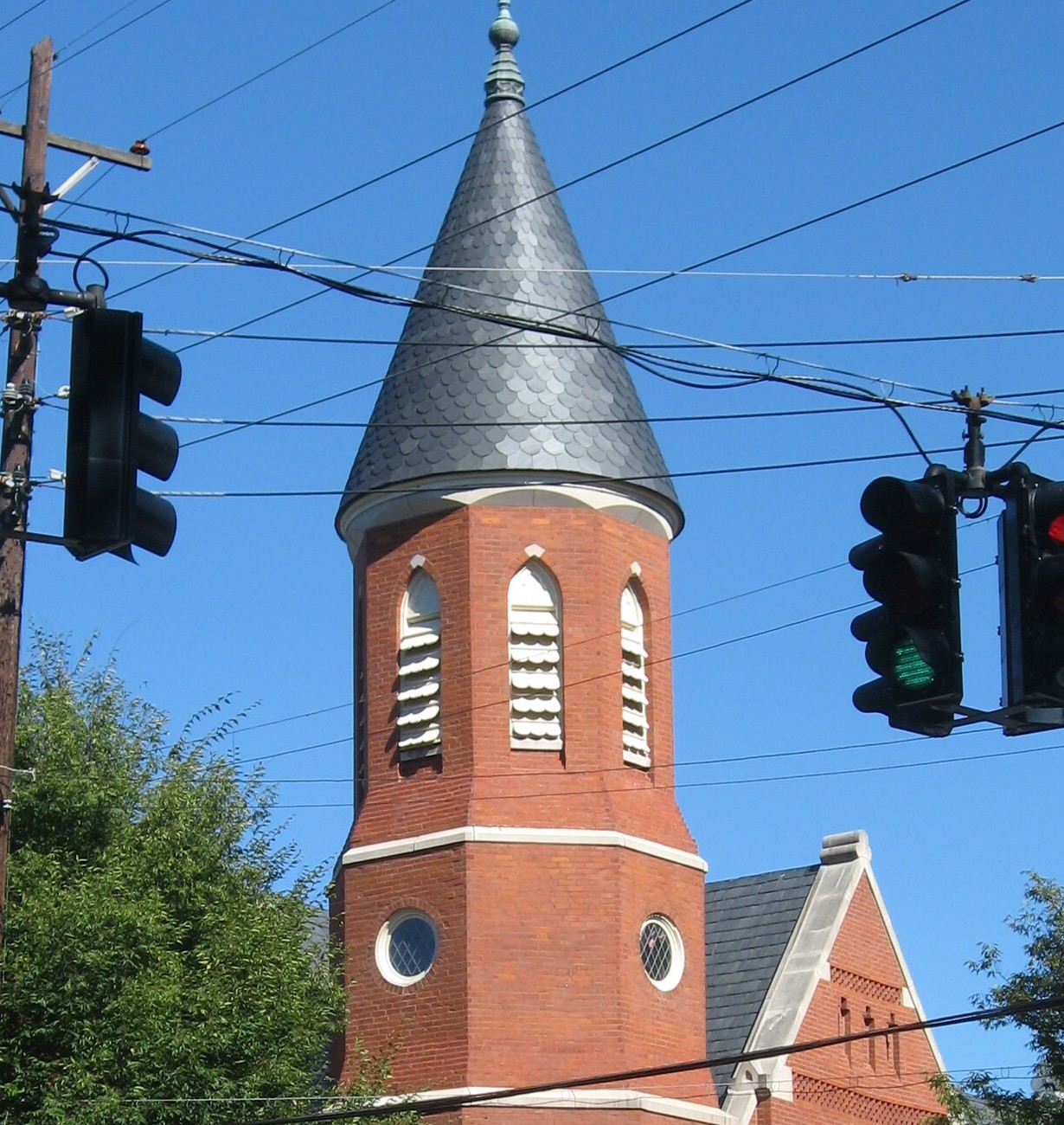
Historic roof work begins with the transitions, not just the field membrane
A flat roof on a historic church can meet slate, copper, masonry and older drainage details within a short distance. That makes the transition work as important as the new membrane itself. The proposal for this Louisville campus addressed a limited flat-roof section where the replacement needs to tie in carefully without treating the surrounding historic materials as disposable.
For a church board or facilities team, that is the difference between a generic reroof quote and a workable preservation-minded plan. The roof surface can be renewed while the visible materials at the edge are documented, protected and returned to their intended position.
Slate and copper require a different kind of scope
The proposed scope calls for a single-ply roof system below an existing slate transition and decorative copper perimeter. Both materials need deliberate handling. Slate must be removed, protected and reset in a way that preserves its layout, while the copper covering needs to be lifted, integrated with the new transition and secured again without assuming a full copper replacement.
Those details should be stated in the scope before work is authorized. If hidden deterioration, damaged slate, structural conditions or a broader preservation requirement is discovered, the owner needs a documented decision point instead of an unexpected assumption during the work.
Two roof-assembly paths give the owner a useful decision
The proposal presented two alternatives for the same flat-roof area. Both would replace the existing roof surface and address the slate and copper transition work. The difference is whether a new insulation layer is added as part of the assembly.
That is a practical choice for an older building. One approach addresses the immediate roof replacement with the existing thermal profile retained. The other allows the owner to consider added insulation, subject to confirmation of the final assembly and any applicable thermal or preservation requirements.
A proposal is a planning record, not a completion claim
This case study describes a proposed roof-replacement path. It does not represent completed work, a selected option, a final warranty or a confirmed construction schedule. Those decisions remain with the owner and depend on final site verification and authorization.
CRA gives commercial and institutional owners options that make the tradeoffs visible. For a historic campus, that means explaining what the immediate roof work includes, what needs to be preserved, what could change after closer review and how the options affect the long-term plan for the building.