A metal roof with a long repair history
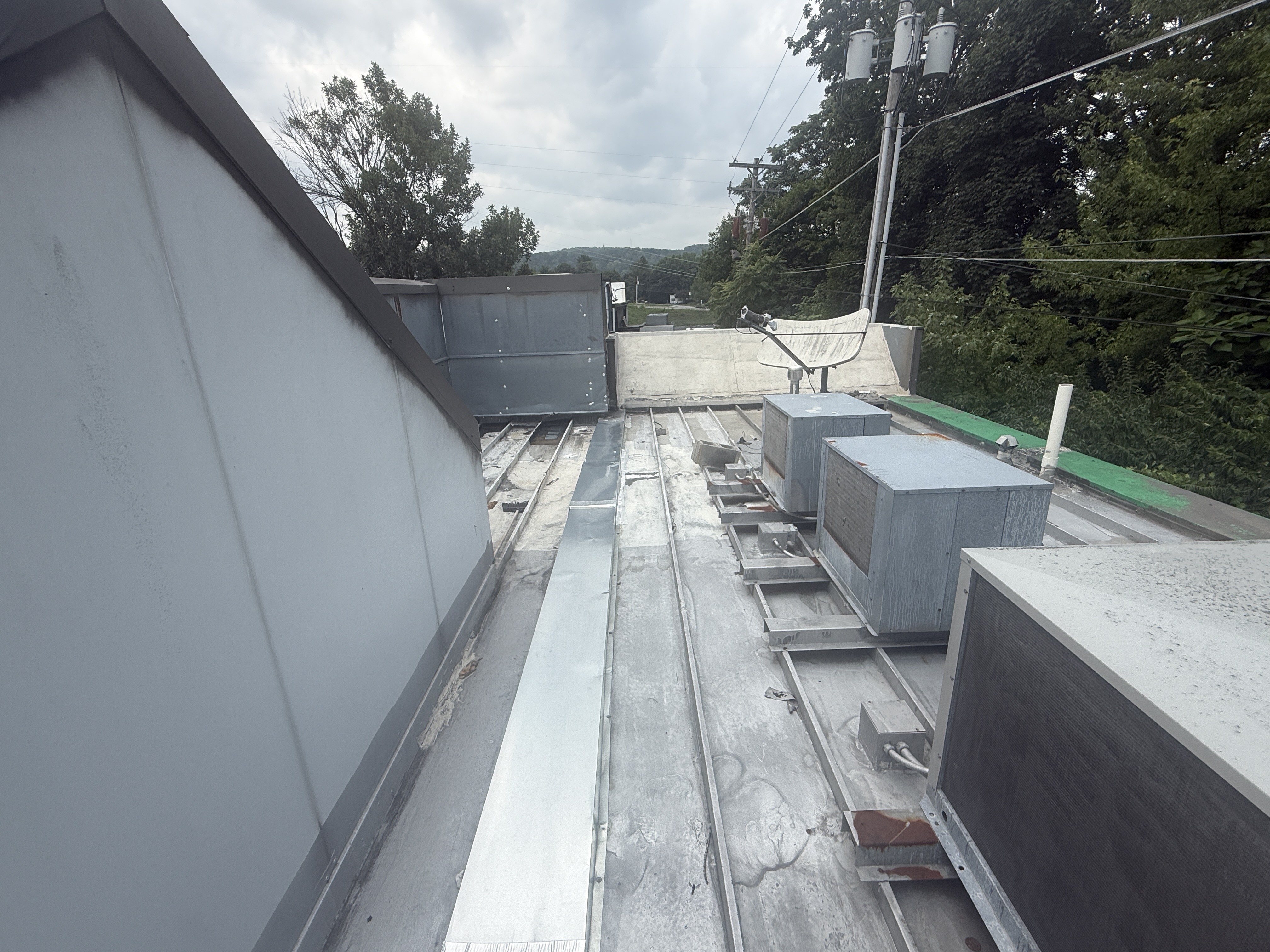
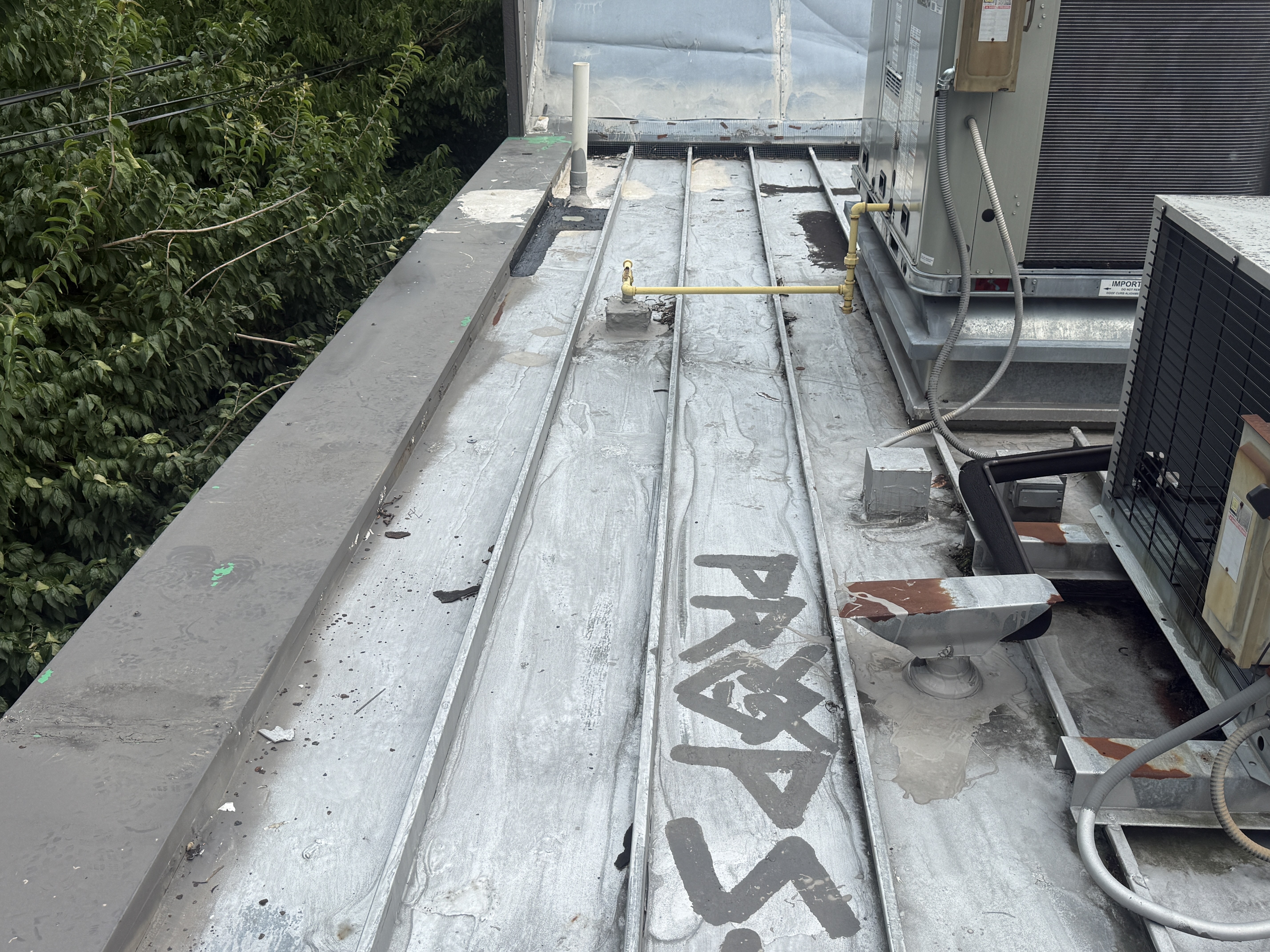
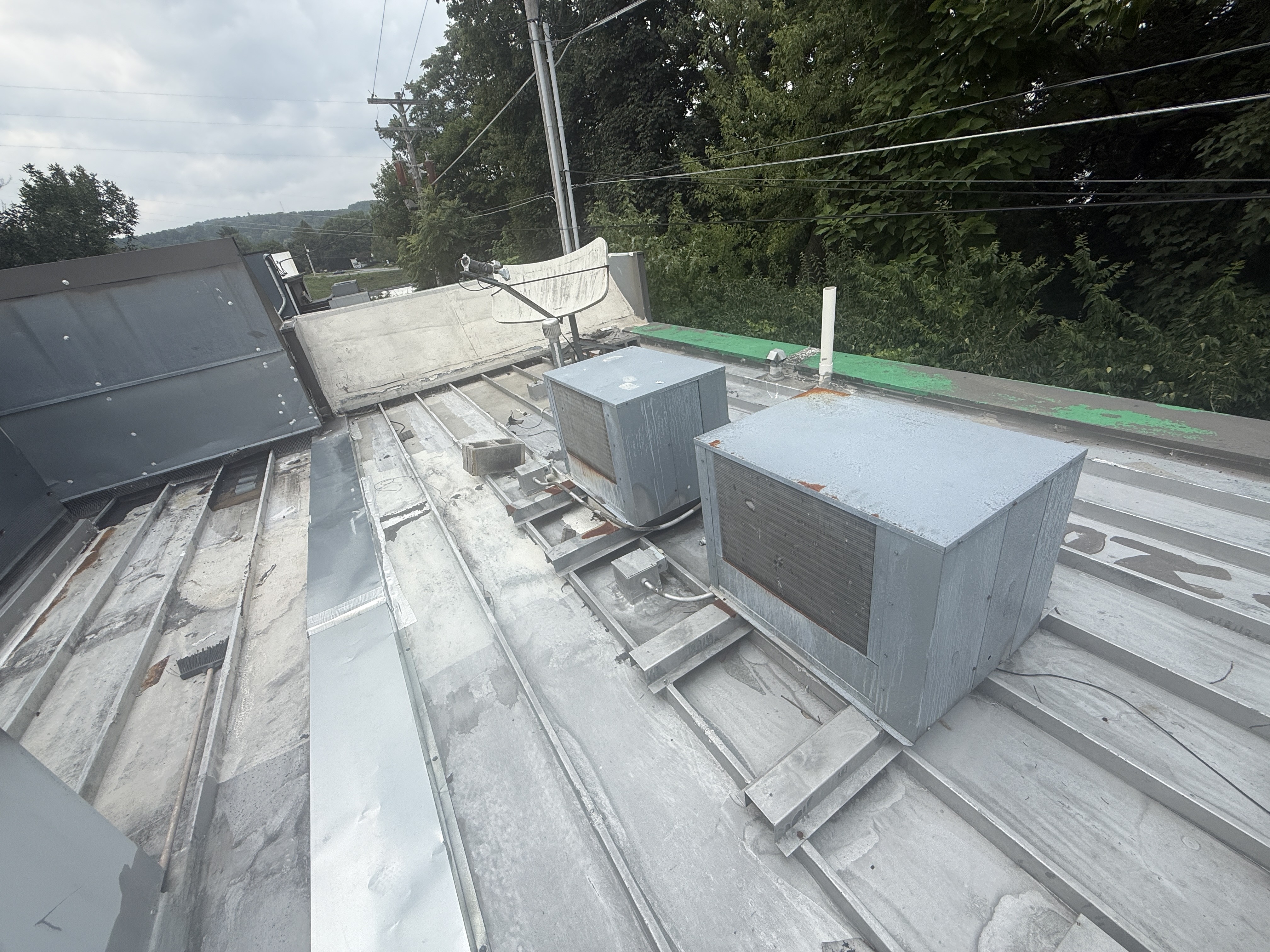
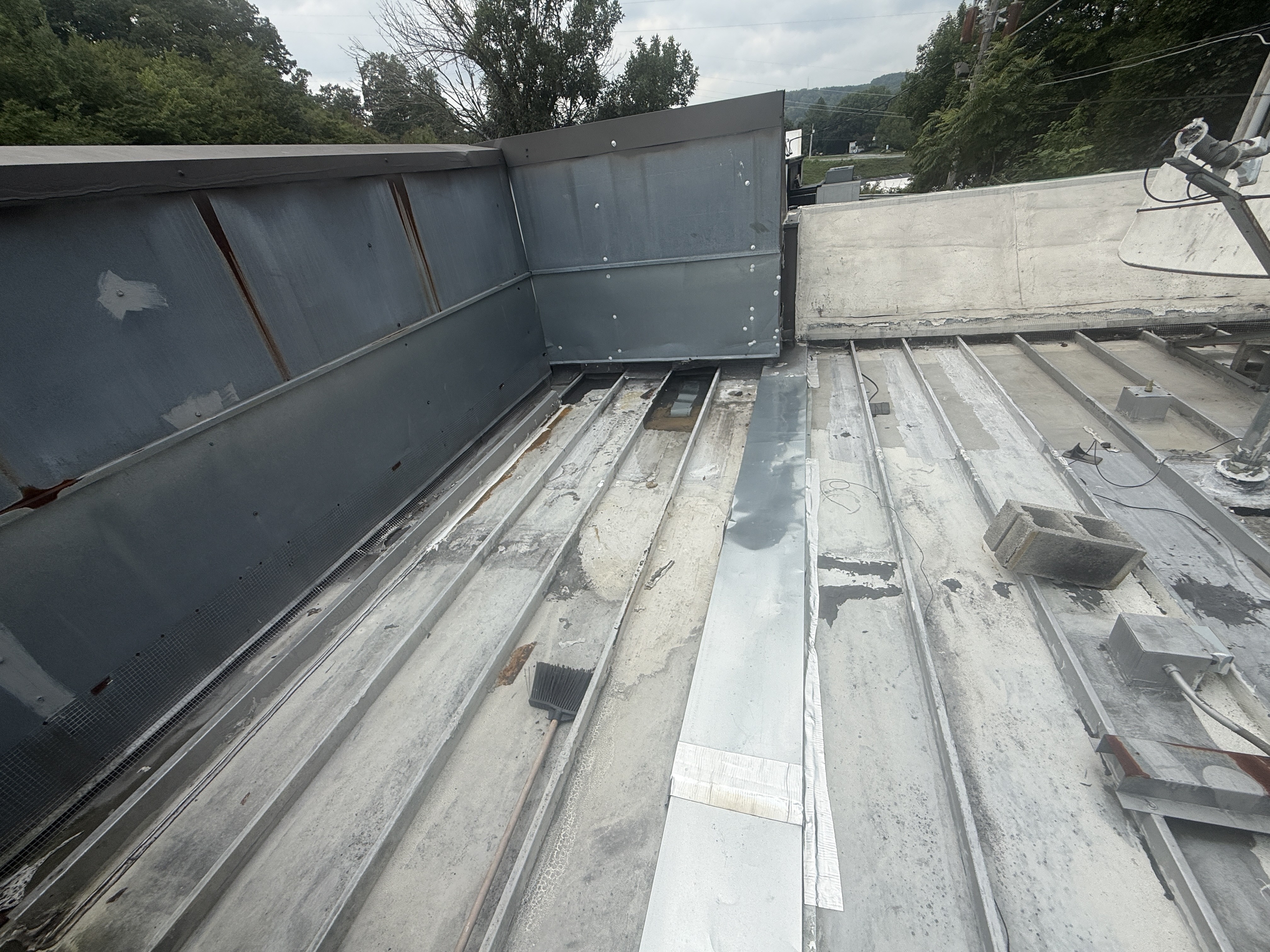
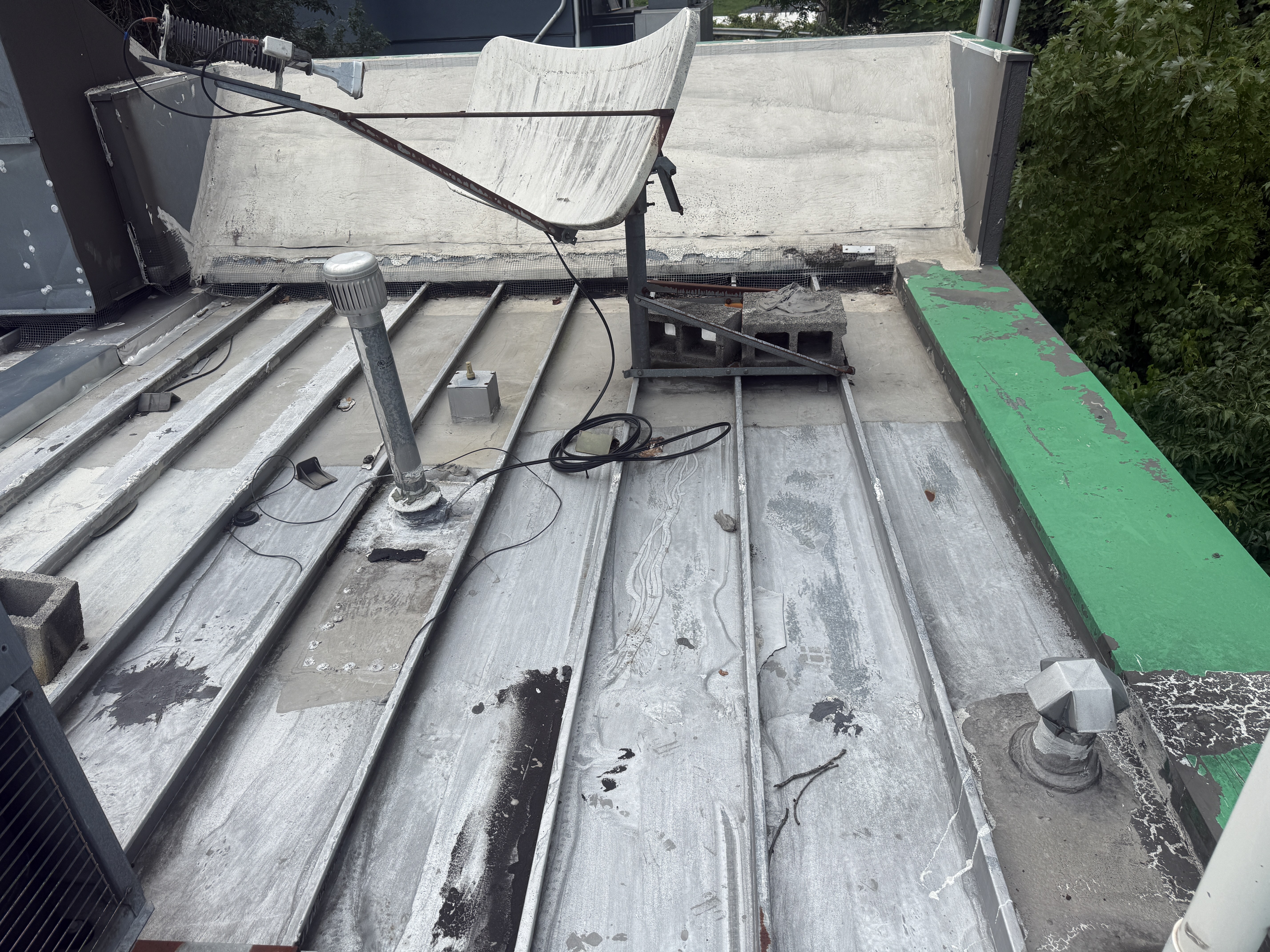
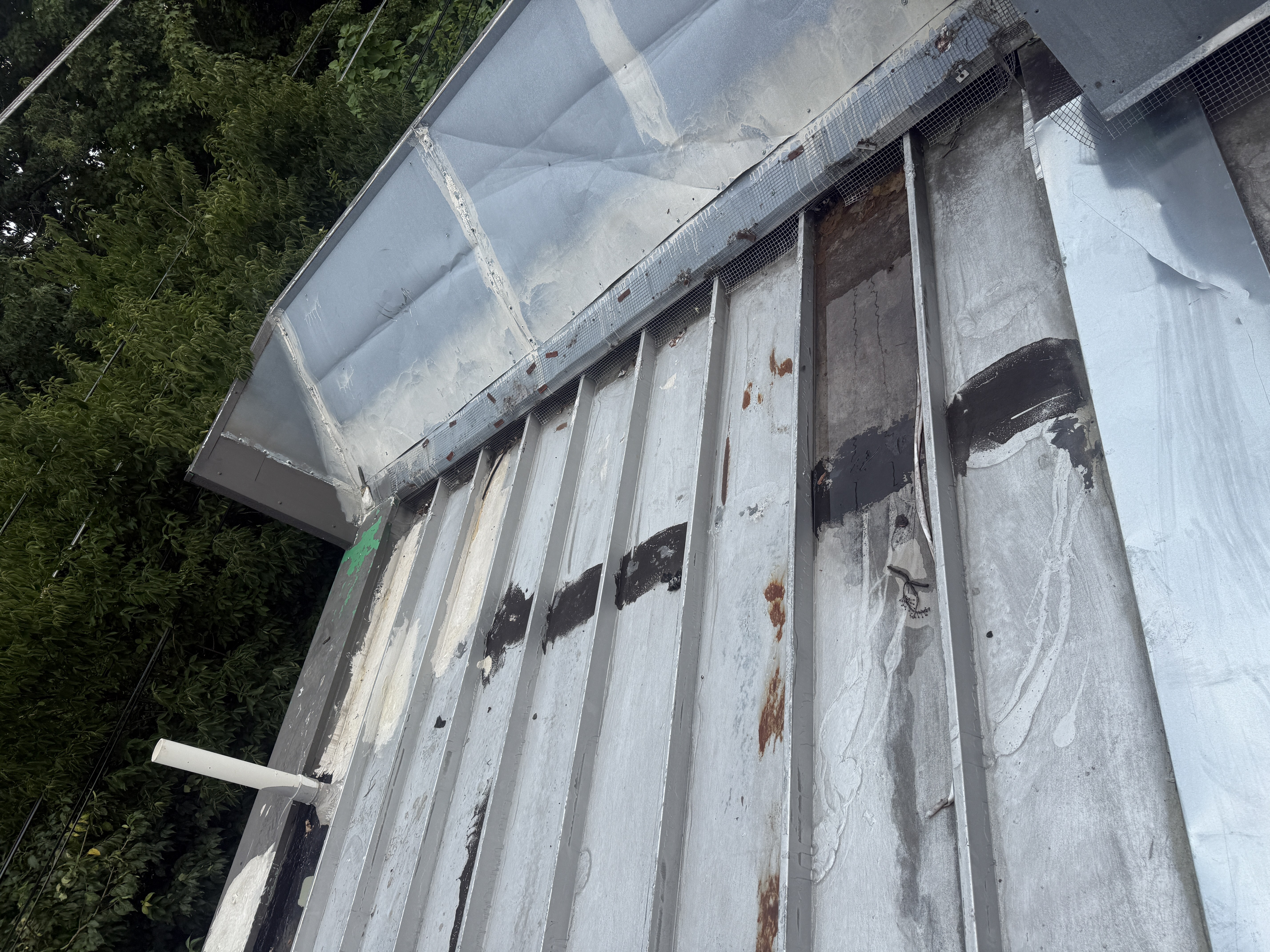
The standing-seam panels carry visible mastic and sealant patches along several seams, evidence of past attempts to stop leaks at specific points rather than address the roof as a system. Rust staining appears at fastener lines and panel laps, and one section of decking was found exposed where flashing had failed at a ridge transition.
That pattern, scattered patches rather than a single defect, is common on an older metal roof that has been repaired reactively over time. It also makes the roof harder to warranty: a patch at one seam does not confirm the condition of the seams around it.
Box gutters and parapet corners
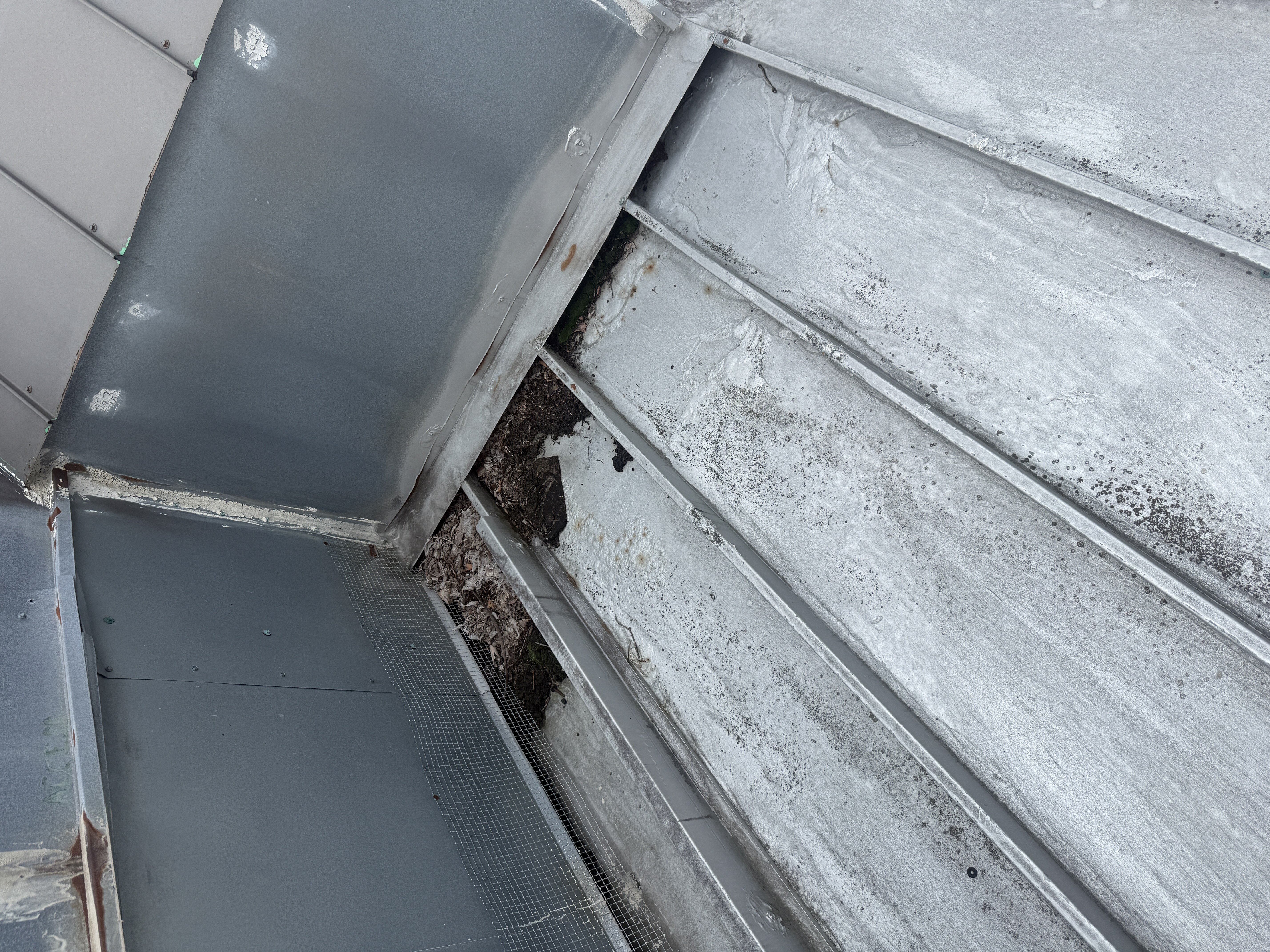
The roof's box gutters and parapet corners showed corrosion, debris accumulation and open joints where the gutter meets the wall. These transition details are frequently where a metal roof actually leaks, even when the open field of panels looks sound, because they combine multiple materials and movement joints in a small area.
Rooftop HVAC units add further penetrations and curb details that need their own review; the assessment noted their condition and placement relative to the roof drainage pattern rather than assuming they were unrelated to the leak history.
What a scattered patch history means for the next step
A roof with mastic patches at multiple, unrelated locations is telling owners something: individual repairs have been treating symptoms without resolving why leaks keep appearing in new places. The reasonable next step is a full-roof review of seams, laps, fasteners, gutters and penetrations, not another single-point repair.
That review should distinguish areas that are still performing from those approaching the end of their service life, so any corrective scope is sized to the roof's actual condition rather than its most recent complaint.