Protecting the warehouse before renovation
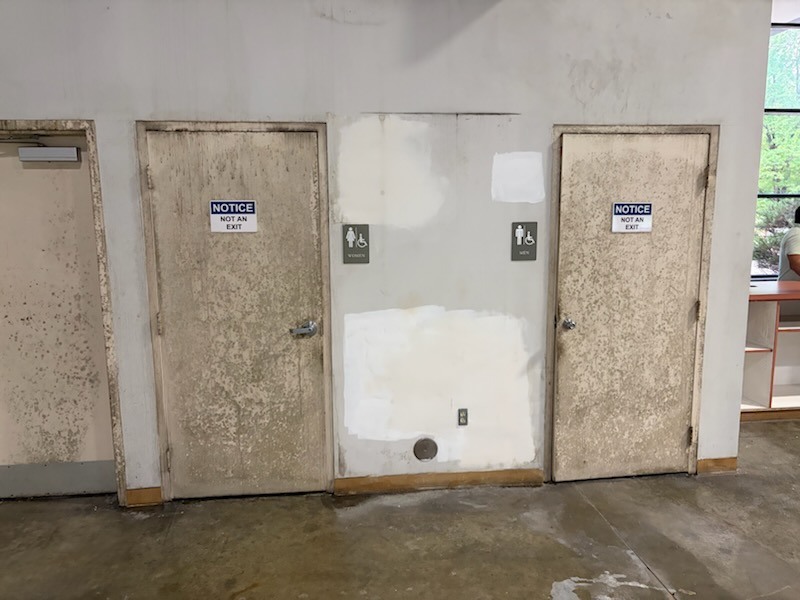
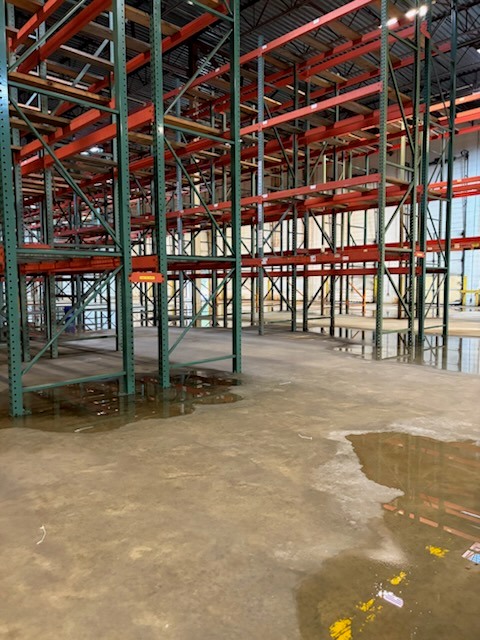
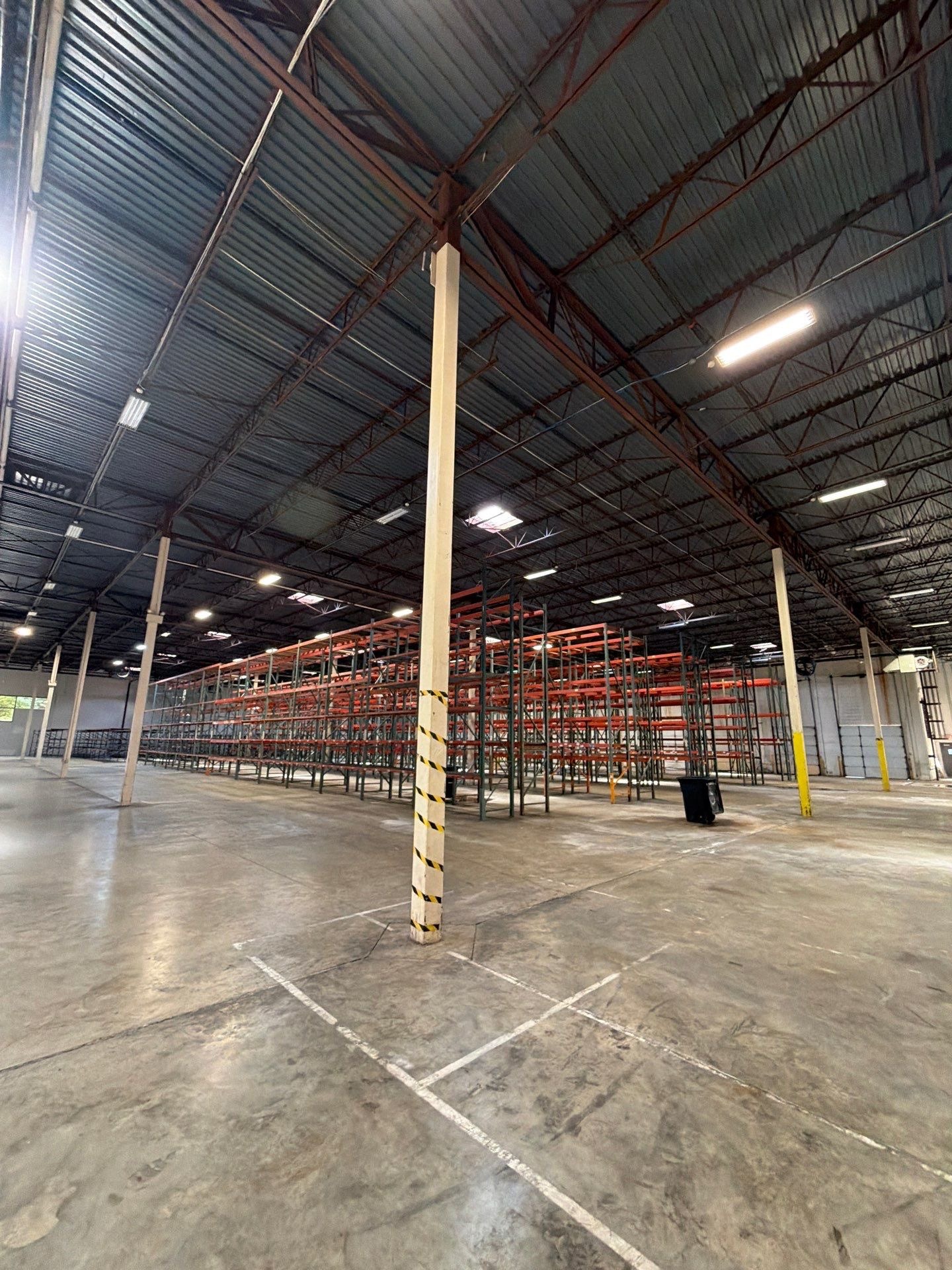
The owner sought temporary repairs while preparing for replacement roughly two to three months later. Water was visible on the warehouse floor, and staining affected interior doors and walls. The immediate concern was water entry into a building approaching construction.
Temporary work needed a clear purpose and limit. It had to be considered in relation to the planned replacement, rather than treated as a separate permanent solution with no connection to the renovation schedule.
Membrane damage and roof details
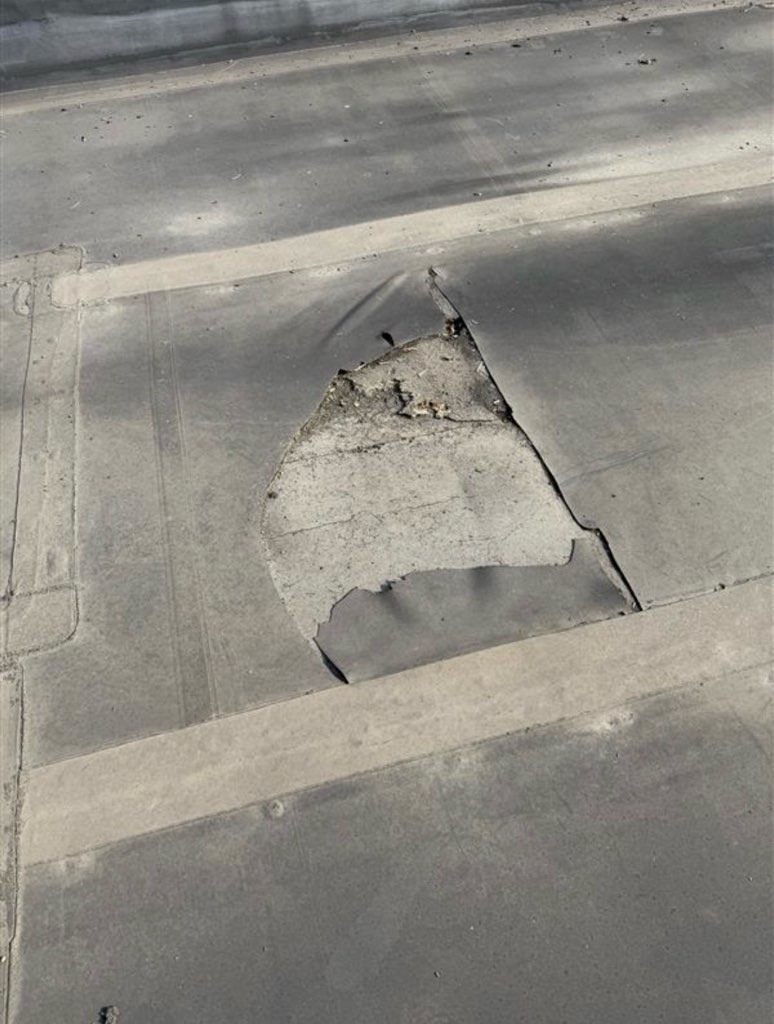
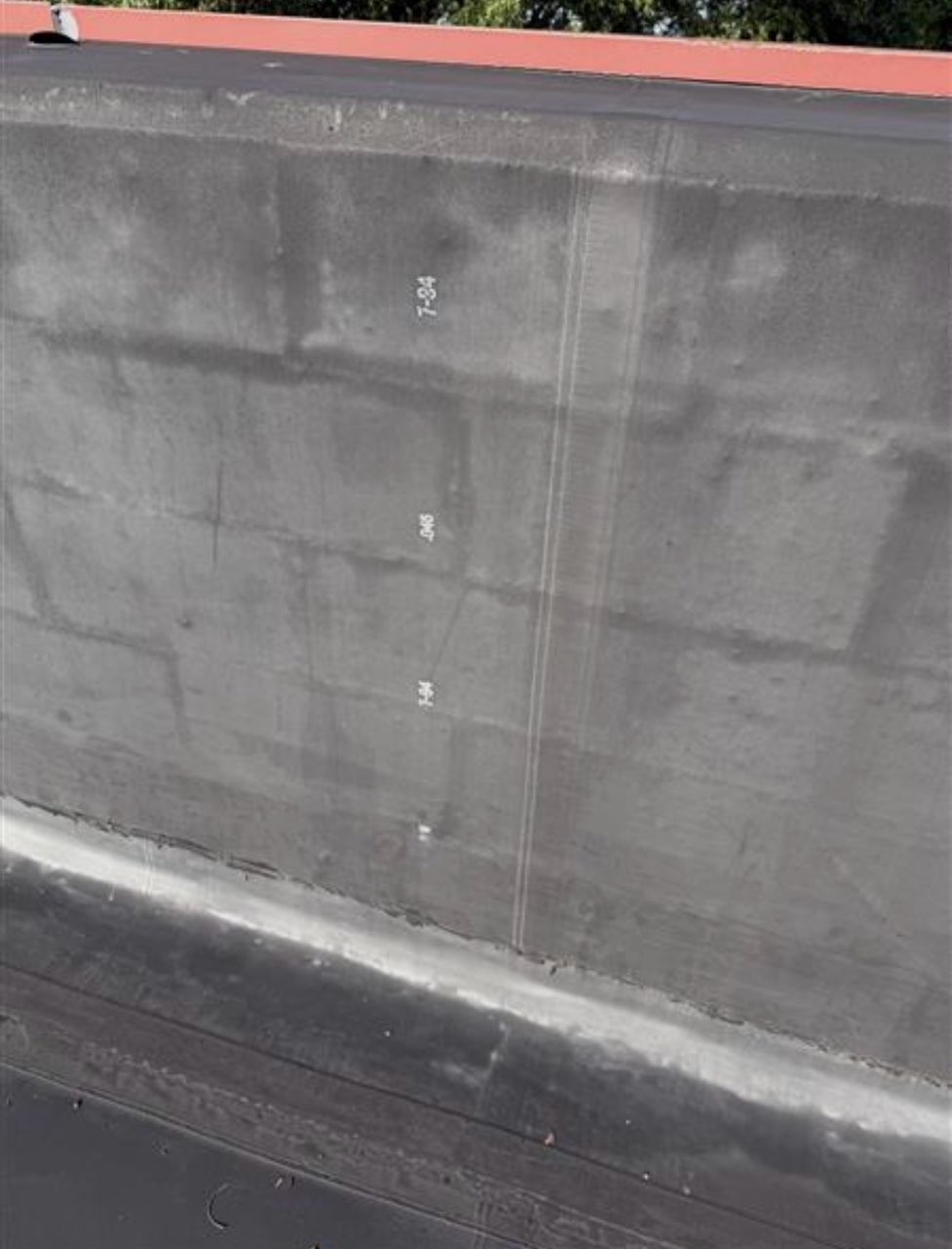
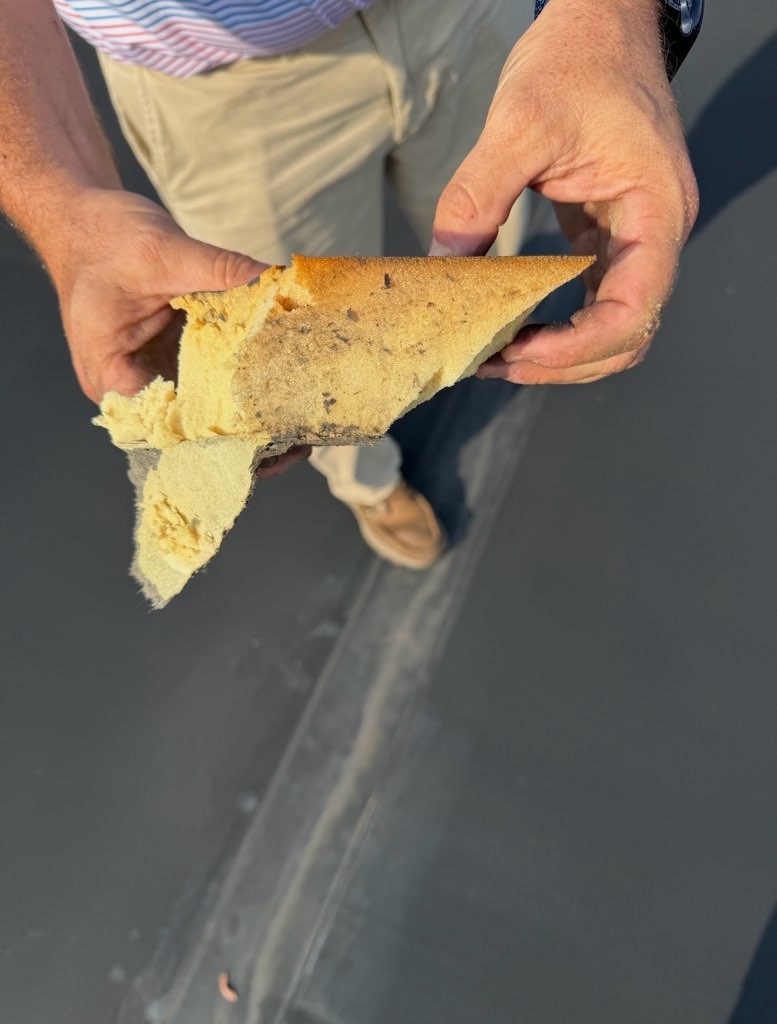
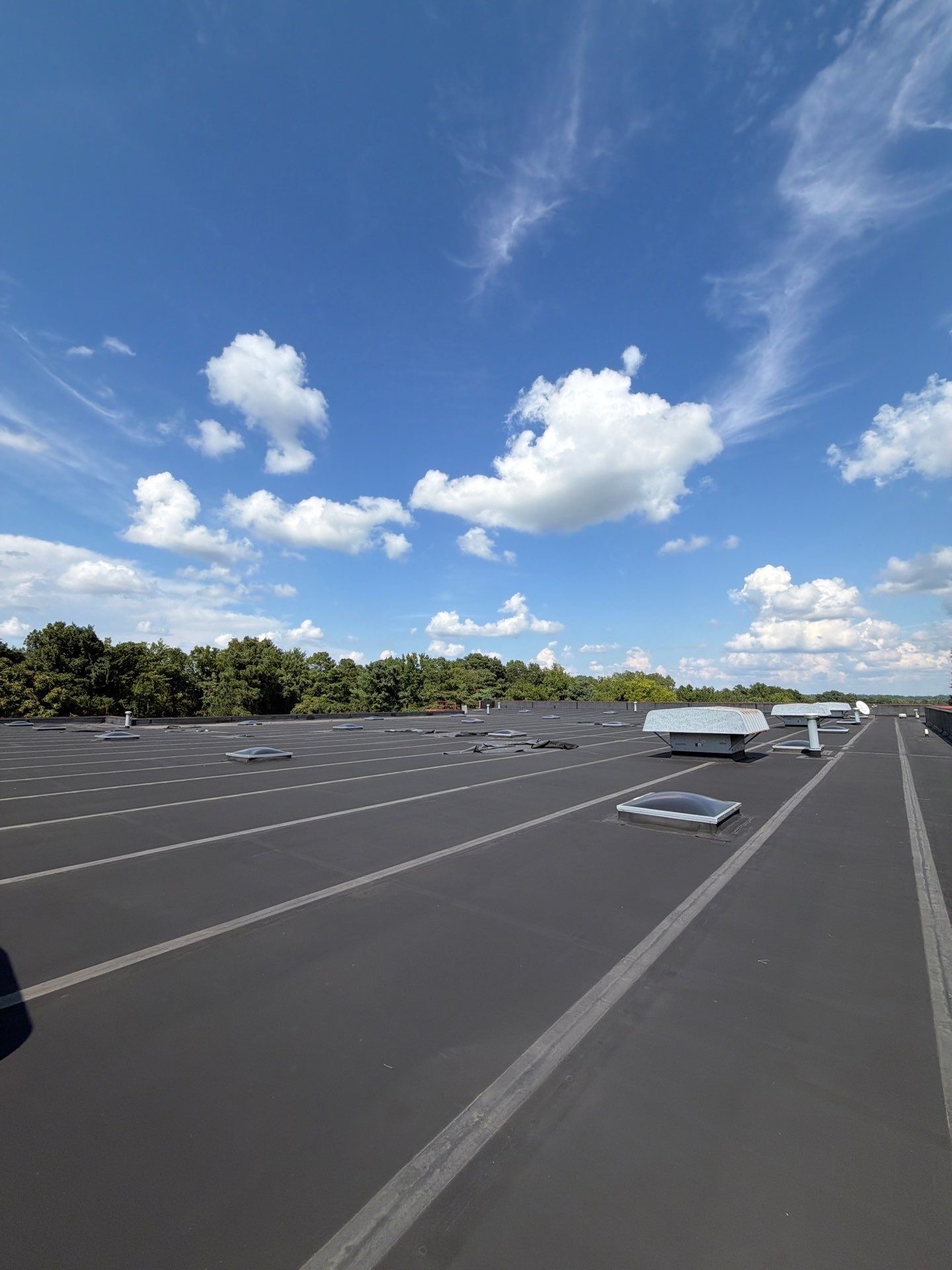
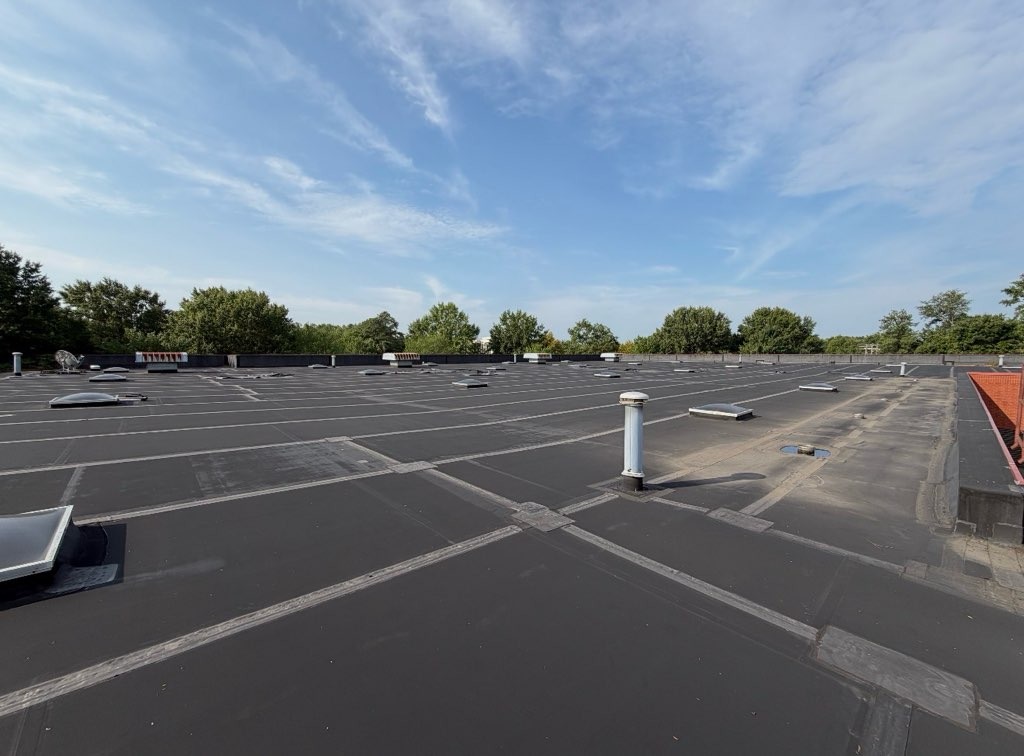
The roof included loose or torn membrane, exposed insulation, perimeter flashing, skylights and several curbs and penetrations. Some concerns were in the open roof field; others involved the interfaces around raised components and walls.
Before defining repairs, the inspection needed to confirm the roof assembly, the condition of the deck and insulation, and the locations associated with the reported leaks. Final dimensions and the extent of affected material were still to be established.
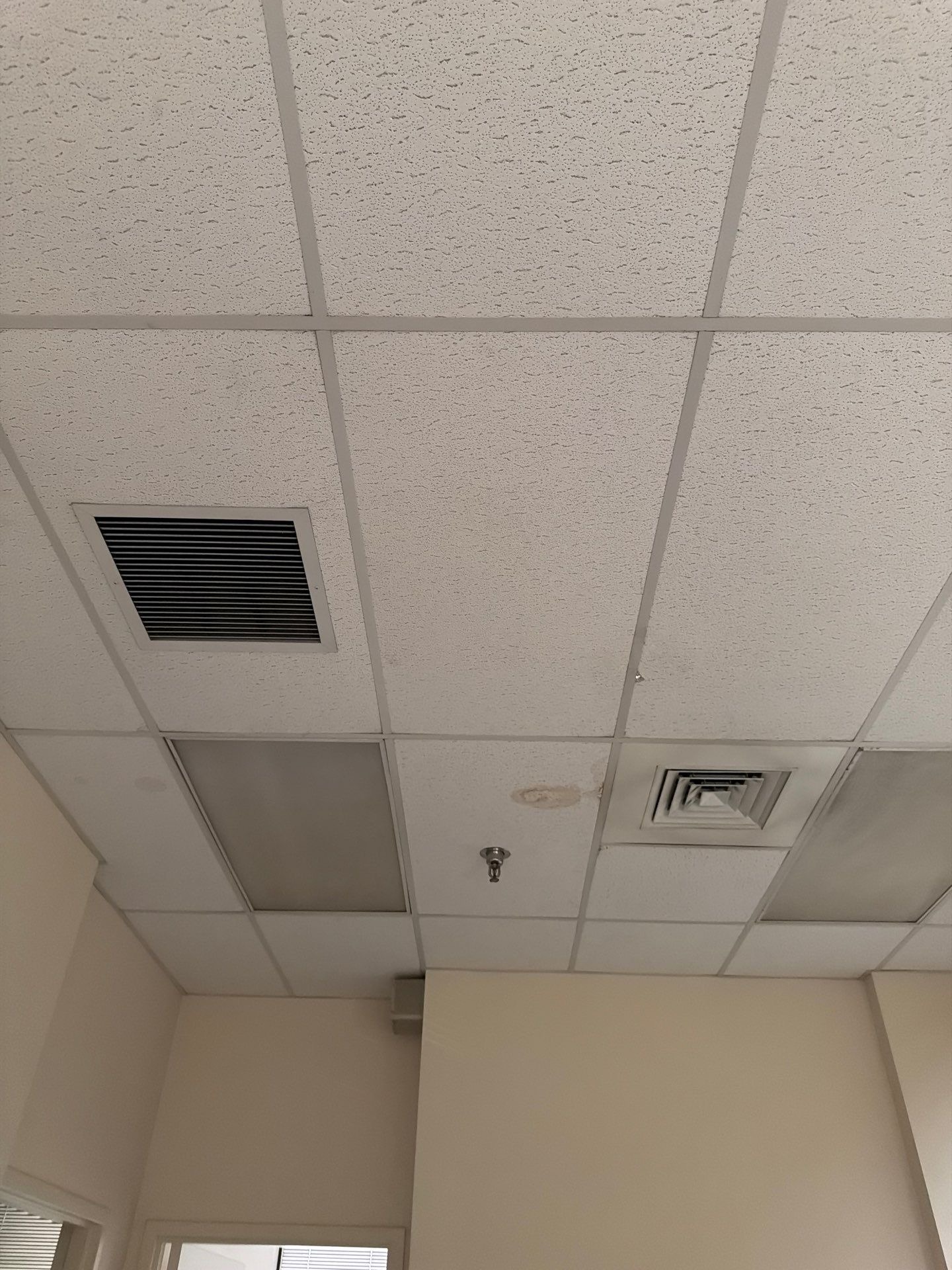
The reported leaks also showed up below the roof: interior ceiling tiles in the office area carried active moisture staining directly under sections of the affected membrane. Documenting both sides of a leak, the rooftop defect and its interior evidence, helps confirm which roof areas are actually contributing to water intrusion rather than relying on the roof surface alone.
Coordinating replacement with rooftop equipment
The renovation also involved rooftop equipment planning. Changes to equipment, curbs or penetrations needed to be coordinated with the new roof so completed roofing would not require avoidable rework.
That sequence influenced the temporary repair discussion. Details expected to change during renovation had to be distinguished from areas that would remain. Access, the replacement schedule and the requirements of the proposed roof system all belonged in the same planning conversation.
Separating urgent work from the capital project
CRA's approach was to establish the immediate leak-response needs and the information required for a measured replacement scope. The owner could then evaluate temporary protection and permanent roofing as related but separate investments.
This project remains at assessment and repair-planning stage. For a warehouse facing a similar transition, CRA can help define the inspection, compare practical repair options and coordinate the roofing plan with the intended use of the building.