
Commercial Roof Drain Repair and Drainage
Commercial roof drain repair starts with finding the point at which water stops moving through the system. We help Austin owners distinguish an obstructed outlet, a damaged drain detail, a piping restriction and a roof surface that sends water away from the outlet.
Check the outlet and where it discharges
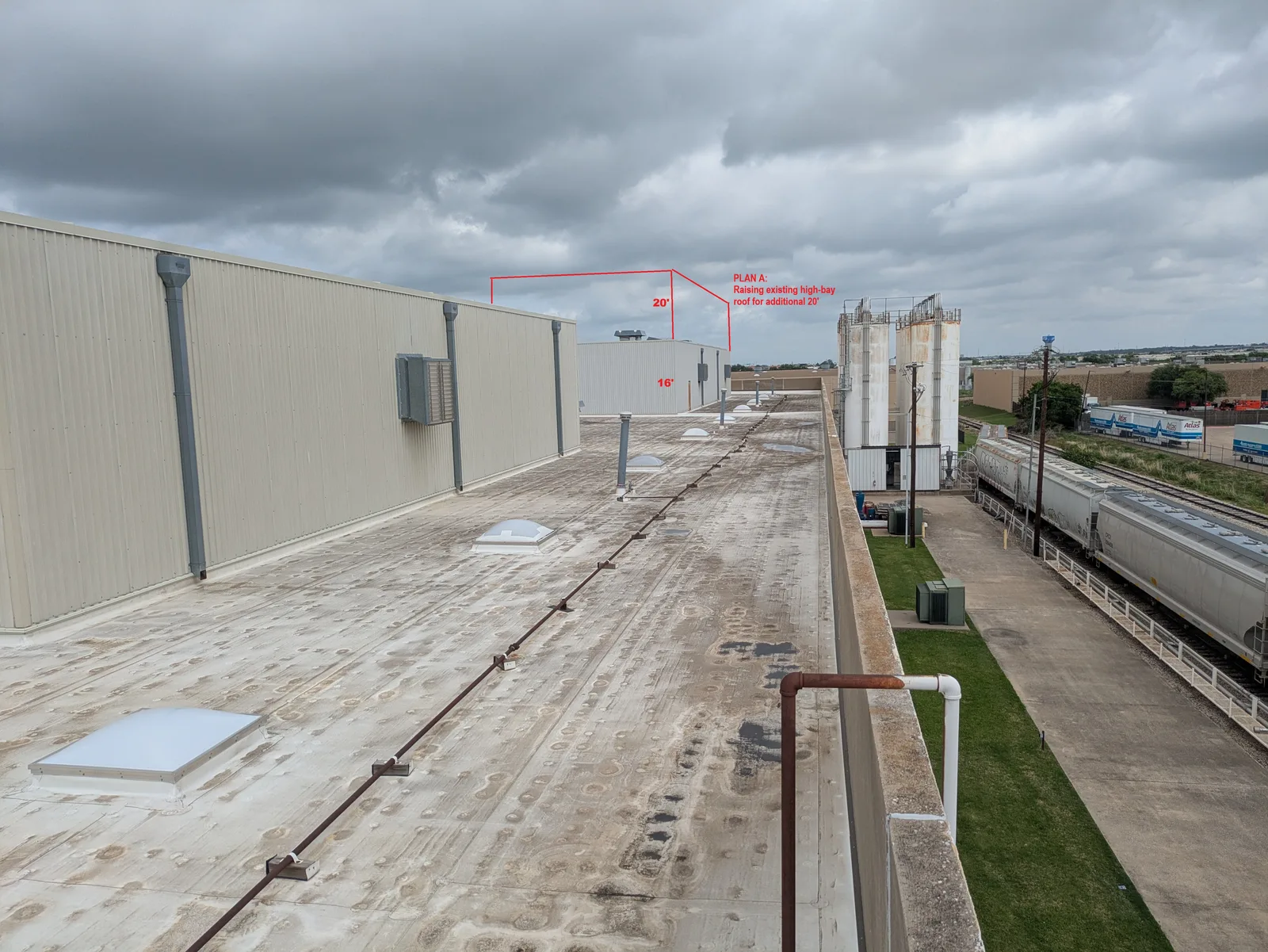
A parapet can hide a roof whose primary outlet is blocked or whose interior line has a restriction. Ask facility staff where they saw runoff, whether an overflow was flowing, and what downstream piping or gutters they can safely observe.
A wet wall at sidewalk level could have another source. Austin Watershed Protection documents how the city storm drain network handles runoff near roads and buildings. Use those conditions as context while verifying the building's own roof drainage path.
Austin Watershed Protection on local flooding
Separate a bad detail from a low spot
If water is reaching the drain bowl but enters the building there, review the clamping or flashing details and look for deterioration around the opening. If water collects in a broad area uphill from a working outlet, evaluate slope, deflection and obstructions before deciding what drainage work is needed.
Photograph sediment lines and map the low area when access is safe. For repeat ponding or a proposed change in outlet dimensions, confirm who will evaluate the design and how the proposed work will be verified.
Build drainage checks into routine service
Set a follow-up check for a roof area that collects debris or repeatedly sends runoff over an overflow. Track the repair date, what was removed or changed, and any unresolved issue in the branch line or roof profile.
Austin commercial roof maintenance agreements
Austin market coverage
We evaluate drainage and ponding on Austin commercial buildings with internal drains, scuppers, gutters and multi-level roof areas.