
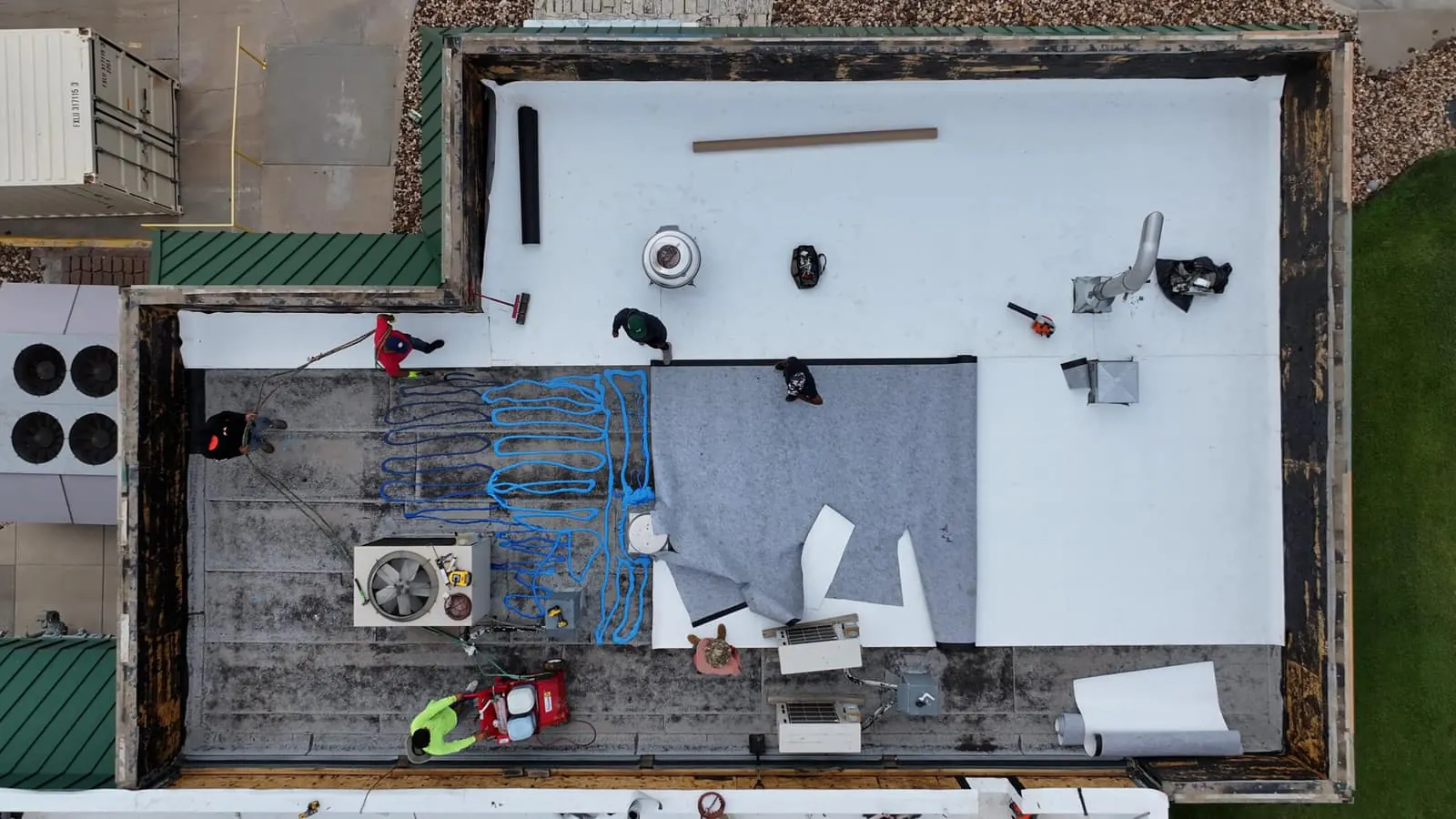
A commercial TPO roof uses a single-ply thermoplastic membrane joined with hot-air welds. Commercial Roofing Advisors helps Grand Prairie owners identify the installed assembly and weigh a compatible repair against renewal of a roof section. At a working fulfillment facility, that choice affects which operations below the roof need temporary protection.
Verify the sheet where the repair must bond
Pull the original warranty and submittals, then compare them with the sheet exposed near the affected detail. A white membrane could be TPO or another material. On a roof with a history of patches or additions, records for the original installation may describe only part of what is there now.
Ask the roofer to confirm material compatibility and evaluate the prepared sheet with a test weld where appropriate. A single damaged detail surrounded by dry, sound, weldable material may support a localized repair. Repeated separation or deteriorated sheet outside the first defect calls for a wider review.
Investigate movement below the weld before renewing a section
If a line of membrane ridges follows fastener rows, check for movement in the underlying attachment before pricing more seam work. For an adhered system, investigate where the sheet or substrate has lost its bond. Map the findings and check for wet insulation so the proposed work addresses the source of the movement.
For a new TPO section, ask the contractor to document the deck, the proposed attachment approach, and how the assembly will tie into the roof that stays. Review perimeter and corner details separately, then ask how finished welds and tie-ins will be documented.
Show fulfillment operations where work will be overhead
Grand Prairie announced a fulfillment facility on Red Hawk Drive, an example of the city's distribution activity. At a working fulfillment site, match each proposed roof opening to the pick aisles, packing stations or conveyance lines underneath. An open aisle beside the work may give operations room to reroute inventory without clearing the entire floor.
Agree on who can clear or shield inventory, which areas can be opened, and where a watertight stopping point can be reached if rain cuts the shift short. Give facilities a completion record that ties each welded repair to the roof plan and the operating area below.
City of Grand Prairie Red Hawk Drive fulfillment announcement
Grand Prairie commercial roof repairs
Questions from Grand Prairie building owners
What if the TPO warranty paperwork only describes the original part of the building?
Ask the roofer to identify the membrane at the specific section that needs work. Keep the original warranty and any addition or patch records with a plan that shows where each applies.
What does a successful test weld tell me about a TPO repair?
It gives the installer evidence that the chosen material and preparation can make an acceptable weld on the sheet tested. The repair decision also depends on the extent of damage, moisture and the condition of the assembly below.
What should a facilities manager send before TPO work over a packing line?
Share the line's location on a floor plan, peak operating hours, nearby inventory and any period when the area can be cleared. The roof team can compare that information with the planned weld or tear-off limits.