Finding And Reducing Roof Risk
Every commercial roof carries risk the owner cannot see from the ground: hidden moisture, deferred repairs, lapsing warranties, safety exposures, and a replacement bill that arrives on the roof's schedule rather than the budget's. Roof risk management is the discipline of finding that risk before it finds you, ranking it by consequence, and reducing it deliberately. We do this work on the owner's side of the table, selling no systems and bidding no work, so the goal is genuinely to minimize the building's risk rather than to sell the next repair.
You cannot minimize a risk you have not measured
Risk minimization in commercial roofing starts with evidence, not opinion. That means a documented condition assessment of each roof, infrared or capacitance moisture surveys where the assembly warrants it, a review of warranties and their real remaining coverage, and an honest read of drainage, edge, and rooftop equipment. Until those facts exist, a roof program is guessing, and guessing is how owners end up funding an emergency reroof they could have seen coming. The first deliverable of risk management is simply a clear, current picture of where the exposure actually is.
The main sources of roof risk owners carry
Most roof risk falls into a few categories worth naming. There is condition risk, the physical state of the membrane, flashings, and insulation. There is moisture risk, the water already trapped in the assembly that quietly shortens its life. There is deferred-maintenance risk, small problems compounding into capital events. There is warranty and compliance risk, coverage that has quietly lapsed or code triggers waiting on the next major repair. There is safety and access risk, fall exposure and unmanaged trades on the roof. And there is capital risk, the chance that several roofs need replacement in the same budget year. A roof program that treats these as one undifferentiated worry cannot reduce any of them efficiently.
Rank by consequence, then act on the top of the list
Not every risk deserves the same dollar. A roof over open product, a data center, or a fully leased floor carries a higher consequence than the same roof over a dry, low-value space, and it should move up the list accordingly. We help owners score roofs on both likelihood and consequence, so the maintenance budget and the capital plan attack the exposures that would hurt most first. That prioritization is where risk management earns its keep: it turns a long list of roof problems into a short list of decisions that actually lower the portfolio's exposure this year.
Reduce risk with maintenance, timing, and governance, not just replacement
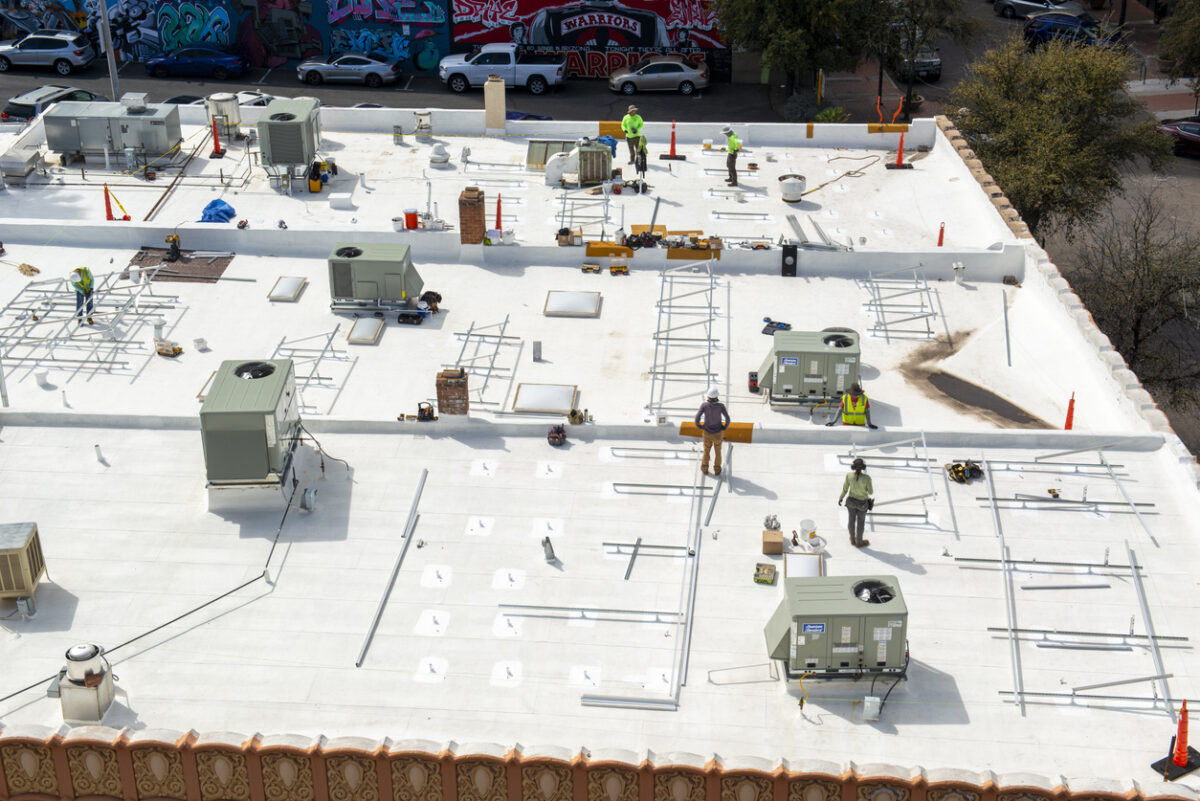
Replacement is the most expensive way to reduce roof risk and rarely the first one that should be used. A disciplined maintenance program closes small leaks before they become capital events. Restoration or coating, where the substrate supports it, extends life and buys budget time. Warranty governance keeps coverage intact so failures fall on the manufacturer rather than the owner. Managed roof access and documented inspections cut both safety exposure and the slow damage that unmanaged trades cause. Sequencing replacements across budget years keeps any single year from spiking. Most risk is reduced through these levers long before a tear-off is the right answer.
Risk management is a program, not a one-time report
Roofs change, weather intervenes, and repairs and acquisitions move the picture, so a single assessment goes stale. Real roof risk management is an ongoing program: consistent inspections, a living record of condition and repairs, warranties and budgets kept current, and a fresh answer each year to the question of where the portfolio's roof risk is now concentrated and what will most reduce it. We stand in as the owner's roof risk manager, holding that record, verifying the field work, and keeping the plan honest, so roof risk is something the owner manages on purpose rather than absorbs by surprise.