
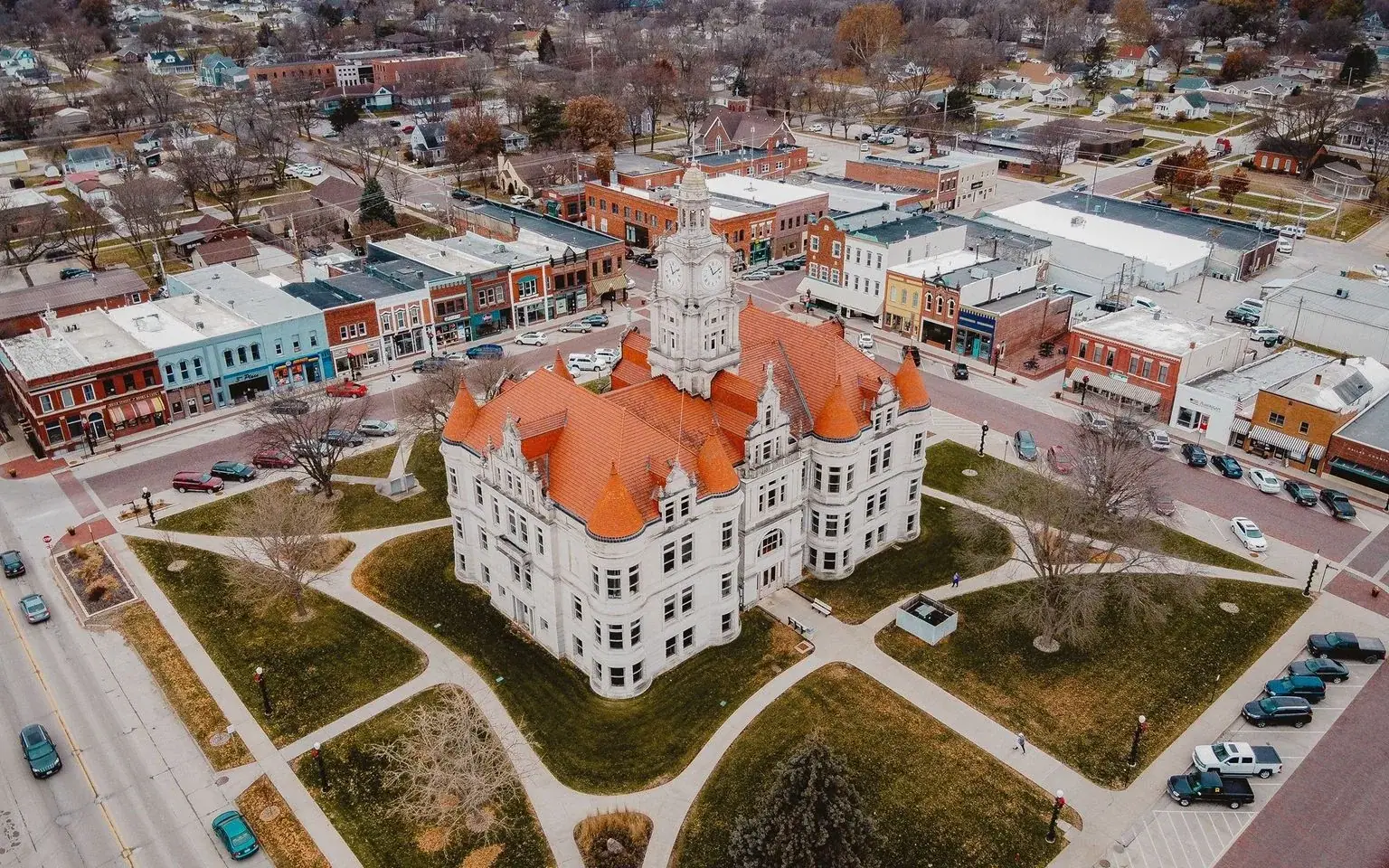
Iowa statewide
Iowa roofs face two distinct threats most years: the severe convective storms that bring large hail and straight-line wind across the state, and the heavy snow load plus relentless freeze-thaw of a Midwest winter. The 2020 derecho was a reminder of how fast wind can strip a membrane here. With an economy centered in agriculture, food processing, insurance, and the warehouse and manufacturing stock around Des Moines and Cedar Rapids, much of the building base carries large low-slope roofs exposed to exactly those forces. We advise building owners, REITs, and asset managers across Iowa on assessing hail and wind damage accurately, deciding when a roof is repairable versus done, and planning capital so a Des Moines or eastern-Iowa portfolio is positioned before the next storm season, not scrambling after it.
Market coverage
Commercial roofing markets we serve in Iowa
Explore commercial roof installation, repair, and replacement in these Iowa cities:
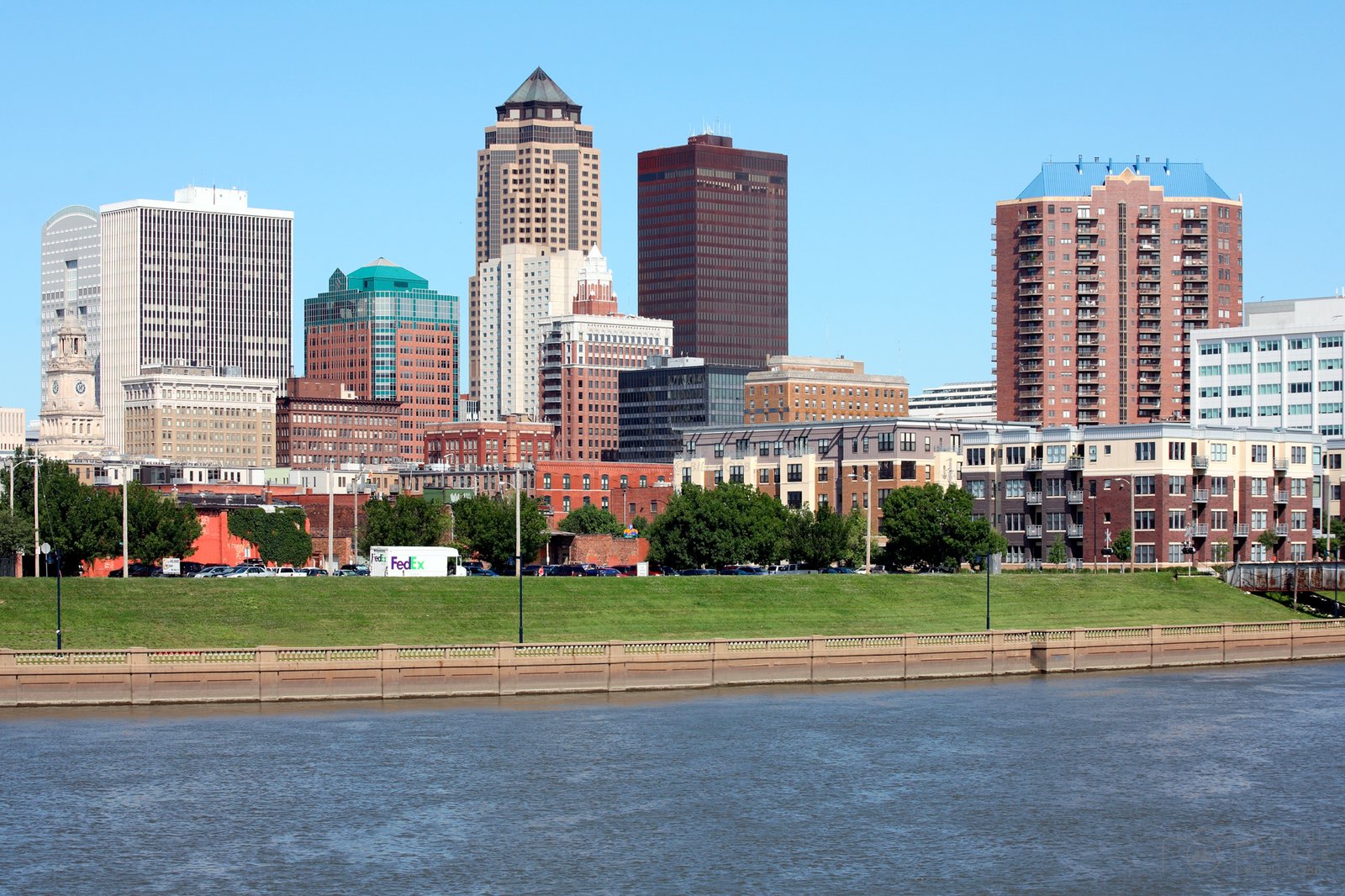
The Iowa commercial building stock we advise on
Iowa's roof inventory tracks an economy built on finance, agribusiness, and manufacturing. Des Moines is one of the country's major insurance and financial-services centers, which puts a large stock of office and corporate-campus roofs in the metro and its western suburbs. Cedar Rapids is among the largest corn-processing centers in the world, and its grain-processing and food plants carry demanding industrial roofs where envelope performance is tied directly to product quality. Across the state, agribusiness, ethanol and biofuel production, and heavy manufacturing dominate the working building stock, and large new data-center investment - including the major project announced for Cedar Rapids in 2025 - is adding mission-critical facilities where a roof leak is a serious operational risk rather than a maintenance ticket.
The building types we advise on across Iowa include:
- Insurance, finance, and corporate office and campus buildings throughout the Des Moines metro and West Des Moines.
- Grain-processing, ethanol, and food-manufacturing plants in Cedar Rapids and across the agricultural corridors, where vapor drive and process exhaust stress the roof assembly from below.
- Manufacturing and equipment plants in the Quad Cities, Waterloo-Cedar Falls, and along the I-80 and I-380 corridors.
- Distribution and warehouse facilities serving the state's freight routes, plus emerging data-center and mission-critical roofs where downtime is intolerable.
- University, healthcare, and institutional buildings in Iowa City, Ames, and the regional centers, managed as long-hold assets.
An owner with a mixed Iowa portfolio is effectively managing several different roof problems at once, each aging on its own schedule. The purpose of an advisory relationship is to run them as a single prioritized program rather than as separate emergencies.
What Iowa weather does to a roof
Iowa endures one of the more demanding climates in the country for low-slope roofs. Winters drive repeated freeze-thaw cycling that fatigues seams, works fasteners loose, and splits membrane that has gone brittle, while snow and ice load the fields and pile at drains, scuppers, and parapets - and refreezing meltwater backs up under terminations and into walls, where the damage stays hidden until it surfaces inside. Structural snow load is a genuine design constraint across the state, not a detail to wave off.
The warm season is where Iowa becomes severe. The state sits in the heart of the Midwest's hail and severe-thunderstorm activity, and the August 2020 derecho is the defining example: straight-line winds measured up to roughly 126 mph and estimated as high as 140 mph tore across central and eastern Iowa, with Cedar Rapids especially hard hit and more than 800 buildings suffering partial roof, wall, or structural collapse. Even in an ordinary year, hail and high-wind events are the steady drivers that bruise membrane, dent metal, and lift perimeter flashing. The damage drivers we plan around include:
- Straight-line wind and derecho uplift, the most consequential wind risk Iowa roofs face.
- Hail bruising and puncture from frequent spring and summer convective storms.
- Freeze-thaw cycling that fatigues seams, fasteners, and flashings over the winter.
- Snow and ice load plus ice damming, concentrated at drains, scuppers, and parapets.
- Ponding water on under-drained fields, which accelerates breakdown and adds standing dead load.
Condition reporting and post-storm assessment
Commercial Roofing Advisors installs, repairs, restores, and replaces commercial roofs. We base recommendations on documented roof conditions, building operations, and the owner's budget. From assessment and scope development through roofing work and closeout, our team helps owners protect the property and plan the next stage of its roof's service life.
Iowa's exposure makes post-storm work a discipline of its own. After a hail or wind event, we provide owner-side damage assessment that distinguishes genuine storm damage from pre-existing wear - the distinction that drives a fair insurance outcome and keeps a claim from becoming a forced full replacement when a scoped repair is the right answer. Working from a documented pre-storm baseline, an owner can substantiate a claim quickly and avoid both under-recovery and the overreach that invites a denial.
Capital planning across an Iowa portfolio
When you hold buildings across Des Moines, Cedar Rapids, the Quad Cities, and the regional markets, roofs compete for the same capital, and Iowa's climate punishes deferral from both seasons. We build multi-year roof capital plans that rank every asset by condition, risk, and consequence of failure, so spending follows a deliberate sequence rather than chasing whichever roof leaks first. That separates the roofs that truly need replacement from those where targeted repair, restoration, and disciplined maintenance buy reliable years - and it lets owners hold reserves against the wind and hail exposure that is a structural feature of operating in Iowa, not a rare event.
We keep the repair-versus-replace decision tied to each asset's real condition and use, weighing a data center, a food plant, and an office tower on their own very different tolerances for risk and disruption. Where a reroof is justified, we help weigh recover versus tear-off, membrane and insulation choices, and uplift resistance against the building's exposure and the length of the intended hold - because in this climate, wind-rating decisions made at reroof are what determine how the next derecho is survived.
Warranty exposure and contractor oversight
Manufacturer warranties on large membrane roofs are detailed contracts, and across a portfolio the exposure is easy to lose track of - particularly after storm repairs, where improper or undocumented work can void coverage on an otherwise sound roof. We track warranty terms, inspection obligations, and the exclusions and maintenance requirements that quietly cancel coverage. When a roof needs work, we help define the scope, vet qualified Iowa contractors, and inspect the installation against specification, because a long-term warranty is only as good as the workmanship behind it, and Iowa weather exposes shortcuts fast.
An owner-side relationship, not a sales call
Before work begins, we confirm roof-area boundaries, access, occupant constraints, material requirements, and the repair or replacement scope. The project plan sets out the work, pricing, schedule, and documentation so the property team knows what to expect.