
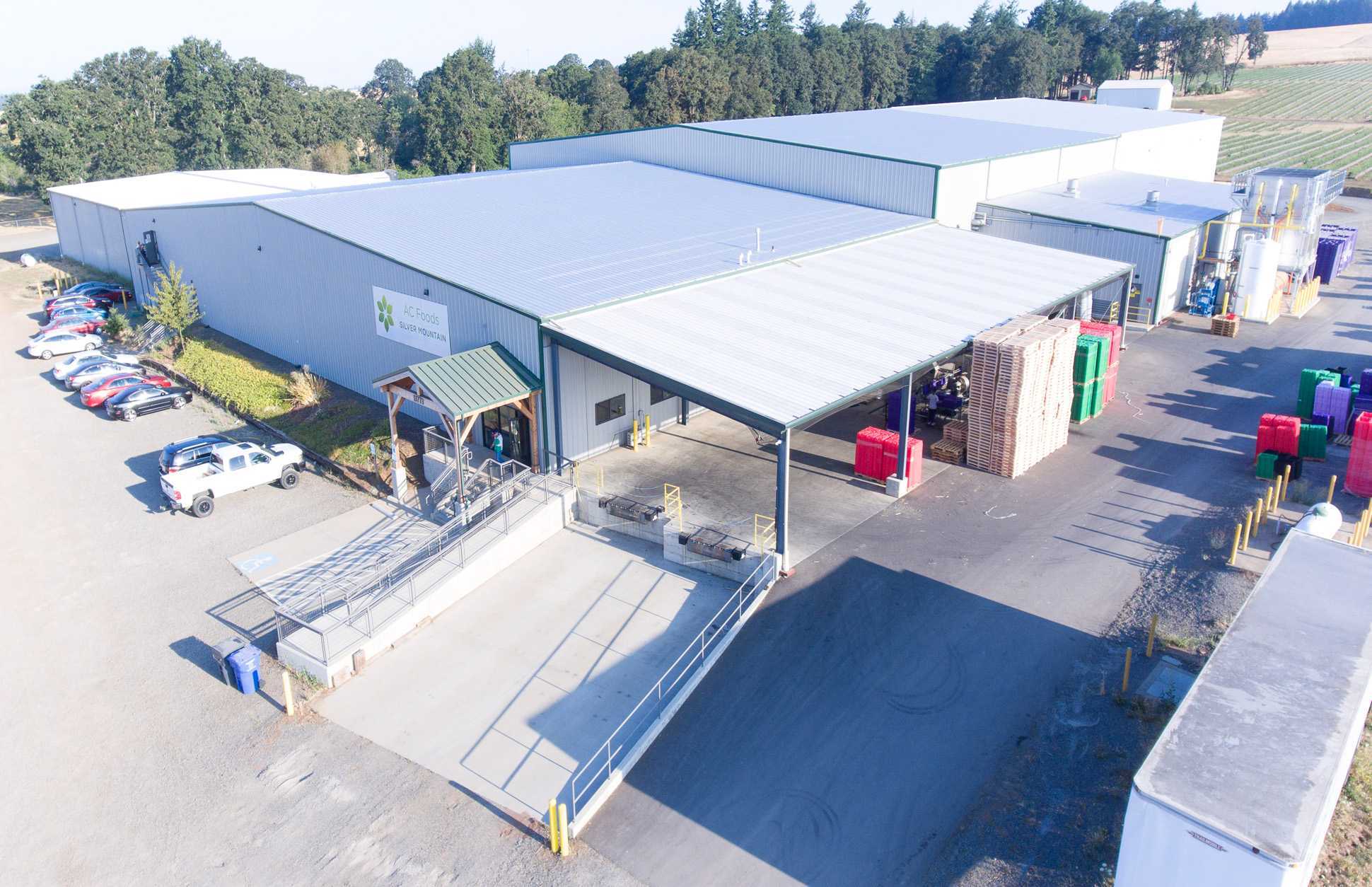
Roofs Over Production That Cannot Stop
A food processing facility roof works harder than almost any other commercial roof, and it usually gets less attention until the day it leaks over a production line. We advise owners and operators of food and beverage plants, dairies, bakeries, meat and poultry facilities, and beverage bottlers on roof condition, moisture risk, and capital timing, where a failure is measured in a contamination hold, a discarded lot, and a shift that cannot run. We sell no systems and bid no work, so our judgment serves the building and the operation rather than a product line.
Washdown and process humidity attack the roof from below
The defining feature of a food plant is moisture, and much of it starts inside. Cooking, sterilizing, washdown, and refrigeration push warm, humid, and sometimes chemically aggressive air up against the underside of the deck. That vapor drives into the assembly, condenses inside the insulation, and quietly degrades a roof that still looks intact from the parking lot. A roof over a wet process ages on a different clock than a roof over a dry warehouse, and it has to be evaluated on that basis rather than by age alone.
Because the damage is internal, the useful tools are internal too. Infrared and capacitance moisture surveys find saturated insulation before it shows at the surface, and core cuts confirm what the scan suggests. For a food facility, that evidence is the difference between a targeted repair and a full tear-off that a hidden moisture problem would otherwise force a year or two early.
Corrosion, coatings, and the chemistry of the plant environment
Sanitizers, salt, organic acids, and rooftop exhaust from cookers and fryers are hard on membranes, fasteners, and metal edge. Grease-laden exhaust in particular can shorten the life of a roof it lands on and void the warranty that was supposed to protect it. When a coating or restoration is on the table, the right question is not which product is cheapest per square foot but which chemistry actually tolerates this plant's exhaust, washdown, and drainage. We evaluate substrate condition and restoration fit on the owner's behalf so the decision rests on how the system will perform in this environment, not on a contractor's inventory.
Sanitation and food safety raise the cost of a leak
In most buildings a roof leak is a facilities problem. In a food plant it is a food safety problem. Water intrusion over a production or packaging area can trigger a line shutdown, a sanitation event, a held or destroyed lot, and questions from an auditor or a regulator. That reality changes how roof risk should be ranked: the areas over open product, clean rooms, and finished-goods storage deserve tighter inspection intervals and faster repair response than a roof over a dry dock or an office wing, and a good roof program says so explicitly rather than treating every square foot as equal.
Roof work has to fit around production, not the other way around
A processing plant rarely offers a convenient shutdown window, and roof work over an operating line carries risks of its own, from fasteners and debris to hot work near combustible dust and product. Sequencing, containment, and coordination with sanitation and food-safety staff matter as much as the roofing scope itself. We help owners scope and stage work so it protects the operation during construction, and so the plant is not trading a roof problem for a contamination problem while the repair is underway.
What owner-side advisory looks like for a food facility
Our role is to give the owner an independent, documented picture of every roof in the operation: what condition it is in, where moisture is already hiding, which areas sit over the highest-consequence spaces, what each roof will need over the next five to ten years, and what that means for the capital plan. We hold the warranties, track the repairs, verify the field work, and keep the record current as inspections and weather change the facts. The output is meant to be used by the plant manager and the asset owner alike, so roof decisions are made on evidence and consequence rather than on the timing of the next unplanned leak.