Roofs Over the Food Chain
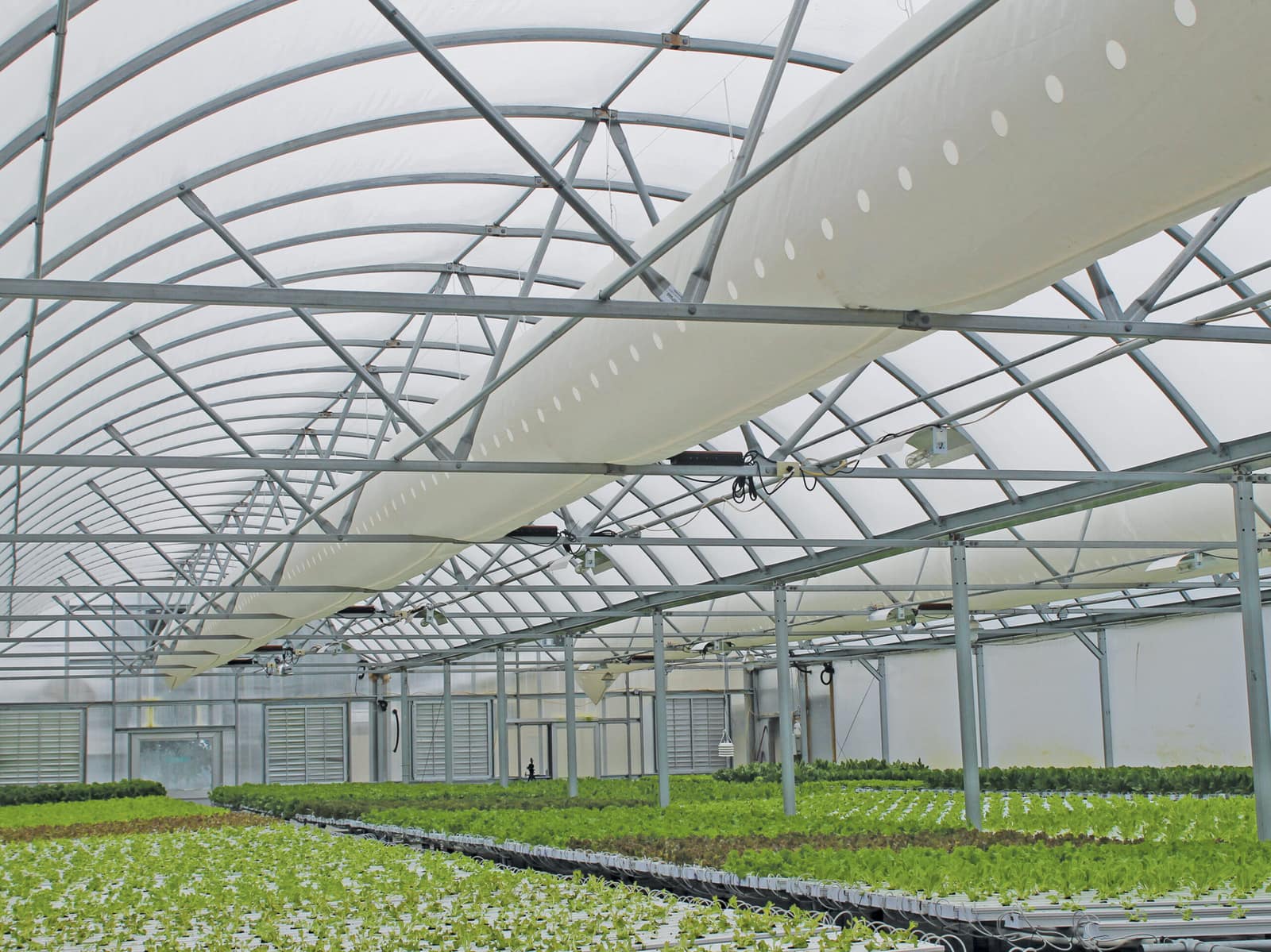
Agricultural and food-processing facilities put roofs to work in conditions most commercial buildings never face: constant interior humidity, corrosive washdown chemistry, ammonia from refrigeration, wide temperature swings between cold storage and ambient, and a regulatory environment where a roof leak is not just a maintenance problem but a food-safety and audit failure. We advise the owners, operators, and agribusiness asset holders behind processing plants, packing houses, cold-storage warehouses, grain and feed facilities, and large agricultural structures on the condition of those roofs and the capital decisions behind them.
The interior environment is the enemy
In most commercial buildings, the roof's hardest exposure is the weather above it. In food processing, the harder exposure is often below. High interior humidity drives moisture into the roof assembly, where it condenses against the underside of the deck and degrades insulation, fasteners, and the deck itself from the inside out. Ammonia and other refrigeration-system exposures attack certain membranes and metals. Washdown chemistry, animal fats, and process byproducts migrating to rooftop exhaust degrade the membrane field around every intake and stack.
This means a roof that looks sound from above can be failing from below, with saturated insulation and corroding deck hidden under an intact-looking membrane. We assess these buildings with that reality in mind, because a visual top-side inspection alone will miss the most expensive problem on the building.
Corrosion and condensation drive the capital decision
On metal-deck and metal-panel agricultural roofs, corrosion is the clock that matters. Fastener back-out, panel seam failure, and underside corrosion driven by interior moisture and process chemistry set the real replacement timeline, often well before the membrane or panel surface would suggest. On low-slope processing roofs, the membrane choice is a corrosion and chemical-resistance decision as much as a weather decision.
- Underside deck corrosion and saturated insulation from interior humidity and condensation
- Membrane degradation around exhaust stacks from fats, oils, and process byproducts
- Ammonia and refrigerant exposure on cold-storage and processing roofs
- Fastener and seam failure on metal panels accelerated by interior moisture
- Ponding over expanded facilities where added equipment overwhelmed original drainage
System selection follows from this. TPO and PVC, EPDM, modified bitumen, SPF, and coating systems each carry different chemical and moisture tolerances, and the right call for a dry grain warehouse is the wrong call for a wet rendering or cold-storage operation. We match the recommendation to the actual interior environment rather than to a default spec.
A leak is an audit and food-safety event
In a processing facility, water intrusion over a production line is not contained to repair cost. It is a contamination risk, a potential product hold, and a finding waiting to happen on the next food-safety audit. Owners in this sector cannot treat a roof leak as a deferred line item, because the cost of a leak over the wrong area is measured in destroyed product and regulatory exposure, not in ceiling tiles.
We help owners prioritize roof work by what sits beneath each zone. The membrane over a finished-goods cooler or an open production line carries a different urgency than the membrane over a dry storage bay, and the capital plan should reflect that, not treat the whole roof field as one uniform priority.
Warranty and documentation in a regulated facility
Processing facilities see constant rooftop change: new refrigeration, added exhaust, relocated process equipment, capacity expansions. Each penetration is a warranty risk and a potential new leak path, and in a regulated environment the documentation trail matters more than in most building types. We track warranty status against what is actually being cut into the roof, maintain the condition and repair records that support both manufacturer warranty enforcement and audit readiness, and keep that record independent of any contractor selling the next job.
That record also carries the diligence weight when an agribusiness property trades, refinances, or is folded into a larger portfolio. A clean, dated roof history is the difference between a smooth transaction and a holdback over an unknown roof.
How we work with agricultural owners
We advise from the owner's side and sell no roofing. When we tell an operator the cold-storage roof has hidden saturation that a top-side recoat would only mask, or that a grain warehouse roof has another five good years with managed repair, that read is driven by the building's condition and the interior environment, not by the work we would otherwise be selling.
- Condition assessment that accounts for underside corrosion and interior moisture
- System selection matched to washdown, ammonia, and process-chemistry exposure
- Capital and replacement timing prioritized by what sits beneath each roof zone
- Warranty tracking and audit-ready documentation through rooftop changes
- Independent scope and bid review when recoat, restoration, or reroof is warranted
- Portfolio forecasting for owners holding multiple processing or storage facilities
The roof over a food-processing or agricultural facility protects product, compliance, and continuity, not just the structure. Managed with the interior environment in view, it stays a planned capital line. Ignored until it leaks, it becomes a product loss and an audit finding at the same time.
Cold storage and processing are not the same roof problem
Owners who hold both cold-storage and ambient-processing buildings often discover that what works on one fails on the other. A cold-storage box drives a continuous vapor drive from the warm exterior toward the cold interior, the reverse of a normal building, and an assembly detailed without that in mind traps moisture and grows ice within the insulation until performance collapses and structural concern follows. An ambient processing roof faces the opposite drive plus aggressive washdown and exhaust chemistry. The insulation strategy, the vapor retarder, and even the membrane attachment method that suit one are frequently wrong for the other. We assess each building against its own thermodynamics rather than carrying a single spec across a mixed portfolio.
This distinction also reshapes capital timing. A cold-storage roof rarely announces its decline at the surface; it shows up as rising refrigeration load and creeping condensation long before a leak appears, which means the replacement decision has to be made on energy and moisture evidence rather than on a visible failure. We help owners read those quieter signals so the work is scheduled before the box becomes a structural and food-safety problem, not after.
Coordinating roof work around production windows
A processing plant cannot simply close for a reroof, and the windows that do exist are dictated by harvest, pack season, and sanitation cycles rather than by the calendar a contractor would prefer. We build roof capital plans around those operational realities, phasing work so that the most product-critical zones are addressed in the available shutdowns and lower-risk areas are sequenced into later windows. For owners running multiple facilities, that planning prevents the common trap of several plants reaching roof end-of-life in the same season, and it keeps roof work from ever competing with peak production for the same few weeks.