
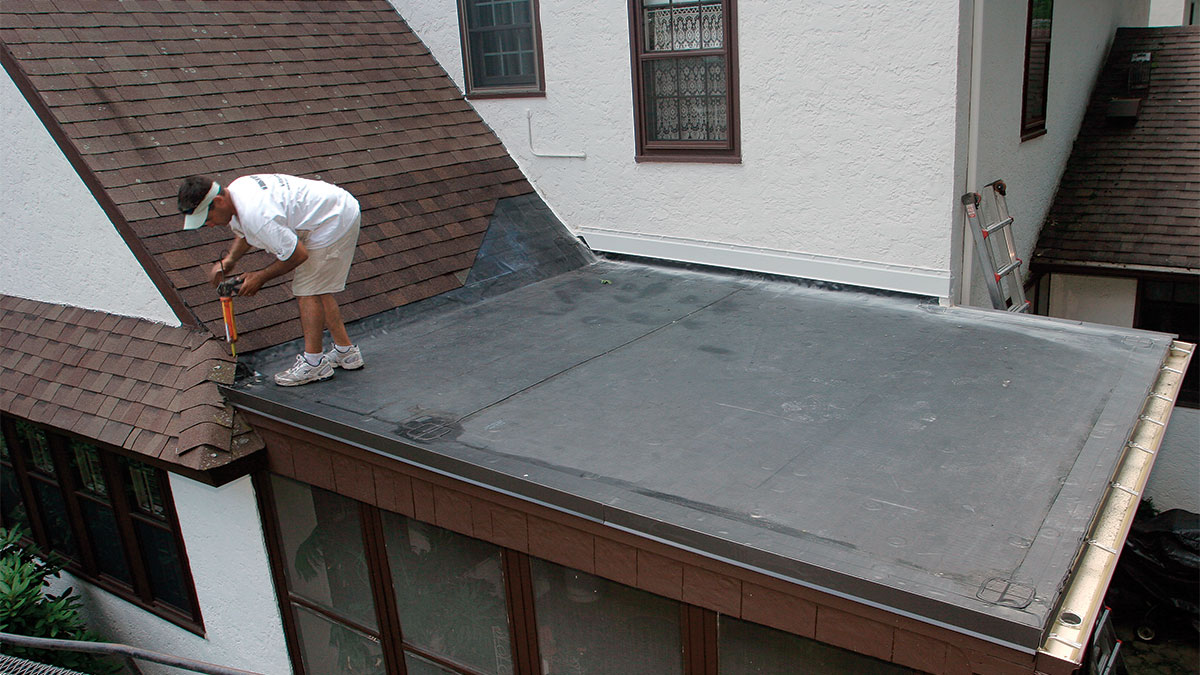
Commercial EPDM roofing in Austin relies on a flexible rubber membrane and compatible seam and flashing materials. Commercial Roofing Advisors helps property teams determine whether the weak point is a splice, a penetration, a termination or a broader change in membrane condition.
Check why a taped splice has released
Identify the original seam and any material added over it before selecting a repair. Surface preparation, compatible primer and properly applied splice materials matter. A repair over dusty residue or variable old sealant may conceal the edge without restoring the splice.
Look on both sides of the seam for wrinkles, tension or movement around equipment. If only a narrow strip is damaged, a localized repair may work. Where multiple joints have moved, trace how the membrane is secured so the new work can address the underlying conditions.
Carlisle SynTec guidance on EPDM membrane splices
Treat a storm walk as an inspection of the whole assembly
Large hail and strong winds are common forms of severe weather in the Austin area according to the National Weather Service. After an event, record the condition of edge metal, flashings, old patches and penetrations along with the rubber field.
Use labeled photographs and locations instead of relying on a general storm date. Document opened seams and punctures separately from areas that need a closer examination. Revisit interior locations where leaks began during later rain.
National Weather Service Austin climate summary
Find out where an old roof can still be worked on
A Central Austin office may have EPDM on one addition and a different assembly on its main roof. Draw that boundary and show the wall terminations, perimeter fastening and drainage details before deciding how much can remain.
If the EPDM is ballasted, account for the stone during inspection and repair. The load that the deck will carry and the way ballast will be moved, stored and redistributed belong in the work plan.
Questions from Austin building owners
What does rubber pulling away from an EPDM parapet indicate?
It may signal movement or a securement problem at the change in plane. Check the perimeter details and field condition so the scope addresses why the rubber is under tension.
Should roofers remove every old EPDM patch before proposing work?
Keep sound, compatible patches that leave the new laps clear. Examine failed repairs, raised edges and incompatible materials to determine where removal is necessary.
Can building staff walk a ballasted EPDM roof to locate a leak?
Facilities teams should follow their established access and fall-protection rules. A roofer may need to move ballast under a controlled plan to see the membrane and trace a suspected water route.