
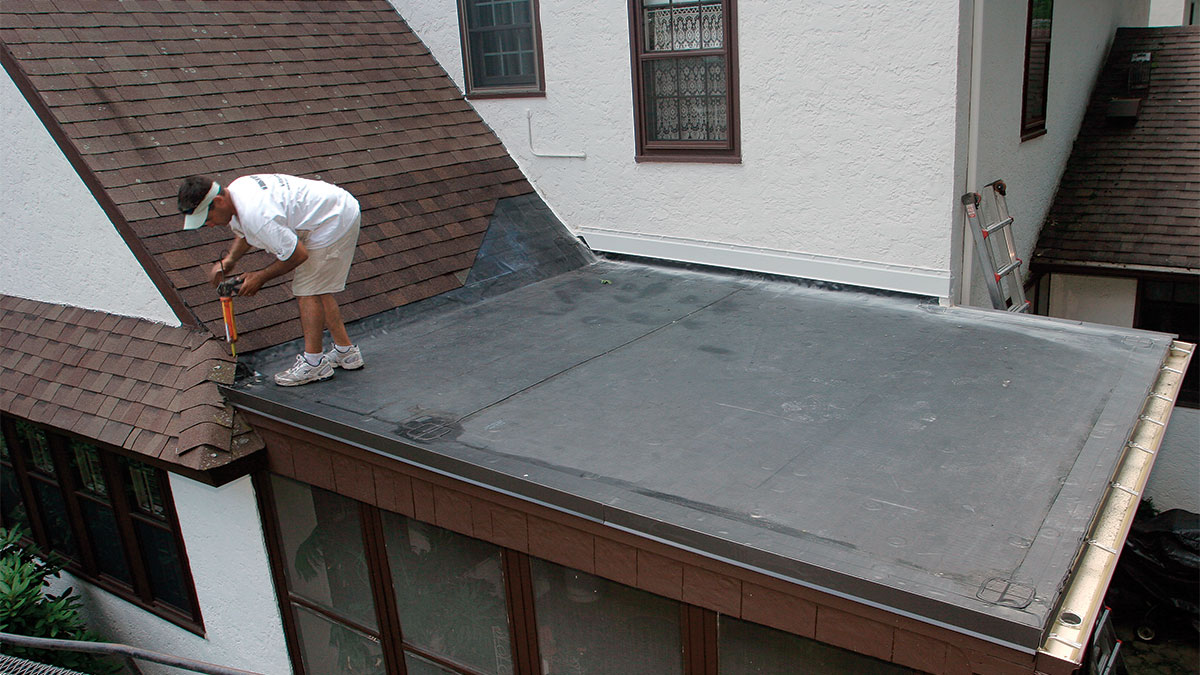
Commercial Roofing Advisors helps Houston property managers decide what to do with an aging EPDM roof. We identify where the rubber has separated, pulled away or been patched before, then define the repair or replacement around those findings. A roof plan and a year of work orders can reveal patterns that a single interior leak report misses.
What is pulling the rubber away from the wall?
When EPDM stretches across the base of a short perimeter wall instead of following the corner, roofers call it bridging. Membrane movement and inadequate restraint can both contribute, particularly on some older ballasted assemblies. A Houston property manager who notices a tight strip at an equipment curb should ask whether the rubber has moved, the attachment has failed, or both.
Have the roof team mark where the gap starts and stops. If the rubber has pulled tight along more than one wall or curb, look beyond the first visible split. The repair scope should describe how the installer will resecure the transition and keep a new flashing from carrying the same load.
EPDM Roofing Association guidance on bridging and aged membrane repairs
Why does the same EPDM seam keep leaking after rain?
Houston’s Intercontinental Airport recorded a normal annual rainfall of about 52 inches for 1991 to 2020. After a heavy shower, note when the stain appears and compare it with the last repair invoice. For an occupied office near the West Loop or a retail strip in southwest Houston, start with the roof section serving the affected suite. The entry point can be an open lap or a flashing higher up the roof.
EPDM repairs typically use compatible materials such as a primer, seam tape or flashing specified for the assembly. A roofer should check what was applied before. Residue from an incompatible patch can complicate preparation and may change where a reliable repair can start.
National Weather Service Houston precipitation and temperature normals
Which signs point toward replacement?
A single failed pipe flashing or a short open seam may be repairable when the adjacent rubber remains sound. If multiple seams fail, flashings pull away in several areas, or moisture testing shows widespread wet insulation, compare area replacement with a broader reroof. Ask the roof team to distinguish confirmed moisture from untested areas before including those areas in a removal price.
Age helps put photos and warranties in context. Use the condition of the membrane and insulation, the attachment, and how often the same sections have leaked to decide whether the building can keep the existing EPDM.
EPDM Roofing Association technical bulletin on repairability
How should I plan an HVAC change on an older EPDM roof?
On a Houston shopping center with several tenant HVAC systems, changing a curb or adding a line can create a new opening in rubber that has already been patched. Get the roof contractor and mechanical contractor to agree on the tie-in detail and who will close it before work starts. Keep photographs of the finished flashing with the tenant’s equipment record so the next technician can locate it.
Questions from Houston building owners
How do I know whether the black roof on my Houston building is EPDM?
Color alone cannot identify a membrane. Check the installer records, warranty and visible seam or flashing details. If records are missing, have a roof professional identify the assembly before selecting a patch.
Can I keep an EPDM roof if the rubber is lifting at one curb?
A localized repair may work if the surrounding membrane is sound and the area below is dry. Have the roof team identify why the rubber lifted and check nearby curbs and wall transitions before setting the repair boundary.
Should I report an EPDM leak if it stops when the Houston storm passes?
Yes. Record the time, affected room, weather and recent rooftop activity. A roof can take on water only when rain hits a specific seam or flashing. That record helps the team reproduce the pattern safely during its assessment.