
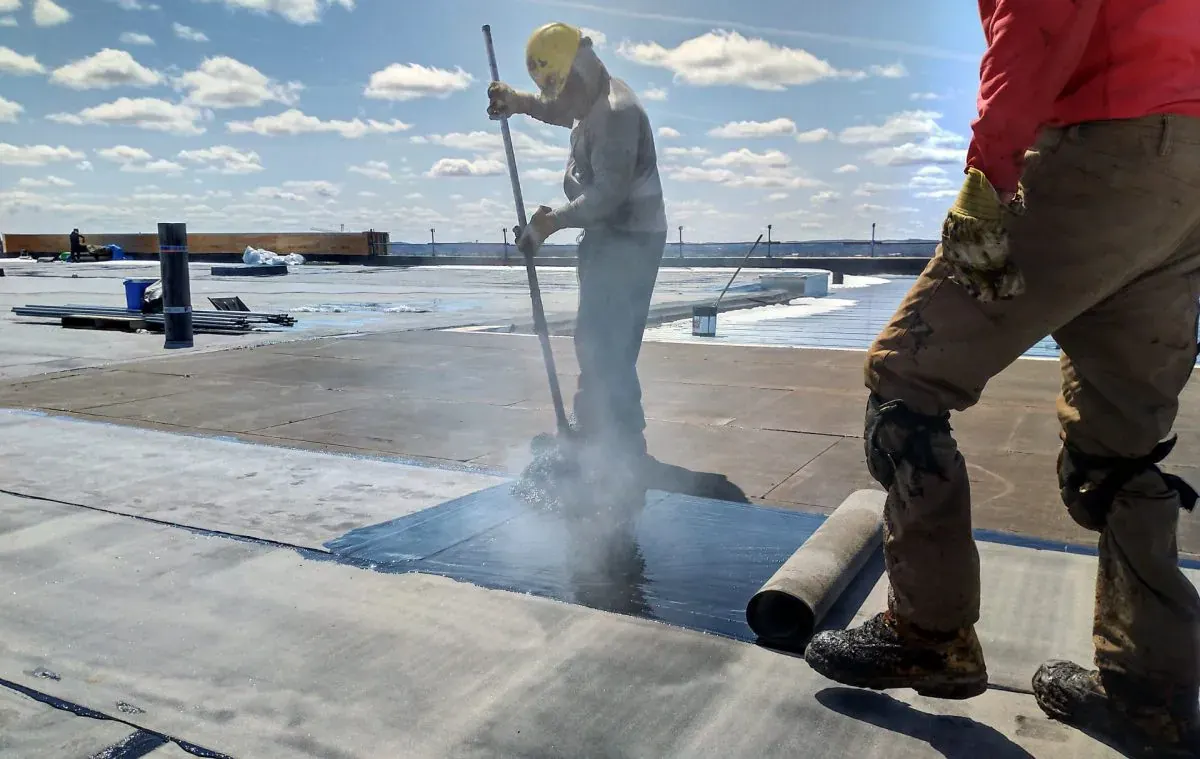
A Houston modified bitumen roof can have several generations of asphalt sheets and repairs. Commercial Roofing Advisors checks its condition before recommending which layers to retain. A cracked patch, an exposed area on a granulated cap sheet, or repeated leaks at a drain can each call for a different scope. We review the existing asphalt layers and past repairs so the bid addresses the part of the roof that has actually failed.
How do you identify the asphalt roof you’re repairing?
Modified bitumen uses reinforced asphalt sheets, usually modified with SBS or APP polymers. On an older roof, the visible granulated cap sheet may be part of a modified bitumen assembly or sit over built-up roofing. Check installation records, manufacturer markings, and representative roof samples if needed before specifying the patch system.
Where the same corner has been patched several times, ask the roofer to mark the limits of each repair. A raised edge can catch runoff, while an opening at a flashing can let water travel under a lap. The scope should show where the new material will bond and whether old mastic, coating, or loose surfacing must be removed first.
Asphalt Roofing Manufacturers Association guidance on built-up and modified bitumen systems
When should a replacement bid include tear-off?
If you manage an older industrial property on Houston’s east side, look for invoices that mention a recover or overlay. Ask bidders to identify how many roof coverings are present and which sections are damp, poorly attached, or too deteriorated to support another roof. Houston’s commercial overlay worksheet calls for a sound deck, adequate structural capacity and drainage, secure attachment, and insulation that is free of saturation.
Ask bidders to separate confirmed removal from allowance pricing for concealed conditions. Put quantities and unit prices against each allowance so the owner can compare how bids handle wet material or unexpected layers once the roof is opened.
Houston Permitting Center commercial roofing overlay worksheet
Does every modified bitumen repair need a torch?
SBS and APP describe the sheet composition. The installation method depends on the listed assembly and the manufacturer’s instructions. Some SBS systems can use cold-applied adhesive or self-adhered sheets. On an occupied building, let bidders know about air intakes, combustible details, restrictions on odors, and when crews can stage or close a roof section.
If a bid includes torch work, have the contractor explain the permit and fire protection plan, including any restrictions near roof openings or existing materials. Houston Fire Department’s roofing operations standard addresses torch-applied roofing. Ask how the installer will handle any transition where the proposed method cannot be used.
Houston Fire Department roofing operations permit and safety standard
What belongs in the scope for a failing granulated cap sheet?
Look separately at worn surfacing, isolated tears, and loss of attachment across a larger area. At a service corridor or loading canopy, old patches can cover several different defects. Ask the roofer to identify where the sheet is still bonded and where the repair must reach a lower ply or extend beyond the cap sheet.
A written repair should specify the membrane, preparation, limits of removal, and how exposed material will be protected. Keep the report with the roof warranty and prior repair records. If a leak returns, the next inspection can check whether it started inside the repaired area or at a separate detail.
Asphalt Roofing Manufacturers Association maintenance and repair compatibility guidance
Questions from Houston building owners
Can a modified bitumen roof be repaired after an older coating was applied?
It depends on the condition of the cap sheet and the materials already on it. Ask the roofer to identify the coating and specify how it will reach a clean, sound surface that the approved repair material can bond to.
Can I keep one modified bitumen section and replace the one beside it?
A phased replacement can work if the retained section can support the tie-in and the design accounts for water flow between them. Ask for the proposed transition detail and where each day’s work will end during installation.
How should I compare hot-applied and cold-applied modified bitumen bids?
Compare the complete assembly, surface preparation, and expected time before the section can be reopened to foot traffic. Ask each contractor to spell out any restrictions around air intakes and occupied areas, and how the first and last sections will be sealed.