
Energy & Reflectivity
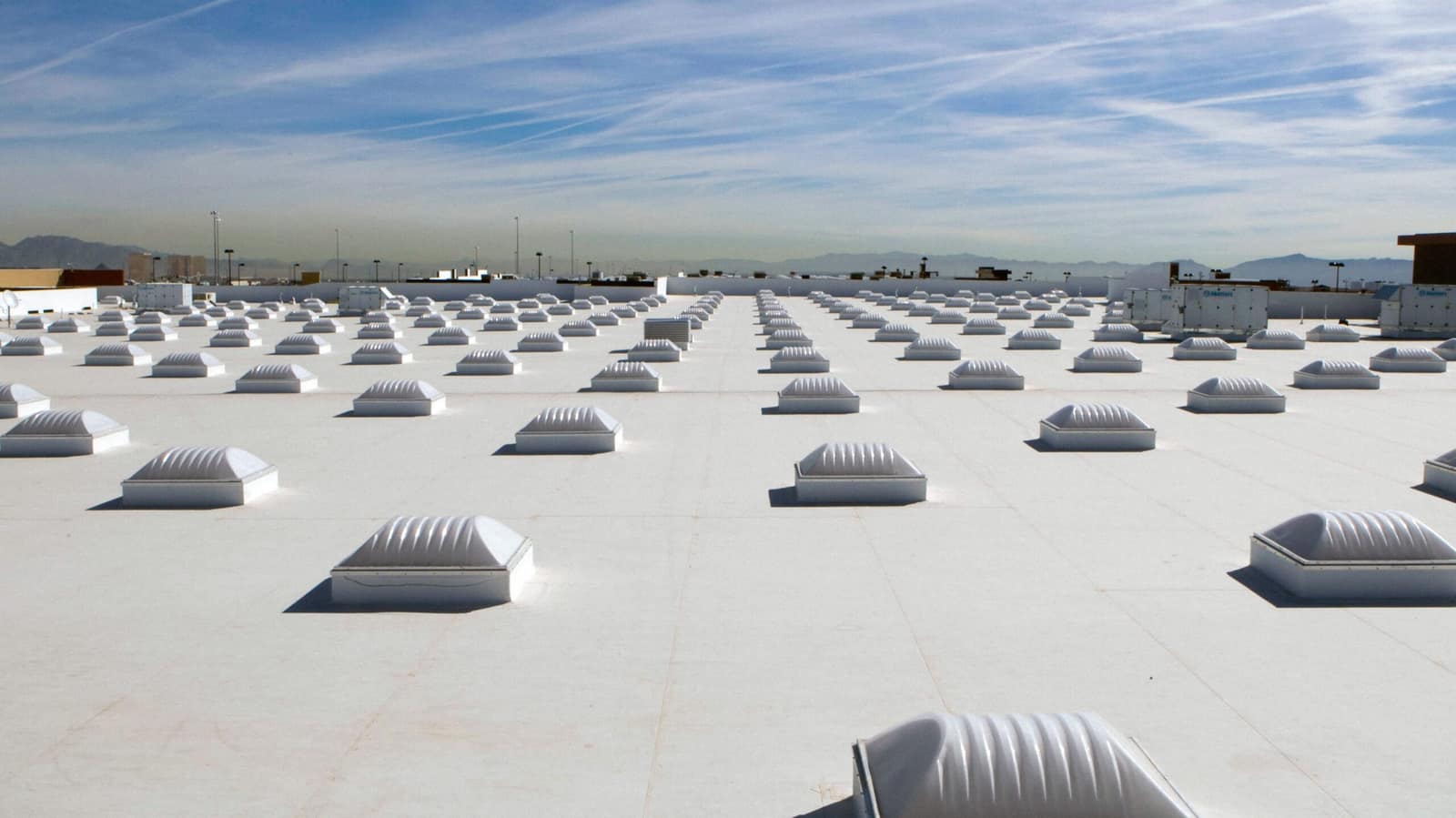
A "cool roof" is not a product so much as a performance characteristic: a roof surface engineered to absorb less of the sun's energy and release more of the heat it does absorb. On a flat commercial roof, that translates into a cooler membrane, a cooler space below, and, in many climates, a smaller cooling load. For building owners, the appeal is straightforward, but the actual value depends on climate, building use, roof construction, and how the surface ages. We help owners separate the genuine energy and durability benefits from the marketing, so a cool-roof decision is made on the numbers that apply to a specific building.
The two properties that define a cool roof
Cool-roof performance comes down to two measurable surface properties. Solar reflectance (sometimes shown as albedo) is the fraction of incoming solar energy a surface bounces back rather than absorbs. Thermal emittance is the surface's ability to radiate absorbed heat back to the sky rather than holding it. A surface can score well on one and poorly on the other, so both matter. Bare metal, for example, can be reflective yet a weak emitter, which is why it can still run hot.
These two values are often combined into a Solar Reflectance Index (SRI), a single rating that lets owners compare products on a common scale. When a membrane, coating, or shingle is described as "cool," it is shorthand for high reflectance, high emittance, or both, usually verified through standardized testing under defined conditions.
How a cool surface changes roof temperature
A dark, absorptive membrane on a sunny afternoon can reach surface temperatures far above the surrounding air. A reflective surface under the same sun stays meaningfully cooler. That temperature difference has effects beyond comfort. Lower peak temperatures reduce the daily thermal cycling that fatigues membranes, seams, and flashings, and they slow the heat-driven aging of many roofing materials. In practice, a cooler-running roof often means a more stable roof.
The temperature reduction also propagates downward. Less heat reaching the insulation and deck means less heat entering conditioned space, which is where the energy story begins.
Energy savings, and where they don't apply
In a cooling-dominated climate, a reflective roof can lower the cooling load during peak hours, easing demand on rooftop units and trimming summer energy use. The benefit is most pronounced on single-story buildings with large roof-to-floor ratios and on facilities that run air conditioning hard during daylight hours. But the savings are not universal:
- In heating-dominated climates, a reflective roof gives back some of the "free" winter solar gain a dark roof would have captured, partially offsetting summer gains.
- On well-insulated roofs, the marginal energy benefit shrinks, because the insulation is already doing most of the work of keeping heat out.
- Multistory buildings see less per-square-foot impact, since the roof is a smaller share of the total envelope.
- Reflectance degrades as dirt, biological growth, and weathering accumulate, so aged performance can be well below the day-one rating.
This is why we treat reflectance as one variable in a building's energy picture rather than a guaranteed line-item saving.
How cool roofing interacts with the roof system
Reflectivity is a surface property, but it lives within a full assembly. A reflective membrane reduces solar load, yet the insulation, or R-value, is what actually governs steady heat flow into the building; the two work together rather than substituting for each other. A cool surface over thin insulation still passes substantial heat; good insulation under a dark surface still runs hot at the membrane.
There are also climate-specific considerations. In cold or humid regions, a cooler membrane can change where condensation forms within the assembly, so vapor control and insulation detailing should be reviewed rather than assumed. And reflective surfaces achieve their rated performance only when kept reasonably clean, which makes maintenance access and a realistic cleaning expectation part of the design conversation.
Warranty, capital, and operating implications
Choosing a cool roof rarely means paying a large premium; many widely used membranes are already light-colored, and reflective coatings can be applied to existing roofs as part of a restoration. The capital question is usually which path delivers the reflectance: a new reflective membrane at replacement, or a coating over a sound existing roof to extend its life and add reflectivity at lower cost.
Owners should also confirm how reflectance interacts with the manufacturer's warranty and any energy-code or incentive requirements that apply locally, since some programs specify minimum reflectance or SRI values and may require documented, aged performance. On the operating side, the payoff is split between modest energy savings and the often-underrated benefit of reduced thermal stress, which can lengthen service life.
How we advise owners
We start with the building, not the brochure. We look at climate, roof construction, insulation levels, building height, and how the space is actually used, then weigh whether reflectance will move the energy needle enough to justify a particular path. Where the energy case is modest, we frame cool roofing for its durability and stress-reduction value instead, so the decision still stands on its merits. When incentives or codes are in play, we confirm the reflectance and emittance figures that qualify and make sure the warranty and assembly support them. Our goal is a roof specified for the real conditions it will face, with the energy and longevity expectations set honestly from the start.