
New York statewide
New York is two roofing climates inside one state, and an owner's roof strategy has to respect both. Downstate, the issue is a dense, aging, often low-slope and prewar building stock exposed to coastal storms and salt air. Upstate and along the Great Lakes, the issue is snow, ice, and relentless freeze-thaw. We advise building owners, REITs, and asset managers on the roofs they hold across New York, and we do it from the owner's side of the table: we inspect, document, plan, and oversee, but we are not the crew doing the install and we have no stake in selling work that the roof does not require.
Commercial roofing markets we serve in New York
Explore owner-side commercial roof advisory in these New York cities:
The markets we cover
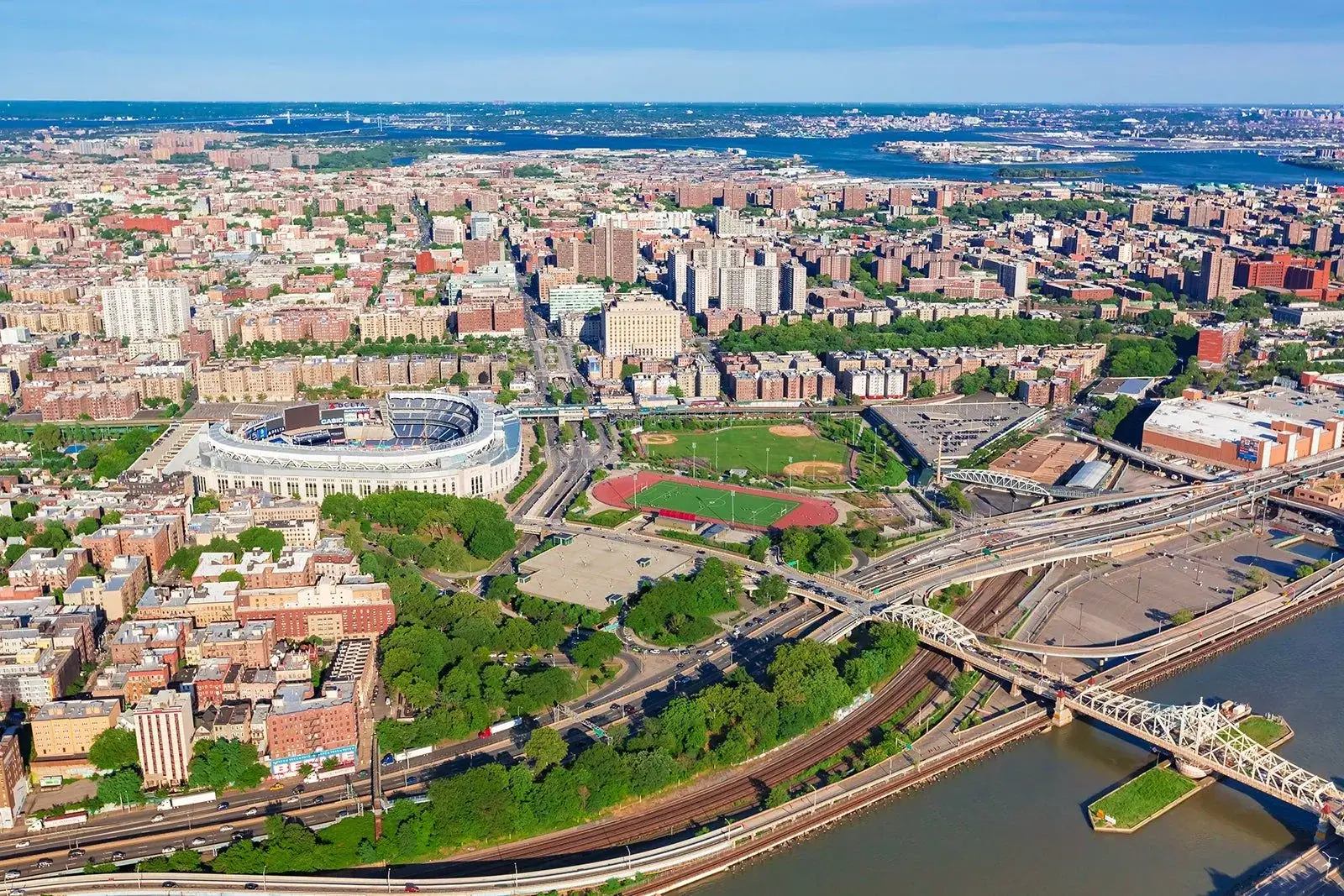
New York City is the largest commercial roof market in the country, and its building stock is unusually demanding to manage: a deep inventory of low-slope roofs over masonry buildings, much of it prewar, with parapets, party walls, bulkheads, and decades of layered repairs. The five boroughs, plus the office and industrial corridors of Long Island and the warehouse and logistics growth across the lower Hudson Valley, give downstate owners a portfolio that is high-value, tightly packed, and often hard to access.
Upstate carries a different but equally large footprint. The Capital District around Albany, Schenectady, and Troy combines state government with the nanotechnology and microchip cluster. Buffalo and the Niagara region hold a heavy manufacturing and distribution base; Rochester remains an advanced-manufacturing and optics center; and Syracuse, Utica, and the Southern Tier round out a Central and Western New York economy where healthcare, higher education, logistics, and manufacturing all occupy large-roof buildings. These are the assets that take the full force of lake-effect winter, and they are where snow load and ice management drive the roofing conversation.
The building stock and the systems on it
No state has a more varied commercial roof inventory than New York, and managing it well starts with knowing what is actually overhead. Downstate, the dominant condition is the low-slope roof on a masonry building, frequently prewar, ringed by parapets and copings and shared with neighbors across party walls. Many of these roofs carry built-up or modified-bitumen assemblies under decades of patches, with single-ply re-covers layered on later, and they are crowded with HVAC, water tanks, bulkheads, and tenant equipment that complicate both inspection and repair.
Upstate the stock skews toward larger, lower buildings: manufacturing plants, distribution and logistics space, healthcare and university facilities, and government buildings, most on low-slope single-ply or built-up systems over wide structural bays. The defining question on those roofs is not just watertightness but capacity, how much snow and ice the assembly and its drainage can carry through a long winter. We match our review to the assembly in front of us, because a parapeted bituminous roof in Brooklyn and a long-span membrane on a Buffalo warehouse fail in different ways, on different timelines, and call for different maintenance and different capital assumptions.
What New York's climate does to a roof
Upstate and the Lake Erie and Lake Ontario snowbelts present the most severe structural roofing exposure in the state. Buffalo averages well over 90 inches of snow a year, and a single lake-effect band can drop one to two feet in a day. That snow matters in two ways:
- Snow load: lake-effect snow carries high moisture content and is far heavier per cubic foot than dry powder. Multiple storms that accumulate without clearing put real stress on decking and framing, particularly on older or long-span low-slope roofs that were never maintained for sustained load.
- Ice dams and freeze-thaw: as snow melts and refreezes at the roof edge, ice ridges block drainage and force water back under the membrane or shingle. Repeated freeze-thaw cycling also loosens seals at flashings, chimneys, vents, and roof-to-wall intersections, which is where leaks usually begin.
Downstate the drivers shift. Coastal and near-coastal buildings in the city and on Long Island face nor'easters, wind-driven rain, and salt air that corrodes metal edge details and fasteners. Across the whole state, low-slope roofs live or die on drainage: clogged or undersized drains and scuppers turn a heavy rain or a rapid snowmelt into ponding and interior water intrusion. Aging built-up and modified-bitumen systems, very common on older New York buildings, grow brittle and crack with age and thermal movement, and blistering and seam failures follow. The state's wide annual temperature range, from below-zero upstate cold to humid summer heat, drives heavy thermal cycling that fatigues laps, fasteners, and metal edge details year after year, so even a roof that never sees a dramatic storm ages faster here than the nameplate warranty term would suggest. On crowded city roofs, that aging is compounded by foot traffic and repeated equipment service, which abrade the membrane and open new leak points around curbs and penetrations.
Owner-side condition reporting
Access and documentation are the hard part of managing roofs in New York, especially in the city, where roofs are crowded with equipment, shared between buildings, and difficult to reach. Our condition assessments give an owner or asset manager a clear, photograph-backed record of each roof: system type and age, realistic remaining service life given the local climate, the condition of seams, flashings, parapets and copings, penetrations, and drainage, along with moisture findings tied to defined roof sections. On upstate buildings we pay particular attention to structural and drainage capacity relative to the snow loads the roof actually has to carry.
For a single building, that produces a defensible repair-or-replace decision. Across a portfolio, it produces a ranked risk picture: which roofs are sound, which need targeted repair before winter, and which are genuinely near end of life. In a state where deferred roof problems compound quickly under snow and ice, that ranking is the difference between a planned program and a string of emergency calls in January. It also arms an asset manager with defensible figures for acquisition due diligence, dispositions, and lender and insurer discussions, where remaining roof life and snow-load adequacy bear directly on value and risk.
Capital planning and warranty exposure
Roofs are one of the largest predictable capital items in any New York holding, and the climate makes timing matter. We build multi-year capital forecasts that sequence replacements and major repairs by urgency, by building, and by season, so the highest-risk roofs are addressed before winter rather than after a collapse scare or a tenant-flooding event. For owners juggling many buildings across both downstate and upstate, that staging keeps spending predictable across budget cycles instead of lurching with the weather. The installation window matters too: the upstate season for membrane and coating work is genuinely short, and we help owners time the work so a needed re-cover is not stranded into a stretch of cold or wet weather when it cannot be installed to specification.
Warranty exposure is the quieter risk. Manufacturer and contractor warranties carry inspection and maintenance conditions, and rooftop alterations, common in New York as HVAC, solar, and telecom equipment get added, can void coverage if they are done without regard to the warranty terms. We help owners track those obligations across a portfolio, keep documentation in order, and ensure that repairs and rooftop work preserve coverage rather than forfeit it. Independent condition reporting, climate-aware capital planning, and active warranty oversight together are what let a New York owner or asset manager hold roofs through hard winters and coastal storms without being blindsided by the bill.