Roof Systems
Metal roofing occupies a distinct place in the commercial market: it is one of the few systems that can be both a long-life sloped roof and, in standing-seam form, a watertight assembly with a service life measured in decades. For owners, the appeal is durability and a predictable maintenance profile; the complication is that "metal roof" covers very different products with very different performance. We advise owners to treat metal as a category of decisions, not a single product, and to match the panel type, attachment method, and coating to the building before comparing it to membrane alternatives.
What a Commercial Metal Roof Actually Is
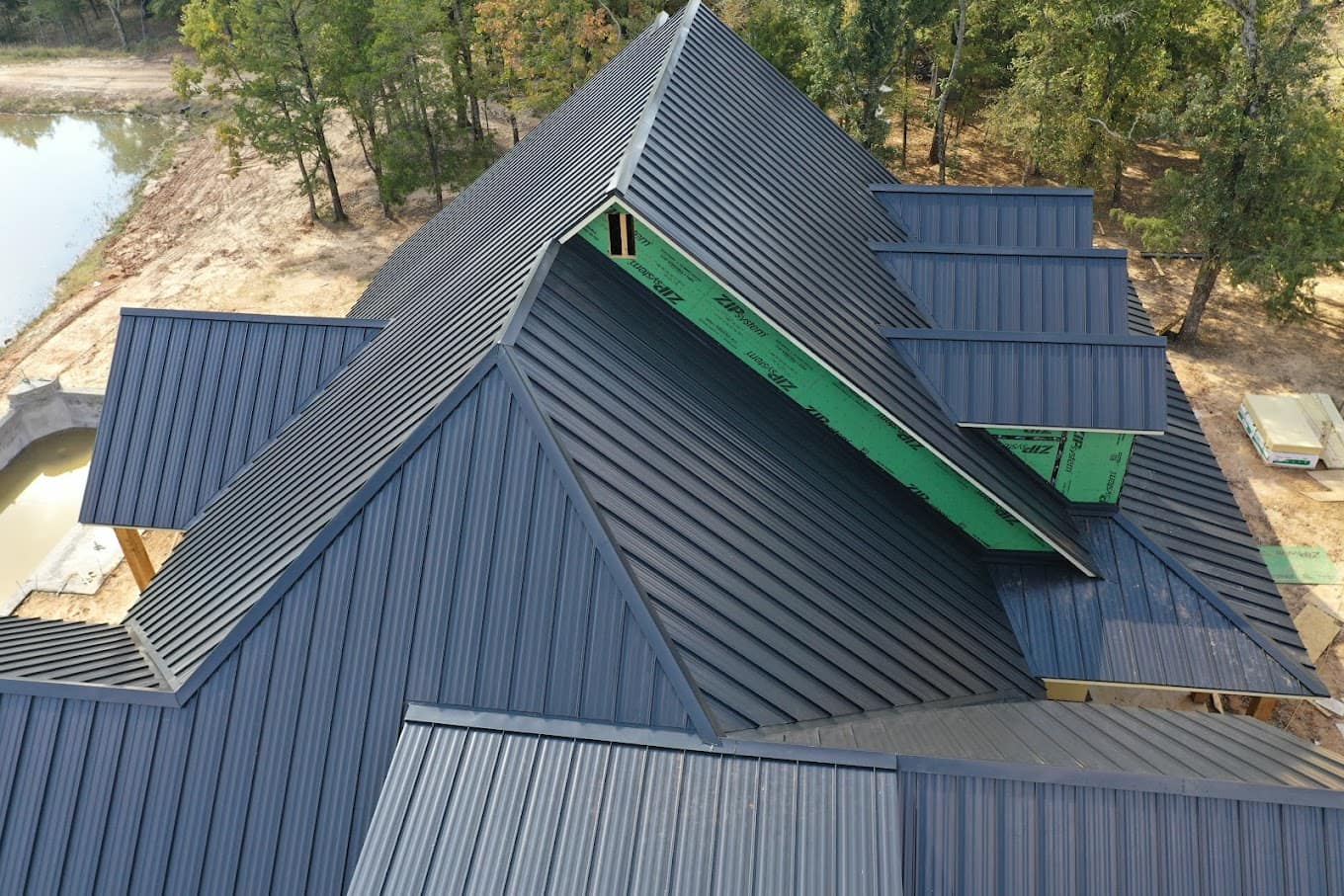
Commercial metal roofing generally falls into two families. Structural standing-seam panels carry their own load and are designed to be watertight at low slopes, with raised vertical seams that are mechanically seamed or snapped together and concealed clips that allow the metal to expand and contract. Architectural and through-fastened panels, by contrast, are screwed directly through the panel face into the deck or purlins and rely on slope to shed water rather than on a sealed seam. The distinction matters enormously: a standing-seam roof can perform on a near-flat metal building, while a through-fastened panel needs real pitch.
Panels are typically steel (galvanized or Galvalume-coated) or aluminum, finished with factory-applied paint systems. The coating, the metal thickness or gauge, and the seam type drive both cost and longevity. Many low-slope commercial buildings also use metal as a retrofit framing system over an aging built-up roof, sloping a new metal roof above the old deck to improve drainage without a full tear-off.
Lifespan and Performance
Properly specified and installed, commercial metal roofs commonly last 30 to 50 years, and standing-seam systems with high-performance coatings can reach the upper end of that range. This is materially longer than most single-ply membranes, which typically run 20 to 30 years. Metal resists fire, sheds snow well, and stands up to wind when the attachment is engineered for the site. Reflective and cool-roof coatings are available and can reduce cooling loads on conditioned buildings.
Performance is dominated by two failure points: fasteners and movement. Through-fastened panels rely on rubber washers that harden and shrink over time, so the screws become the leak path long before the metal itself fails. Standing-seam systems avoid this with concealed clips, but only if the clips and seams accommodate thermal movement; a long metal roof can move noticeably between a winter night and a summer afternoon, and a system that fights that movement will telegraph stress into the seams.
Where Metal Fits Best
Metal is strongest where slope, longevity, and a long ownership horizon align. We see it perform best on:
- Pre-engineered metal buildings, warehouses, and industrial structures where the framing already suits panel attachment.
- Buildings with usable slope, or where a retrofit slope can be added over a failing low-slope roof.
- Snow-load climates, where shedding and structural strength are assets.
- Owners planning to hold the asset long enough to capture the longer service life and lower lifecycle cost.
- Facilities where a hard, impact- and fire-resistant surface is valuable.
It is a weaker fit on heavily penetrated, dead-flat roofs crowded with HVAC units, large drains, and frequent rooftop traffic. Each penetration through a metal panel is a detail that must be flashed and maintained, and complex rooftops often favor a membrane that can be welded or flashed continuously around obstacles.
Strengths and Limitations for an Owner
The honest case for and against metal, from an owner's seat:
- Strength: long service life and a high salvage and recycling value at end of life.
- Strength: low routine maintenance when detailed correctly, and excellent fire and wind resistance.
- Strength: can often be installed over existing roofs via a retrofit frame, avoiding tear-off and disposal.
- Limitation: higher upfront cost than single-ply membranes, and pricing is exposed to steel and aluminum commodity swings.
- Limitation: leaks, when they occur, tend to originate at seams, fasteners, and penetrations, and can travel laterally before they show up inside.
- Limitation: repairs and modifications require metal-specific skill; not every roofing contractor is competent at standing-seam work.
- Limitation: thermal movement, oil-canning (visible waviness in flat panel areas), and noise are real considerations that good design manages but cannot fully eliminate.
Warranty and Maintenance Realities
Owners should separate the warranties they will be quoted. The paint or coating finish warranty covers fade and chalk and is a manufacturer promise about appearance, not water. The substrate warranty covers the metal against perforation. The watertightness warranty, where offered on standing-seam systems, is the one that protects against leaks, and it is typically conditional on certified installation, manufacturer-approved details, and documented inspections. A long printed warranty term means little if the conditions are not met or the installer is not authorized.
Maintenance is light but not zero. Through-fastened roofs need a fastener and sealant program, since washers and screws are consumable. All metal roofs benefit from keeping seams, gutters, and valleys clear, checking penetration flashings annually, and addressing dissimilar-metal contact and coating scratches before they corrode. Foot traffic should be controlled, because dented panels and crushed seams create both cosmetic and watertightness problems.
How We Advise Owners Evaluating Metal
When we counsel an owner weighing metal, we start with the building rather than the panel. We confirm the slope, the structural capacity for the panel and any snow or solar loading, and the number and complexity of penetrations, because those facts decide whether metal is a natural fit or a forced one. We then press on attachment: standing-seam with concealed clips for low slopes and long-life expectations, through-fastened only where ample slope and a realistic fastener-maintenance budget exist.
We also push owners to compare lifecycle cost, not first cost. Metal's premium is easier to justify on a long hold than on a building you intend to sell within a few years. Finally, we weigh installer qualification heavily, because metal is unforgiving of poor detailing and the right warranty depends on certified work. With those pieces aligned, metal can be one of the most durable and lowest-drama roofs an owner can put over a commercial building; without them, it is an expensive way to inherit seam and fastener problems.
Put the system choice into an owner decision
Before approving a roof system, align field condition, moisture findings, drainage, attachment, warranty terms, operational constraints, and hold period. Commercial Roofing Advisors can review those inputs without tying the recommendation to one material or contractor.