
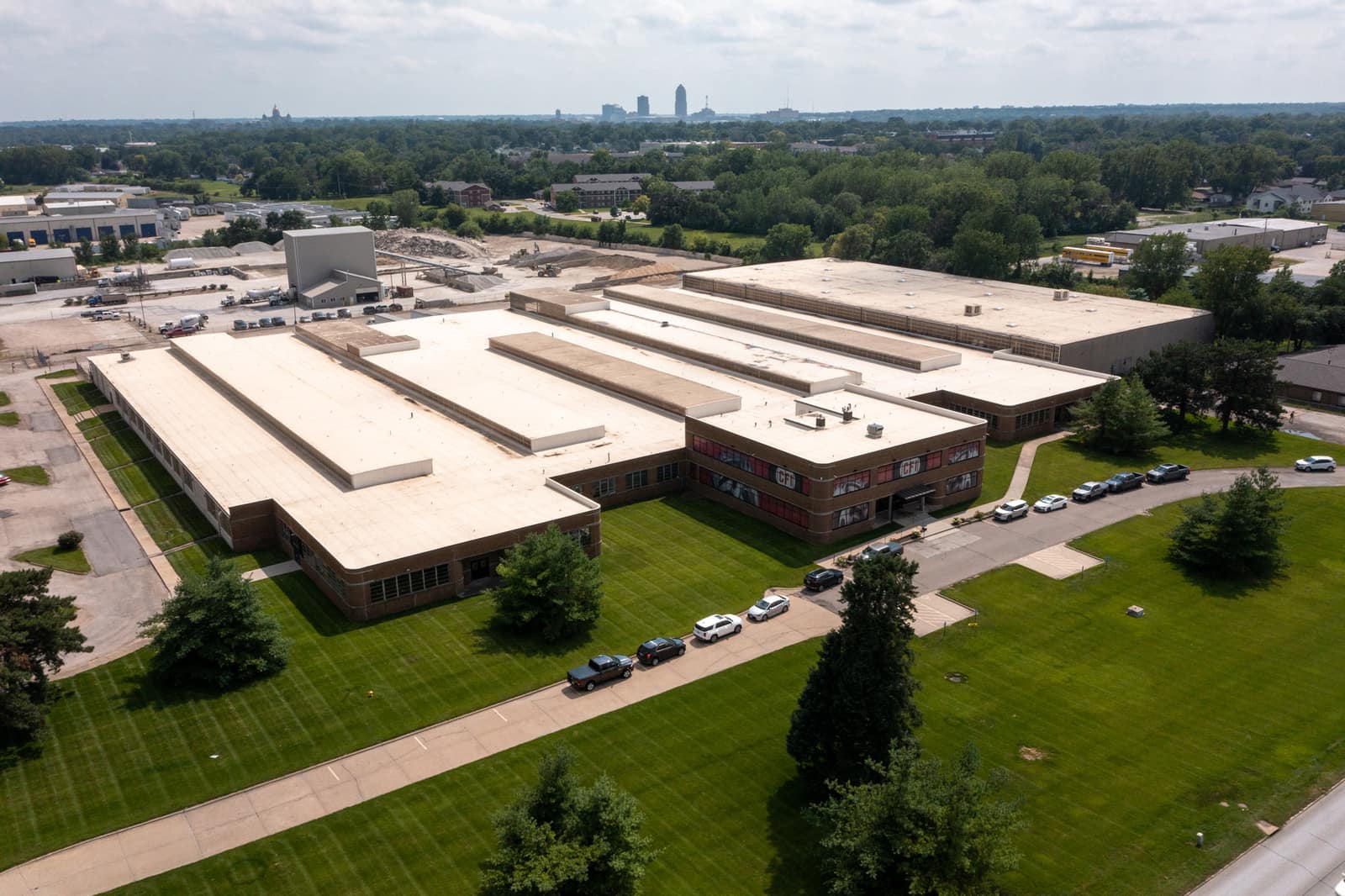
Storm Response
A hailstorm is one of the few roof events that runs on two clocks at once: the physical clock of water finding its way into the building, and the procedural clock of an insurance policy that rewards prompt, documented action and penalizes delay. Owners who treat hail as purely a repair problem often lose the larger battle, because the difference between a funded reroof and a denied claim is usually decided in the first two weeks by paperwork, not by the roof itself. We advise owners through that window so the claim and the asset are both protected.
The First 72 Hours Decide More Than People Think
Hail damage to a membrane roof is frequently invisible from the ground and sometimes invisible from the roof surface to an untrained eye. Bruising on EPDM, fractured granules on modified bitumen, and split coatings over SPF can all pass a casual walk-through while having already compromised the assembly. The mistake we see most often is an owner waiting to see whether the roof leaks before reporting. By then the storm date is harder to establish, other weather events have intervened, and the carrier has room to argue causation.
In the first 72 hours, the goal is to fix the event in time and place. That means noting the storm date and confirming it against public hail-mapping and local weather records, photographing any visible interior water intrusion before it dries, and getting a qualified eye on the membrane before foot traffic, repairs, or a second storm muddies the picture. Emergency tarping or temporary patching to stop active water is appropriate and expected, but it should be photographed before and after so the carrier sees the original condition.
What the Carrier Will Actually Look For
Adjusters and their engineers are evaluating three things: that a hail event of sufficient size occurred on the claimed date, that the damage is consistent with hail rather than age or prior wear, and that the damage is functional rather than cosmetic. Each membrane type tells that story differently, and a denial often hinges on the owner's team not speaking that language.
- TPO and PVC: look for fracturing of the membrane over the cover board, circular impact marks, and reinforcement scrim exposure. Hail can crack the membrane without immediate leakage, which is exactly the functional-versus-cosmetic fight.
- EPDM: bruising and tearing at the impact point, often with no granule signature, making documentation and a test cut more important.
- Modified bitumen and BUR: displaced or fractured granules, surface spatter marks, and softening of the cap sheet; spatter alone is evidence of the event but not necessarily of damage.
- SPF and coatings: punctures through the topcoat into the foam, which trap water and accelerate failure even when the surface looks intact.
Building the Record Before the Adjuster Arrives
By the time a carrier's representative walks the roof, the owner should already have an independent record. We assemble that record so the claim rests on the asset's documented condition rather than on a single inspection by a party with an interest in paying less. The strongest files share a common structure.
- A dated, geo-referenced photo set of every elevation and roof section, including close-ups of impact marks against a scale reference.
- The pre-loss condition baseline, drawn from prior roof reports, warranty records, or maintenance logs, to defeat the carrier's age-and-wear argument.
- Storm verification tying the claimed date to documented hail size at the property's coordinates.
- Core or test cuts where membrane type makes subsurface damage plausible, performed and documented before any permanent repair.
- Manufacturer specifications for the installed system, including hail-rating classifications that frame what the assembly was warranted to withstand.
This record does two jobs. It supports the immediate claim, and it gives the owner a defensible position if the matter moves to appraisal or litigation, where the absence of contemporaneous documentation is nearly impossible to cure later.
The Repair-Versus-Replace Pressure Point
Carriers prefer to scope hail claims as repairs, and on a low-slope commercial roof a patchwork repair often creates more long-term exposure than it resolves. Membrane that has been impacted across a wide area is rarely repairable to a uniform standard, and selective patching can void portions of a manufacturer warranty or create seams that fail at the next freeze-thaw cycle. The owner's interest is in matching the settlement to the actual restoration of useful life, not to the cheapest path to a dry interior this quarter.
We frame this conversation around the policy language on matching, code-upgrade coverage, and the realistic serviceability of a patched assembly. When a building's roof was near the end of its service life before the storm, the analysis also has to separate storm-attributable cost from deferred capital the owner would have spent regardless, because that line is precisely where a fair settlement is negotiated.
The Weeks That Follow: Deadlines and Drift
Most commercial policies carry notice requirements and proof-of-loss deadlines measured in days, not months, and many include a hard outer limit on the time to file suit. The practical risk is drift: an owner reports the claim, an adjuster visits, an estimate arrives that feels low, and the file goes quiet while operations take priority. That quiet period is where rights expire. We keep the timeline visible, track the carrier's obligations against the policy's own clock, and make sure that every supplement, disagreement, or invocation of appraisal happens inside the window the policy allows.
Handled well, a hail claim moves from a chaotic storm response to a structured negotiation in which the owner holds the better-documented position. The roof is a one-time event, but the record tuned to it is the asset that actually determines what the policy pays.