
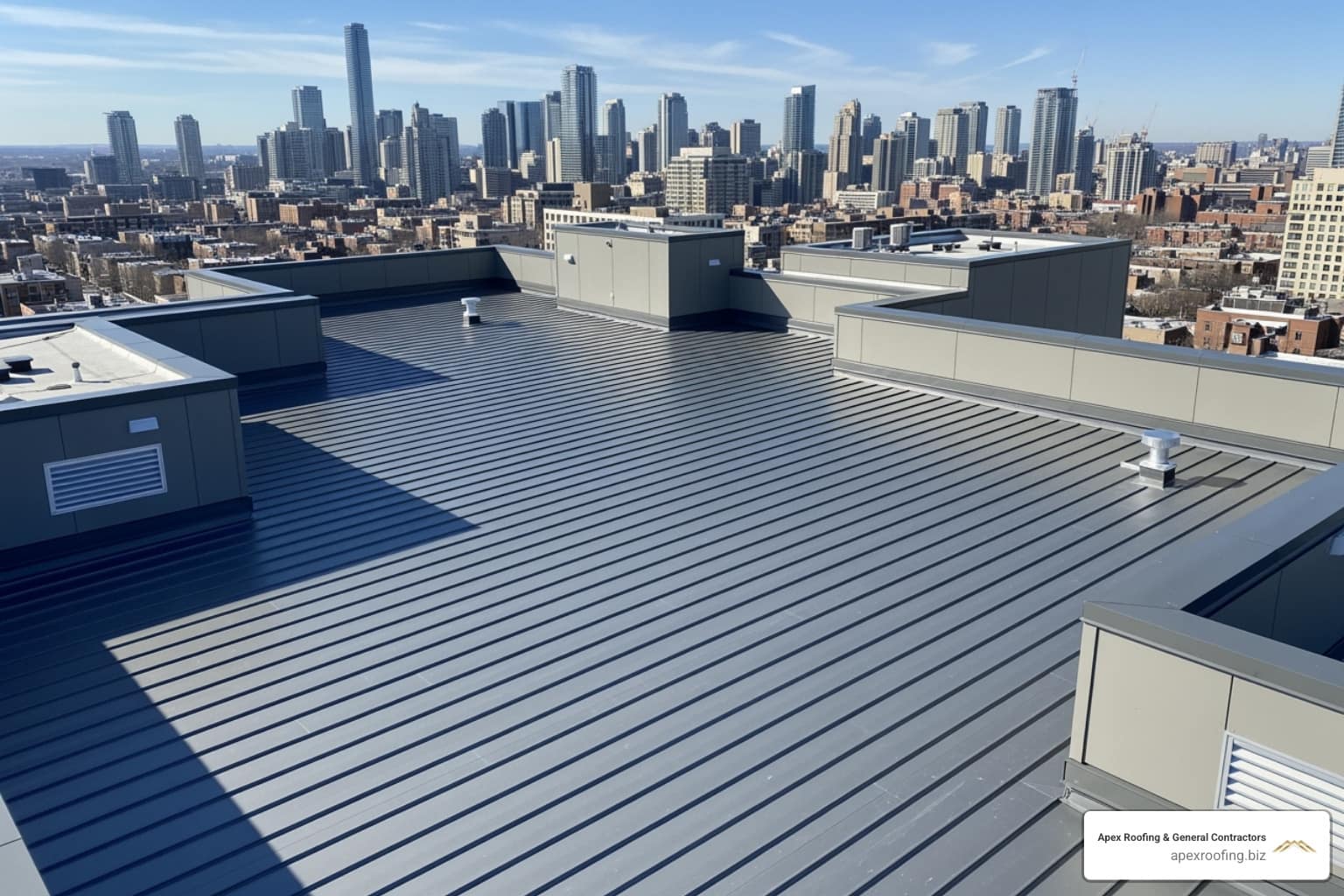
Membrane Realities
Single-ply membranes now cover the majority of low-slope commercial roofs in the United States, and with that dominance has come a thicket of half-truths that influence how owners spend capital. TPO, PVC, and EPDM are mature, well-understood systems, but the shorthand used to sell and specify them often misleads the people signing the checks. When an asset manager makes a reroofing decision based on a myth rather than the actual behavior of the material, the result is either money spent on the wrong system or a roof that underperforms its expected life. We work owner-side, so our interest is in what these membranes actually do over a holding period, not what a single-source manufacturer would prefer you believe.
Myth: One Membrane Is Simply Better Than the Others
There is no universally superior single-ply system, and any pitch that claims one exists is selling, not advising. TPO, PVC, and EPDM each have a defensible application. PVC and its cousin KEE membranes excel where the roof is exposed to grease, chemicals, or animal fats, which is why they dominate restaurant and food-processing roofs; EPDM does not tolerate that exposure. EPDM, a true rubber, handles thermal cycling and ponding with a long, well-documented field history and is often the pragmatic choice on large, simple roofs in cold climates. TPO occupies the middle, offering a reflective white surface and heat-welded seams at a lower material cost, but its formulations have evolved repeatedly, so field history varies by vintage.
The right question is never "which membrane is best" but "which membrane is best for this building, this climate, this rooftop equipment load, and this holding period." An owner planning to sell in three years and an owner holding for twenty should not necessarily buy the same roof.
Myth: A Thicker Membrane Always Lasts Longer
Mil thickness matters, but it is one variable among several, and owners routinely overweight it because it is the easiest number to compare. A 60-mil membrane is not five years better than a 45-mil membrane in any simple proportion. What governs real-world longevity is a combination of factors that rarely appear on a spec sheet headline.
- The thickness of the membrane above the scrim, not just the total thickness, since the scrim is where weathering damage concentrates on TPO and PVC
- Attachment method and wind design, which determine whether the roof survives storms regardless of mil count
- Detailing and flashing quality at penetrations and perimeters, where the large majority of leaks originate
- Substrate and insulation condition beneath the membrane, which a new sheet cannot fix
- Maintenance over the life of the roof, including drainage and removal of debris and standing water
Myth: A White Reflective Roof Always Saves Money
Reflective TPO and PVC reduce rooftop temperatures and can lower cooling loads, which is a genuine benefit in air-conditioning-dominated climates. But the energy case is climate-specific. In northern markets with long heating seasons, a highly reflective roof gives back some of the winter heating benefit that a darker surface would have captured, and the net savings shrink. Reflective surfaces also soil over time, and a white roof that has not been cleaned loses a meaningful portion of its initial reflectivity within a few years.
For owners, the lesson is to treat reflectivity as one input into a roof decision rather than a headline justification. The energy delta is rarely the largest line in the capital analysis; membrane life, warranty terms, and detailing quality usually matter more to total cost of ownership than the color of the sheet.
Myth: A Manufacturer Warranty Means the Roof Is Covered
A 20-year or 30-year manufacturer warranty reads like an insurance policy, but it is narrower than owners assume. Most warranties cover material defects and, in the case of total-system or NDL warranties, certain workmanship failures, but they exclude ponding water beyond a stated period, damage from rooftop traffic, unauthorized alterations, and lack of maintenance. A leak caused by a tenant's HVAC contractor cutting the membrane is not a warranty event. A leak at a flashing that was never maintained may not be either.
The practical owner posture is to read the actual warranty document rather than the cover-page term, and to maintain the conditions the warranty requires. A long warranty on a poorly maintained roof is a document, not protection.
Myth: Reroofing Is the Only Answer to an Aging Single-Ply Roof
When a single-ply roof reaches the back half of its life, the default assumption is a full tear-off and replacement, the most expensive and disruptive option available. It is often the right call, but not always. Depending on the membrane type, the extent of seam and field degradation, and the condition of the insulation below, alternatives can extend useful life at a fraction of replacement cost.
- Restoration coatings, which can add years to an EPDM or aged TPO roof when the substrate is sound and seams are intact
- Targeted seam and flashing repair, where failures are localized rather than systemic
- A recover system over the existing membrane, permissible where code and deck loading allow and the substrate is dry
- Phased replacement across a portfolio, sequencing the worst roofs first to align with capital availability
The decision should rest on a condition assessment and core samples, not on a single contractor's preference for the scope they would rather sell. Our role is to put the actual condition data in front of the owner so the capital decision matches the roof, not the myth.