Roof Risk Before You Buy
The roof is one of the largest single line items on a commercial building and one of the easiest to misjudge during a transaction. A property tour and a generic property condition assessment can both call a roof acceptable while a tear-off sits two winters away. We provide pre-acquisition roof due diligence for buyers, REITs, and asset managers so that roof condition, remaining service life, and replacement exposure are quantified before you close, priced into your offer, and ready for negotiation rather than discovered after the keys change hands.
What a generic PCA misses
A standard property condition assessment touches the roof, but it is rarely a roof investigation. The walker may note the membrane type and general age, photograph a few obvious issues, and move on. What that level of review consistently misses is the difference between a roof that looks tired and a roof that is functionally finished, and on a low-slope commercial roof those two can be visually identical from a doorway.
We treat the roof as its own diligence workstream. The questions that actually drive your capital exposure are not whether the membrane looks weathered, but what is underneath it and how much life is genuinely left:
- Is the insulation dry, or has water tracked under the membrane into the cover board and deck
- How many roofing systems are stacked up, and is the building already at its tear-off limit under code
- Are the seams, flashings, and penetrations sound, or are they a year from a cascade of leaks
- Is there a transferable manufacturer warranty, and what voids it
- What does the deck itself, steel, concrete, or wood, look like where moisture has been sitting
How we read the roof
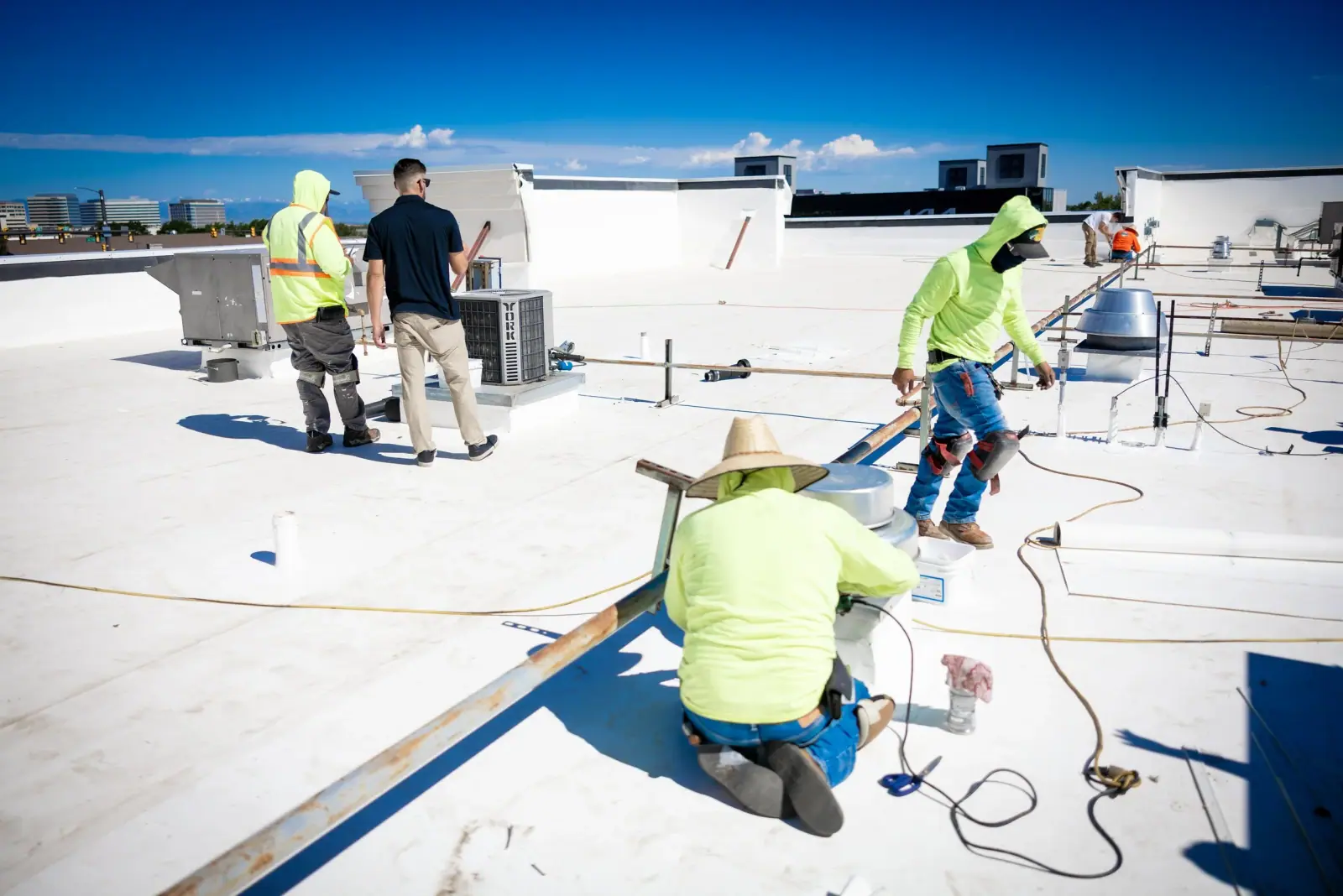
We start with the system and its history. Identifying whether you are buying a TPO, PVC, EPDM, modified bitumen, BUR, or SPF roof tells us its typical failure modes and where to look, and pulling the building's roofing records, permits, and any existing warranty tells us how old it really is versus how old the seller says it is. From there we assess the field: seam integrity, surface degradation, ponding, flashing and termination condition, and the state of every curb, drain, and penetration.
The decisive question on most low-slope roofs is hidden moisture, because wet insulation cannot be seen and cannot be coated over, and it turns a recoat candidate into a tear-off. Where the stakes justify it, we recommend infrared moisture surveys or core cuts to confirm whether the assembly is dry, since that single finding can swing the number by hundreds of thousands of dollars on a large roof. We also check whether the building already carries two roof systems, because once it does, code typically forces a full tear-off on the next replacement rather than a cheaper overlay.
Turning condition into a number
Diligence is only useful if it produces a figure you can underwrite. We translate roof condition into an estimated remaining service life and a replacement or major-repair cost range expressed in current dollars, so you can place the roof on your capital timeline with the rest of the asset. A roof with three good years reads very differently in a hold model than one with twelve, and we make that distinction explicit instead of leaving it as a vague caution.
That output plugs directly into how you structure the deal:
- A remaining-service-life estimate by roof section, not a single building-wide guess
- A cost range for replacement and for the bridge repairs needed to reach it safely
- A clear flag on deferred maintenance that will accelerate failure if left alone
- The warranty and code constraints that change what a future replacement will cost
Using the findings at the table
A credible roof report is leverage. When the analysis shows a system at the end of its life, that becomes a price adjustment, a seller credit, an escrow holdback, or a repair the seller completes before closing. Sellers routinely describe a roof as having years left because no one has put a defensible counter-analysis in front of them, and an owner-side report grounded in core cuts and remaining-life math is far harder to wave off than a buyer's verbal concern.
Just as important, the report protects you from over-correcting. If the roof is genuinely sound, we say so, and you avoid pricing in a replacement reserve the asset does not need or walking from a deal over a roof that had ten good years in it. Because we sit on the owner's side and never sell the installation, our incentive is an accurate number, not a large scope of work.
Day-one and beyond
Our involvement does not have to end at closing. The same assessment that informed your offer becomes the foundation of your ownership plan: the maintenance cadence that protects whatever life the roof has, the repair sequence for the items you negotiated, and the budget year in which a replacement should be planned and funded. For buyers assembling a portfolio, we apply a consistent diligence standard across every acquisition so that roof risk is measured the same way on each asset and your reserves reflect reality rather than the optimism of the last broker you spoke to.
The roof is rarely the reason a deal succeeds, but a missed roof is a common reason a first year of ownership goes sideways. Putting rigorous, independent roof diligence into your underwriting is the difference between inheriting a known, funded liability and inheriting a surprise.