
Albany commercial roofing
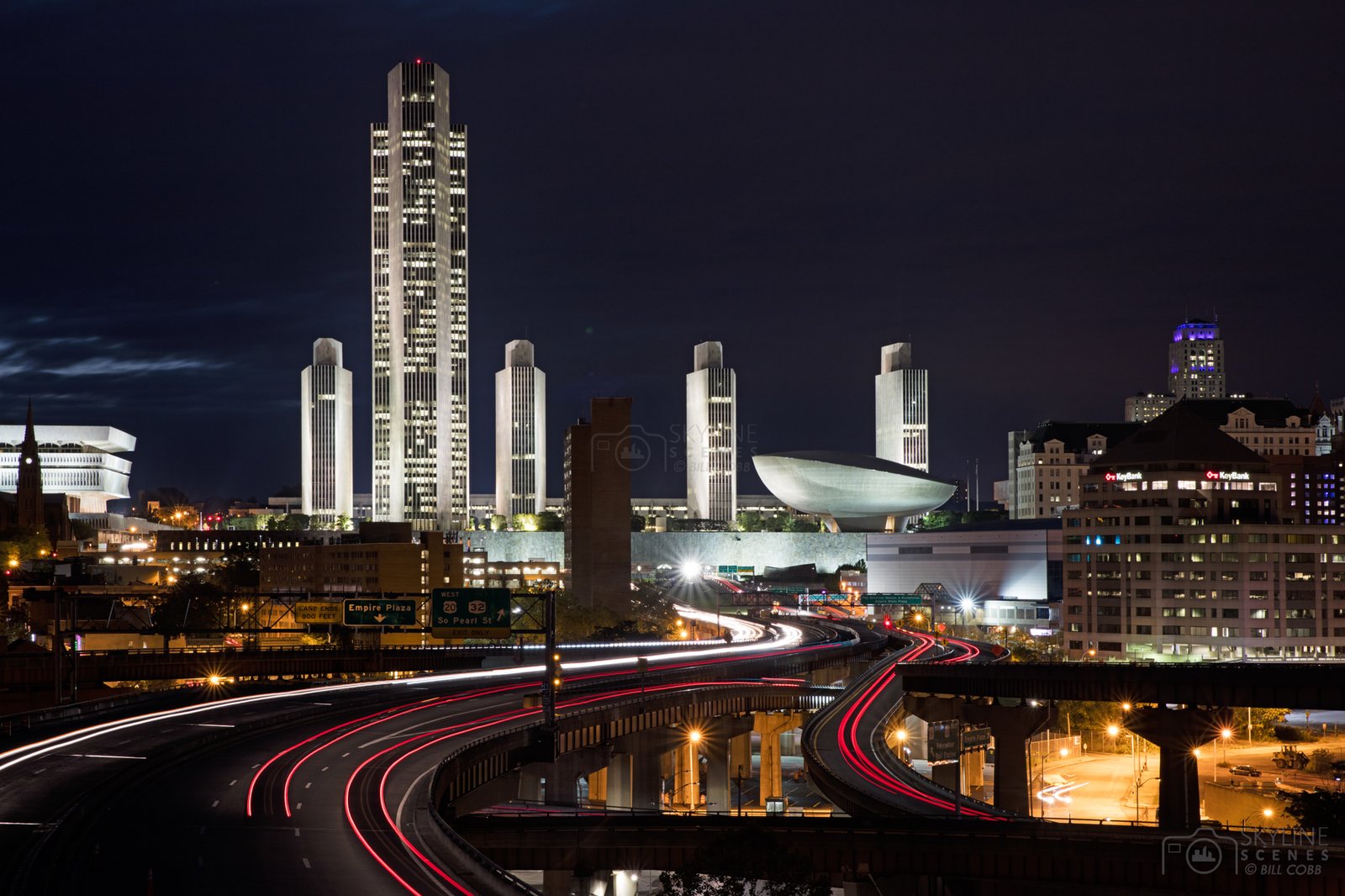
Albany anchors New York's Capital Region at the confluence of the Hudson and Mohawk rivers, and its commercial roofs work through a demanding Northeast climate of heavy snow, sustained winter cold, and relentless freeze-thaw cycling, followed by warm, humid summers and the severe storms that track through the upper Hudson Valley. The metro pairs a dense core of state government and institutional buildings with a growing high-tech and life-sciences base, and the low-slope roofs that carry them span a wide range of ages and complexities. The building stock runs from the Empire State Plaza and the state office core downtown, through the University at Albany and the Albany NanoTech and semiconductor corridor toward the Luther Forest campus, to the industrial and distribution roofs along Interstate 87 and the Port of Albany. For owners here, the winter half of the year defines roof life, and snow, ice, and thaw do damage that leaks reveal only months later.
The Capital Region markets we advise on
Albany's commercial inventory is unusually weighted toward government and institutional property. The Empire State Plaza and the surrounding state complex hold large, architecturally complex roofs with heavy mechanical loads, and the downtown office core adds older institutional and commercial stock. The university and nanotech corridor brings laboratory and cleanroom roofs where mechanical density is high and interior sensitivity to leaks is extreme. The I-87 and port-area industrial belt carries large single-ply and built-up distribution footprints, where snow drifting and drainage failures can quietly compromise the deck across acres. We track each of these as a distinct risk environment, because a cleanroom roof crowded with exhaust and equipment and a wide-open distribution roof accumulate and shed snow on entirely different terms.
What actually drives roof failure in Albany
The failure drivers we plan around here are dominated by winter, though Hudson Valley summers add their own storm load.
- Heavy snow accumulation and drifting that stress structural capacity and drainage, then melt and refreeze into ice dams at eaves, valleys, and low points where backed-up meltwater works under membrane and flashing.
- Aggressive freeze-thaw cycling across a long cold season that opens seams, cracks aged coatings, and drives moisture into any poorly sealed detail.
- Blocked or undersized internal drains and scuppers that cannot clear meltwater during a rapid thaw, turning snowmelt into chronic ponding and interior leaks.
- Summer heat, humidity, and severe convective storms, including hail and straight-line wind, that bruise membranes and lift edges on buildings whose perimeter attachment was never verified.
- Condensation and trapped moisture within assemblies where vapor control was poorly detailed, a recurring problem in a climate that swings from deep freeze to humid summer.
None of these are unusual for the Northeast, but they act slowly and out of sight. A roof that has handled snow reliably for years can develop an ice-dam pattern the winter a drain finally clogs, and by the time meltwater appears on a state-office or cleanroom ceiling the deck may already be wet. Our role is to catch that trajectory early, while the fix is still a maintenance item rather than a mid-winter emergency on a building that cannot tolerate one.
Owner-side condition reporting and capital planning
For an Albany owner or asset manager, the foundational deliverable is an honest, standardized condition report on every roof. We document membrane type and age, seam and attachment condition, flashing and penetration detailing, drainage and scupper performance under thaw conditions, insulation moisture where investigation is warranted, and realistic remaining service life, with defects photographed and located so each year's report is directly comparable to the last. This is part of our New York commercial roof advisory coverage, and because we sit on the owner's side of the table, a roof with serviceable life left gets maintained and monitored rather than replaced because a crew is available. Across a mixed portfolio of institutional, research, and industrial roofs, that discipline turns competing roof ages into a funded, sequenced capital plan rather than a run of winter surprises.
Why an independent advisor protects Albany owners
Every hard winter and every summer storm season in the Capital Region brings a wave of roofing solicitations, and a contractor's free "inspection" is a sales call by another name. An owner with documented condition and a standing maintenance schedule is far better positioned than one fielding storm-driven bids with no baseline of their own. We time inspections to the seasons that matter, scope and competitively bid only the work that genuinely needs doing, and hold contractors to documented condition rather than to their own estimate. That independence sharpens transactions too: when an Albany institutional, research, or industrial asset is bought, sold, or refinanced, a current roof record built to real snow-load and freeze-thaw exposure removes a recurring point of friction and keeps a costly roof from being mispriced.
Albany market coverage
We provide owner-side commercial roof advisory across Albany, New York and the surrounding metro.