
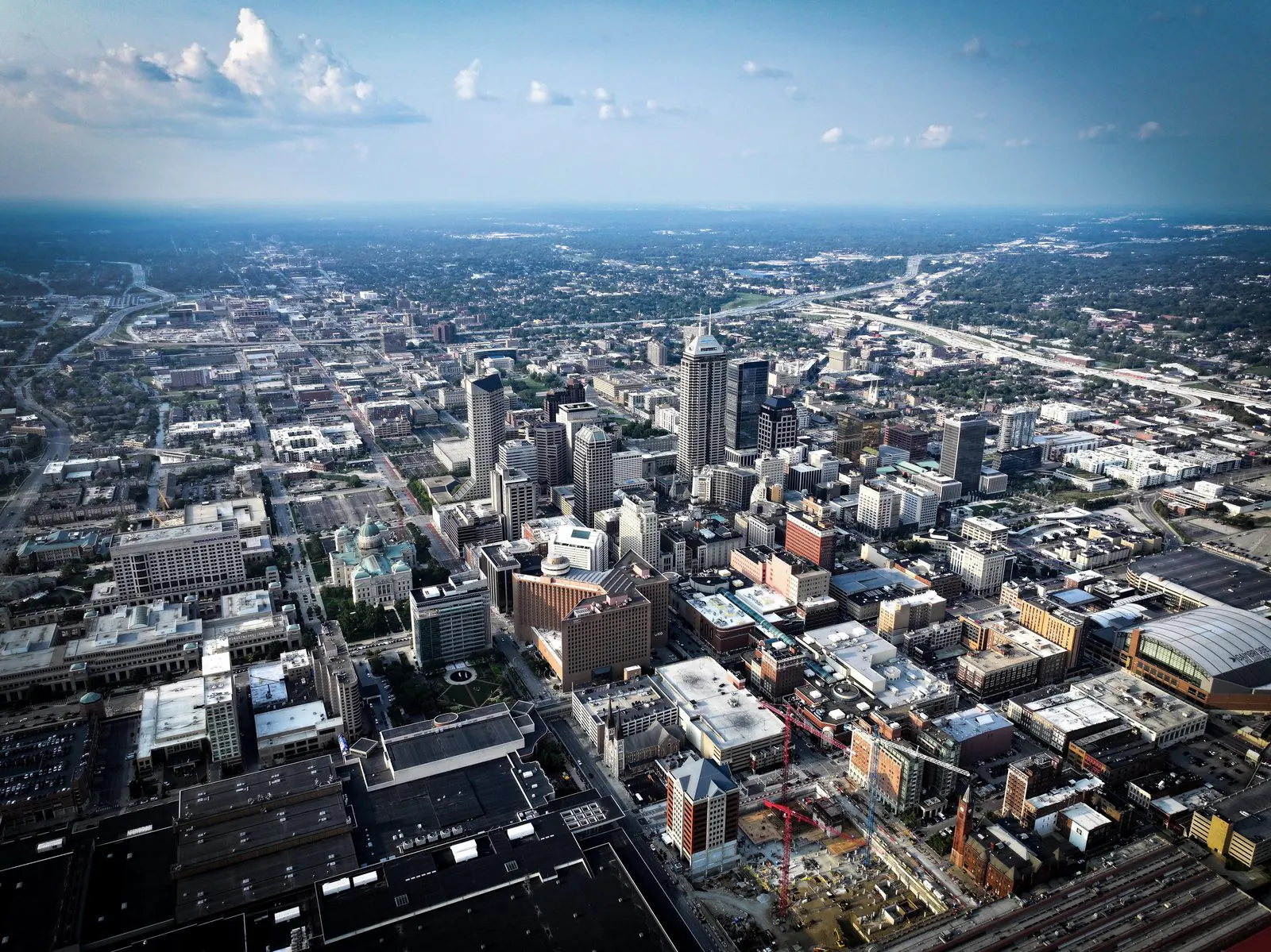
Indianapolis commercial roofing
Indianapolis sits at the crossroads of America's freight network, and the roofs that come with that role face a four-season workload that few Sun Belt metros ever see. Central Indiana runs hot and humid in summer, then swings through a long, hard winter of snow load, ice, and relentless freeze-thaw cycling that opens seams and works fasteners loose, all while spring and summer deliver the hail and straight-line wind of the Ohio Valley storm track. Owners here hold the vast distribution and manufacturing fields that ring the city along the interstate belt, the fulfillment build-out toward Plainfield, Whitestown, and the airport, the older industrial stock on the near-south and east sides, and the office, medical, and life-sciences properties downtown and along the north-side corridors toward Carmel and Fishers. We advise those owners, REITs, and asset managers on documented roof condition, funded capital plans, and vendor-neutral contractor oversight built for the Midwest.
Freeze-thaw is the roof killer here
The single most destructive force on an Indianapolis roof is the freeze-thaw cycle. Central Indiana crosses the freezing line repeatedly through winter, and every cycle drives water into seams, cracks, and detail failures, freezes it, expands it, and pries the assembly a little further apart. A membrane that entered fall with a minor open seam can exit spring with a genuine leak, and the damage is cumulative year over year. Snow and ice load compound it, holding meltwater against the roof, overwhelming drains as it releases, and building ice dams at edges and low points that back water under the membrane.
Summer then reverses the stress. Midwest heat and UV age the membrane and dry out the sealants that winter already worked loose, while Ohio Valley thunderstorms bring hail and damaging wind that bruise the surface and lift edges on any roof whose perimeter attachment was never verified. A roof in this climate is never resting; it is being pulled apart in the cold and baked in the heat on an annual loop.
The owners and buildings we cover
Indianapolis is one of the great distribution markets in the country, and its roof stock reflects it. The newer logistics and manufacturing fields along I-70, I-65, and I-465, and out through the Plainfield and Whitestown submarkets, are large single-ply systems where a small unrepaired detail compounds unseen across acres. The older industrial inventory on the near-south and east sides carries aging built-up and modified bitumen on tighter footprints, often loaded with tenant-added equipment. The downtown office core, the growing life-sciences and medical properties, and the north-side corporate campuses toward Carmel and Fishers add profiles where tenant uptime governs every decision. An owner spread across these cannot manage them to one assumption.
An independent report before you approve a bid
After a spring hail pass, Indianapolis fields a wave of roofing solicitations, most offering a free inspection that concludes with a replacement quote. Because we sit only on the owner's side, our condition report is not written to sell a re-roof. We document membrane type and age, seam and attachment condition, flashing and penetration detailing, drainage performance, insulation moisture where freeze-thaw damage is suspected, and realistic remaining service life, then photograph and locate every defect so this year's report is directly comparable to next year's. That baseline lets an owner file a legitimate storm claim inside the required window, reject a manufactured one, and keep a serviceable roof on a maintenance path through the winter cycle. It is part of our Indiana commercial roof advisory coverage, and it exists so the owner carrying the capital risk decides when it gets spent.
Capital planning and warranty exposure
Indianapolis portfolios typically mix young, high-value distribution roofs with an older core nearing the end of its service life, and the two demand opposite strategies: protect the new ones through disciplined maintenance and warranty compliance, and sequence the old ones so replacements are planned rather than triggered by a February leak. We build multi-year capital forecasts that put every roof on a funded timeline, which matters more in a freeze-thaw climate where a deferred repair reliably becomes a larger one after winter.
Warranty exposure has a distinctly Midwestern shape here. Manufacturer coverage on single-ply systems carries strict conditions, and Indianapolis roofs routinely test them: ice-dam and ponding conditions that exceed warranty limits, snow-removal and rooftop work that damages the membrane and voids coverage on the affected areas, unauthorized tenant penetrations, and hail or wind damage that goes unfiled past the required window. We track warranty terms, expiration dates, and compliance obligations across the portfolio and flag the routine actions that keep coverage intact, so a six- or seven-figure roof is not silently uninsured heading into the next hard winter.
Indianapolis market coverage
We provide owner-side commercial roof advisory across Indianapolis, Indiana and the surrounding metro.