
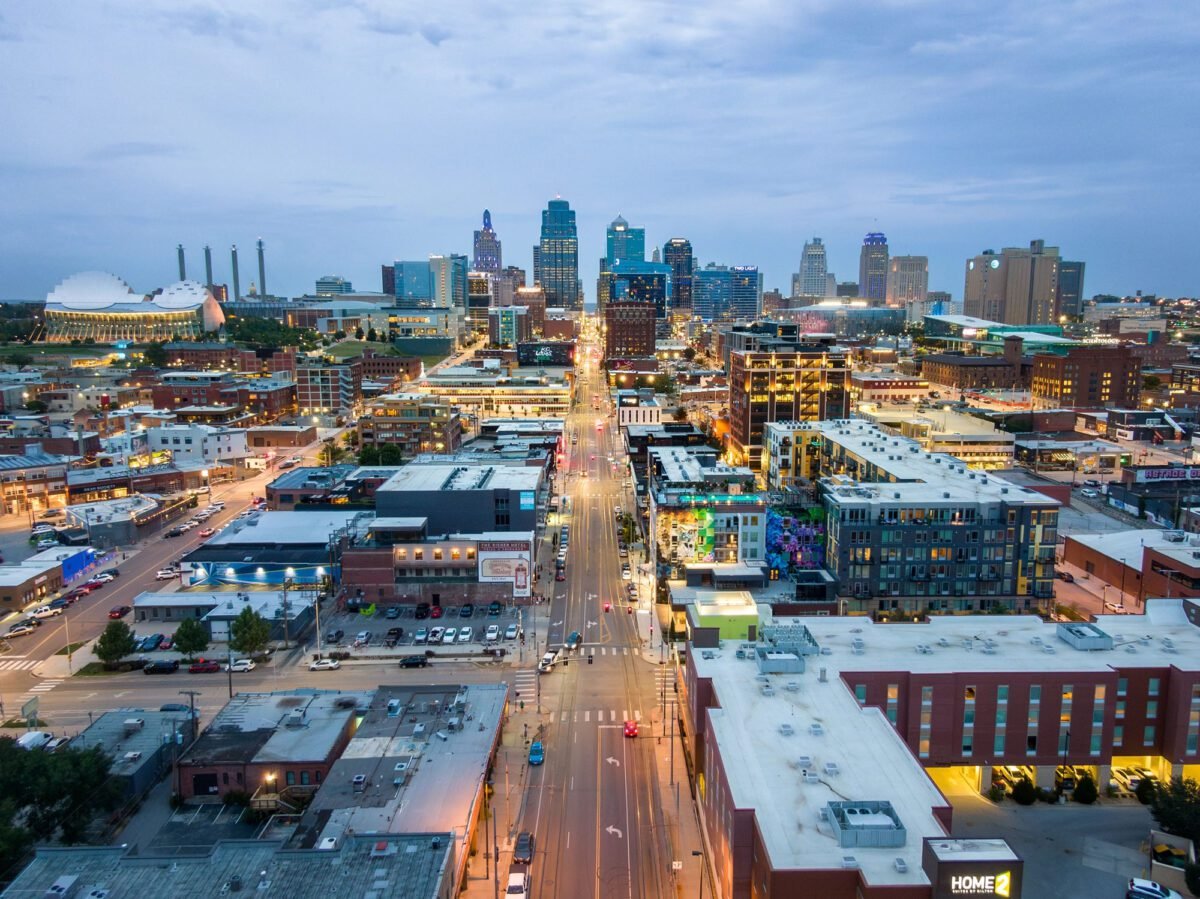
Kansas City commercial roofing
Kansas City is a major inland logistics and rail hub with a commercial roof inventory to match, and it sits in a climate that hits a roof from every direction across the year. The metro rides the northern edge of hail alley and the Plains severe-storm track, absorbing recurring large hail and straight-line wind, then swings through hot, humid summers of heat and UV and long winters of snow load and hard freeze-thaw cycling. Owners here hold the vast distribution and intermodal fields around the Logistics Park and CenterPoint developments, the fulfillment and manufacturing build-out along Interstate 35, I-70, and I-435, the older industrial stock in the West Bottoms and along the rivers, and the office, medical, and institutional properties downtown and across the metro on both sides of the state line. We advise those owners, REITs, and asset managers on documented condition, funded capital plans, and vendor-neutral contractor oversight built for the Plains.
Hail, wind, and the four-season swing
Kansas City's headline hazard is hail. The metro is struck by damaging hail often enough that it shapes every serious roof plan, and each event can bruise a membrane, fracture an aged coating, and quietly shorten a roof's service life without an immediate interior leak. Because storms recur, damage accumulates across seasons, and an owner without documented pre- and post-storm condition cannot separate genuine storm damage from ordinary age when it comes time to file a claim.
Around the hail, the continental climate keeps the roof under constant load. Straight-line winds test perimeter attachment and edge metal, intense summer heat and UV age the membrane, and long winters bring snow load, ice damming, and repeated freeze-thaw cycling that drives water into seams, expands it, and pries the assembly apart. Heavy convective rain then overwhelms any drainage that debris or ponding has already compromised. A roof here is stressed hot, stressed cold, and periodically battered.
The owners and buildings we cover
Kansas City's roof stock is heavily logistics-driven and split across a metro that spans two states. The distribution and intermodal fields around the Logistics Park, CenterPoint, and the I-35 and I-435 corridors are large single-ply systems where a small unrepaired detail compounds unseen across acres and where a hail pass strikes the whole footprint at once. The older industrial inventory in the West Bottoms and along the rivers carries aging built-up and modified bitumen on tighter footprints, and the downtown, medical, and institutional properties add tenant-uptime profiles. An owner holding property on both sides of the state line cannot manage it to a single assumption, and after a storm the response has to be portfolio-wide.
An independent report before you approve a bid
After a Plains hail season, Kansas City fills with roofing solicitations, most offering a free inspection that concludes with a replacement quote, and the pressure to tear off a roof that may still be serviceable is real. Because we sit only on the owner's side, our condition report is not built to sell a re-roof. We document membrane type and age, hail bruising and coating condition, seam and attachment integrity, flashing and penetration detailing, drainage performance, and realistic remaining service life, then photograph and locate every defect so pre-storm and post-storm condition can be compared directly. That baseline lets an owner file a legitimate hail claim inside the required window with real evidence, reject an inflated or manufactured one, and keep a roof with life left on a maintenance path. It is part of our Missouri commercial roof advisory coverage, and it keeps the decision with the owner carrying the risk.
Capital planning and warranty exposure
In a hail market, capital planning is risk planning. We build multi-year forecasts that put every roof on a funded timeline and account for the certainty that storm damage will arrive on an unpredictable schedule, so an owner responds to a hail event from documented condition rather than scrambling. Sequenced replacements and disciplined maintenance keep the portfolio ahead of the weather, and on the young, high-value logistics roofs that dominate this market, that maintenance discipline is where the return is largest.
Warranty and insurance exposure is where Kansas City owners most often lose money. Manufacturer coverage on single-ply systems carries strict conditions, and the Plains climate tests them constantly: storm damage that goes undocumented and unfiled past the required window, ice-dam and ponding conditions beyond warranty limits, snow-removal work that damages the membrane, and unauthorized rooftop penetrations that void coverage on the affected areas. Insurance claims turn on evidence, and an owner without a documented baseline is at the mercy of an adjuster and a contractor. We track warranty terms, expiration dates, and compliance obligations across the portfolio and maintain the condition record that turns the next hailstorm into a claim rather than a crisis.
Kansas City market coverage
We provide owner-side commercial roof advisory across Kansas City, Missouri and the surrounding metro.