
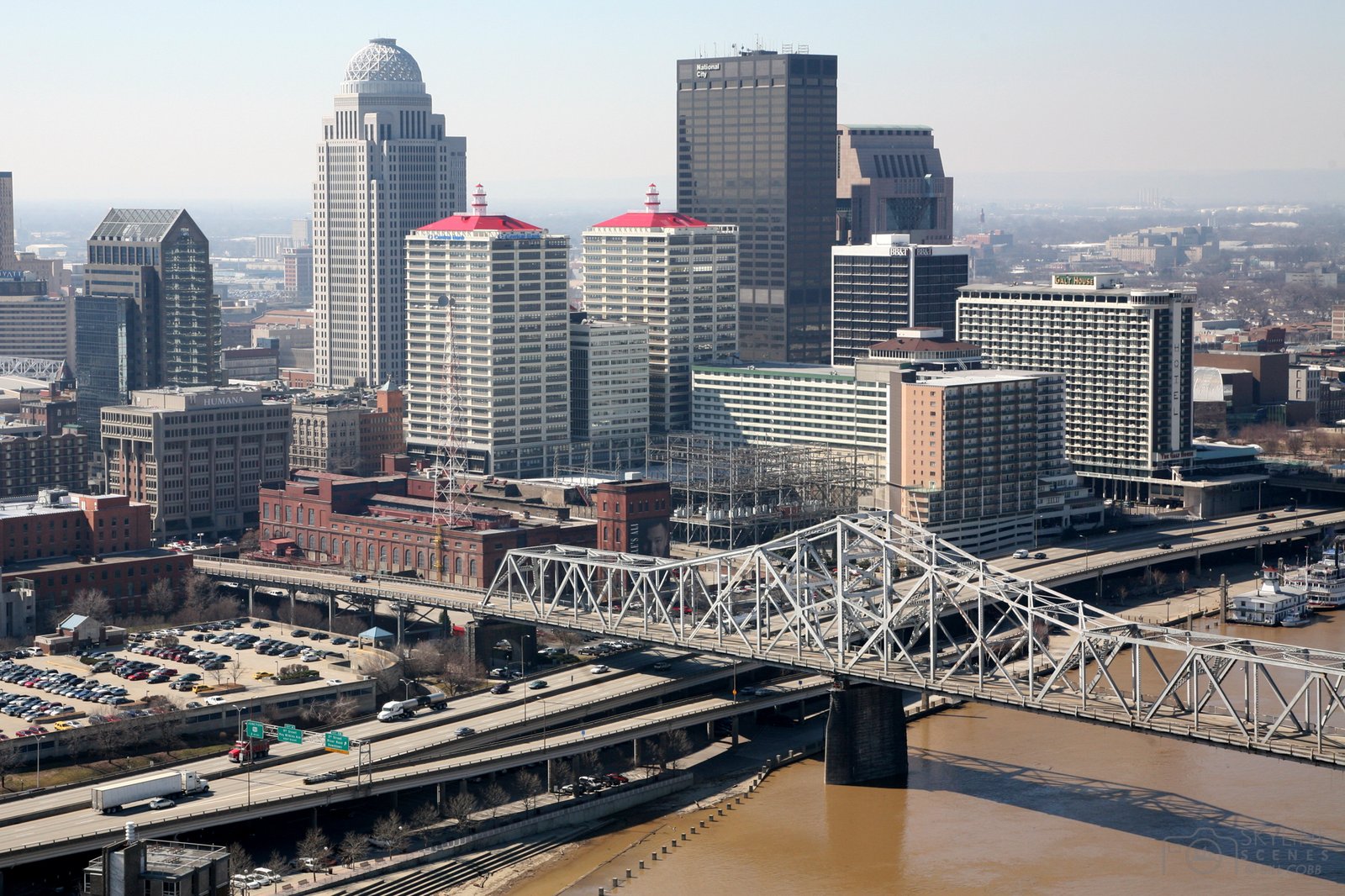
Louisville commercial roofing
Louisville runs on logistics, and its roofs carry the weight of that role. Home to the UPS Worldport global air hub and a dense network of distribution and manufacturing along the Ohio River, the metro holds an enormous inventory of large low-slope roofs, and the Ohio Valley climate gives them no easy season. Summers are hot and heavily humid, aging membranes and driving moisture into assemblies; the region sits squarely in the Ohio Valley storm track, catching hail and damaging straight-line wind and the occasional derecho; and winters cross the freezing line often enough that freeze-thaw cycling reopens every seam the summer stressed. Owners here hold the fulfillment and air-cargo fields around the airport and Worldport, the industrial stock in the Riverport and along Interstate 264 and I-265, the bourbon and manufacturing facilities across the metro, and the downtown and suburban office and medical properties. We advise those owners, REITs, and asset managers on documented condition, funded capital plans, and vendor-neutral contractor oversight.
Humid summers, hard winters, valley storms
Louisville's roofs are worked from two temperature extremes. Long, humid Ohio Valley summers of heat and UV age membranes and dry out sealants, while high ambient moisture and wide day-to-night swings push condensation into the assembly, saturating insulation where vapor control was poorly detailed. Then winter reverses the load: the metro crosses freezing repeatedly, and each freeze-thaw cycle drives water into seams and detail failures, expands it, and pries the roof apart a little more. Snow and ice add load and back meltwater against edges and drains.
The storm season is the sharp edge. The Ohio Valley track delivers hail and straight-line wind that bruise membranes and lift flashing on roofs whose perimeter attachment was never verified, and a derecho can rake edge metal and rooftop equipment across an entire industrial district in one pass. Heavy convective rainfall then finds any drainage that debris or ponding has already compromised.
The owners and buildings we cover
Louisville concentrates air-cargo and distribution roofs to an unusual degree. The fulfillment and logistics fields around the airport, Worldport, and the Riverport are large single-ply systems where a small unrepaired detail compounds unseen across acres and where uptime is measured in shipments. The manufacturing and bourbon-industry facilities across the metro add process-driven roofs with heavy rooftop equipment, and the older industrial and downtown inventory carries aging built-up and modified bitumen on tighter footprints. The suburban office and medical stock adds tenant-uptime profiles. An owner spread across these cannot manage them to a single assumption.
An independent report before you approve a bid
After an Ohio Valley storm season, roofing solicitations arrive in waves, most offering a free inspection that ends in a replacement quote. Because we sit only on the owner's side, our condition report is not built to sell a re-roof. We document membrane type and age, seam and attachment condition, flashing and penetration detailing, drainage performance, insulation moisture where freeze-thaw or humidity damage is suspected, and realistic remaining service life, then photograph and locate every defect so this year's report is directly comparable to next year's. That baseline lets an owner file a legitimate hail or wind claim inside the required window, reject a manufactured one, and keep a serviceable roof on a maintenance path through the winter cycle. It is part of our Kentucky commercial roof advisory coverage, and it keeps the replace-or-maintain decision with the owner carrying the capital risk.
Capital planning and warranty exposure
Louisville portfolios typically pair young, high-value logistics roofs with older industrial and downtown inventory, and the two demand opposite strategies: protect and extend the new ones through disciplined maintenance and warranty compliance, and sequence the old ones so replacements land deliberately rather than as emergencies after a winter leak. We build multi-year capital forecasts that put every roof on a funded timeline, which matters in a freeze-thaw climate where a deferred repair reliably grows over the cold months.
Warranty exposure has a distinctly valley shape here. Manufacturer coverage on single-ply systems carries strict conditions, and Louisville roofs routinely test them: ice-dam and ponding conditions beyond warranty limits, snow-removal and rooftop work that damages the membrane and voids coverage on the affected areas, unauthorized tenant penetrations, and hail or wind damage that goes unfiled past the required window. We track warranty terms, expiration dates, and compliance obligations across the portfolio and flag the routine actions that keep coverage intact, so a six- or seven-figure roof is not silently uninsured heading into the next storm season.
Louisville market coverage
We provide owner-side commercial roof advisory across Louisville, Kentucky and the surrounding metro.