
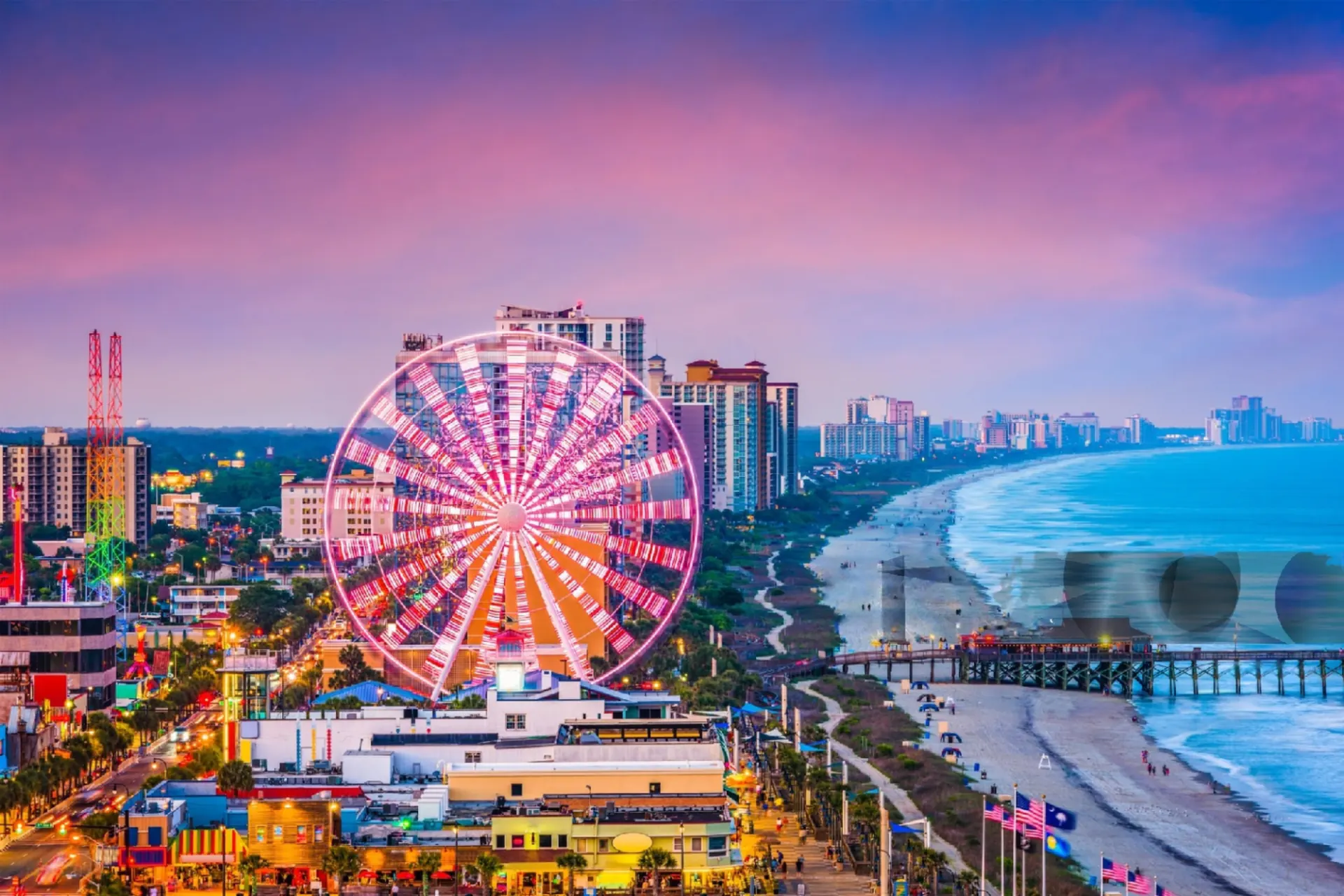
Myrtle Beach commercial roofing
Myrtle Beach's commercial roofs sit directly in the path of Atlantic hurricanes and marinate year-round in corrosive salt air, a combination that punishes low-slope roofing harder than almost anywhere inland. The Grand Strand's economy is built on tourism and coastal development, so the roofs at risk here are hotels and resort towers along Ocean Boulevard and the oceanfront, the retail and entertainment stock at Broadway at the Beach and Barefoot Landing, the restaurants and mixed-use of the Market Common, and the warehouse, hospitality-service, and medical buildings spread inland along Highway 17 and toward Conway. Hurricane-season wind uplift, wind-driven rain, relentless subtropical heat and UV, and salt that corrodes fasteners and edge metal all work on these roofs at once. We advise Myrtle Beach owners, REITs, and asset managers with independent condition reporting and capital planning built for the coast.
What the coast does to a roof
Wind is the acute threat. A landfalling or brushing hurricane or tropical storm drives uplift at parapets, corners, and edge metal, and forces rain horizontally into any detail that is not perfectly sealed. On oceanfront hotels and towers, where perimeter attachment takes the full force of onshore wind, an edge or flashing weakness that was invisible in calm weather becomes the entry point for water that damages guest floors below. Damage is frequently hidden from the ground and shows up only as interior leaks after the storm has passed.
Salt is the chronic one. Constant marine air corrodes fasteners, edge metal, drains, and rooftop equipment far faster than inland exposure, quietly weakening the very components that hold a roof down against the next storm. Layer on months of intense heat and UV that bake membranes and shrink adhesives, and a Grand Strand roof ages on a compressed timeline. An owner who documents condition before hurricane season is in a completely different position from one trying to prove storm damage afterward.
The owners and buildings we serve here
Myrtle Beach's stock is dominated by hospitality: oceanfront hotels and resort condominiums where a roof failure directly threatens revenue-generating rooms, alongside the retail, entertainment, and restaurant properties that serve the tourist economy and the warehouse and medical buildings inland. Hospitality roofs demand planning around continuous occupancy and peak season, while inland distribution and service buildings run wider, more utilitarian footprints. Each ages differently under the same coastal load, so we track each asset as its own risk profile. This work is part of our South Carolina commercial roof advisory coverage, and the coastal exposure here shapes it heavily.
Owner-side reporting and capital planning
The foundational deliverable is a standardized, honest condition report for every roof you hold. We document membrane type and age, seam and attachment condition, flashing and penetration detailing, drainage performance, corrosion of fasteners and edge metal, and trapped moisture where investigation is warranted, then locate and photograph defects so this year's report is directly comparable to next year's. Because we sit on the owner's side of the table, that report is built to protect capital rather than to sell a re-roof.
From that baseline we build a multi-year capital forecast that puts every Grand Strand roof on a funded timeline and sequences replacements deliberately rather than as post-storm emergencies. We track warranty terms and the wind, ponding, storm-documentation, and unauthorized-rooftop-work conditions that quietly void coverage on the coast. After a named storm passes over a portfolio, we inspect, scope, and competitively bid the work that genuinely needs doing, and hold contractors to the documented condition rather than to their own estimate, which matters most in a market that draws a wave of storm-chasing solicitations after every hurricane.
Myrtle Beach market coverage
We provide owner-side commercial roof advisory across Myrtle Beach, South Carolina and the surrounding metro.