
New Mexico statewide
New Mexico asks a great deal of a commercial roof. High-altitude sun, a defined summer monsoon, recurring hail along the Rio Grande corridor, and a daily temperature swing that can exceed forty degrees all work against the membranes, coatings, and flashings that keep a building dry. We advise building owners, REITs, and asset managers on the roofs they hold across the state, from single assets in Albuquerque to portfolios spread between the Sandias and the southern border. Our role is owner-side: we inspect, document, plan, and oversee the work, but we are not the crew on the roof and we carry no incentive to sell you a tear-off you do not need.
Commercial roofing markets we serve in New Mexico
Explore owner-side commercial roof advisory in these New Mexico cities:
The markets we cover
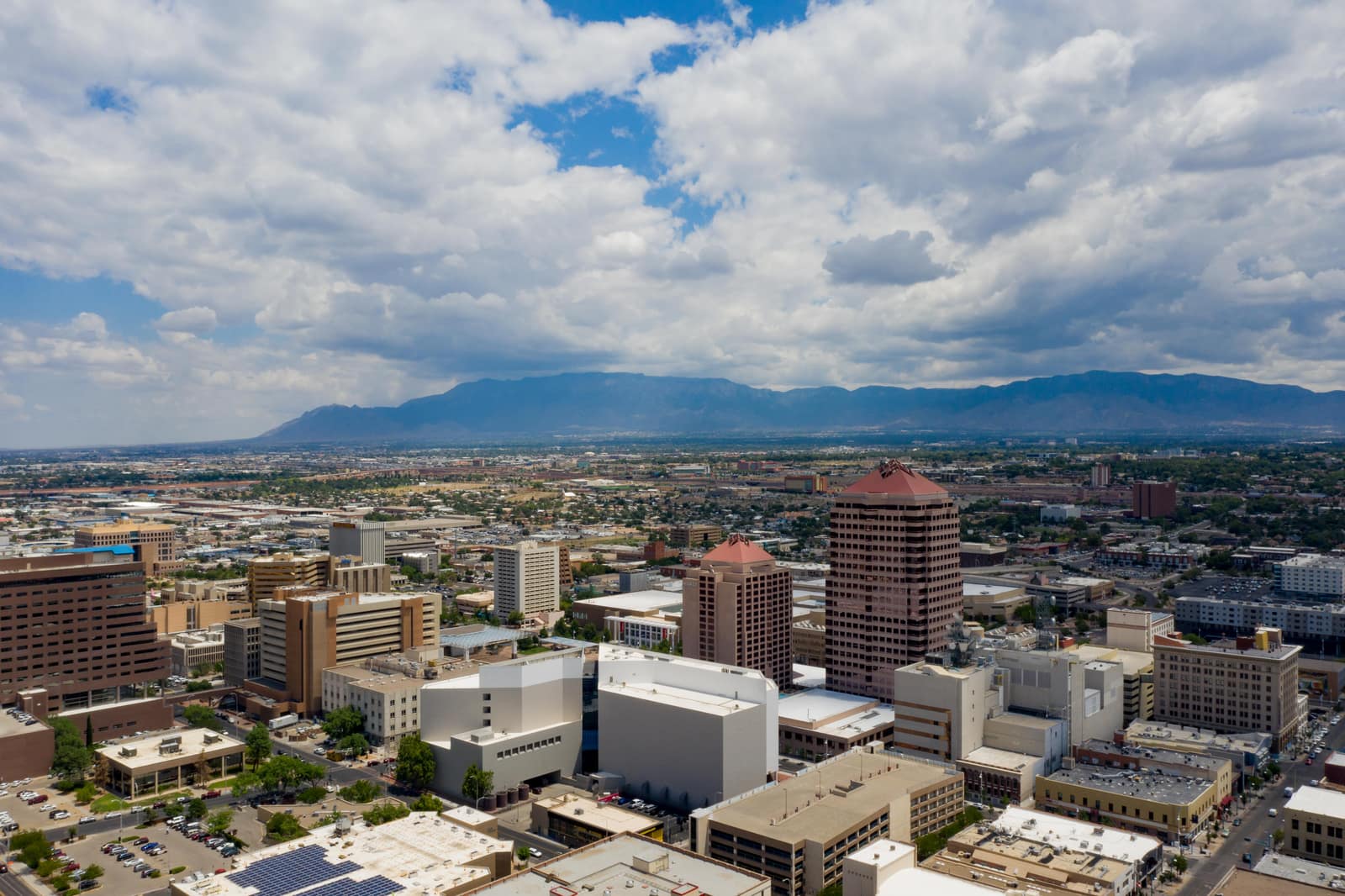
Albuquerque anchors the state's commercial roof stock. Bernalillo County holds the largest concentration of manufacturing and industrial space in New Mexico, and the I-25 and I-40 interchange has drawn distribution, light manufacturing, and federal tenants, including the research and aerospace footprint tied to Sandia National Laboratories and Kirtland Air Force Base. Rio Rancho carries Intel's large semiconductor presence and the surrounding supplier base. Down the valley, Los Lunas now hosts Meta's multi-building data center campus, and the broad-roof, high-value, mission-critical buildings that come with that kind of development.
The rest of the state spreads the work out. Santa Fe combines state government, healthcare, and hospitality. Las Cruces pairs New Mexico State University with agriculture and the defense and aerospace activity around White Sands, while Santa Teresa, on the Doña Ana County border with Texas, has become a fast-growing industrial and cross-border logistics hub. Farmington and the Four Corners carry energy and resource buildings, and the eastern plains around Roswell, Hobbs, and Lea County add agricultural, oilfield, and a growing slate of large-format data and energy projects. Each of these submarkets has its own roof types and its own pace of failure.
The building stock and the systems on it
New Mexico's commercial roofs are not uniform, and the right oversight depends on knowing what is actually on the building. The large industrial, distribution, and data-center buildings along the Albuquerque corridor and in Los Lunas and Santa Teresa are predominantly low-slope, often with single-ply membranes, on roof areas measured in hundreds of thousands of square feet. On those buildings, reflective single-ply and reflective coatings are common because they push back against heat gain and the relentless high-desert UV, and their performance hinges on seam integrity and proper drainage across very large planes.
Elsewhere the picture is more mixed. Retail, office, healthcare, and institutional buildings carry a blend of single-ply, modified bitumen, built-up roofs, and, in older or more design-driven Santa Fe and northern New Mexico properties, the flat and low-parapet roofs of the regional vernacular, where canales and internal drains are frequent leak points. We tailor our review to each assembly: a coated built-up roof in Las Cruces, a mechanically attached membrane on a Rio Rancho plant, and a parapeted roof on a Santa Fe building each fail differently and demand different maintenance, and an owner-side plan that ignores those differences will misjudge both risk and timing.
What New Mexico's climate does to a roof
The single most underestimated threat here is ultraviolet exposure. With more than 300 days of sunshine a year and the thin atmosphere of elevations from roughly 3,000 feet on the southern plains to over 7,000 feet in the northern mountains, UV intensity is brutal on organic and bituminous surfaces. Asphalt caps, coatings, and unprotected single-ply embrittle and check far faster than the same products would in a milder climate. We frequently see membranes reaching the end of their service life years ahead of the nameplate warranty term simply because the sun has cooked them.
Layered on top of UV are several mechanical stresses owners need to plan around:
- Thermal cycling: summer surface temperatures well into triple digits followed by overnight lows that drop into the 50s, repeated daily, fatigue seams, laps, fasteners, and metal edge details through constant expansion and contraction.
- Monsoon rainfall: from roughly mid-June through September, sudden high-volume downpours test every drain, scupper, and lap. A roof that performs fine in a light rain can fail in an afternoon cloudburst when drainage is undersized or blocked.
- Hail: the central Rio Grande corridor, including the Albuquerque metro, sits in an active hail belt, and a single severe cell can bruise membranes, fracture coatings, and dent metal in ways that may not leak immediately but shorten the system's life.
- Wind: spring and monsoon gusts that reach 60 mph or more attack edge metal, parapet caps, and any membrane that is not fully and correctly secured.
- Blowing dust and grit: abrasive particulate scours reflective coatings and clogs drains, quietly degrading performance between storms.
Owner-side condition reporting
Most of the trouble we are brought in to untangle was visible long before it became a leak. Our condition assessments give an owner or asset manager an evidence-based picture of every roof in a holding: membrane type and age, the real remaining service life given New Mexico's UV and thermal load, the state of seams, flashings, parapet details, penetrations, and drainage, plus photographs and moisture findings tied to specific roof areas. Where a building has had reflective or restoration coatings applied, we assess whether they are still performing or merely cosmetic.
For a single building this supports a clear repair-or-replace decision. Across a portfolio it produces something more valuable: a ranked view of which assets are sound, which need targeted repair before the next monsoon season, and which are genuinely near end of life. That ranking is what turns a reactive, leak-driven roofing budget into a plan. It also gives an asset manager defensible numbers for acquisition due diligence, dispositions, and lender or insurer conversations, where a roof's true remaining life materially affects value and where a coating that looks fine from the parking lot can be hiding saturated insulation underneath.
Capital planning and warranty exposure
Roofs are among the largest predictable capital items an owner carries, and in New Mexico they often need attention sooner than a national assumption would suggest. We build multi-year capital forecasts that sequence replacements and major repairs by urgency and by the realities of the local climate calendar, so spending can be staged across budget cycles and the highest-risk roofs are addressed before peak monsoon and hail exposure rather than after a failure. Because the spring-and-fall working window between hard freezes and monsoon storms is genuinely short in much of the state, we also help owners plan the timing of the work itself, so a needed re-cover or coating is not left stranded into a season when it cannot be installed correctly.
Warranty management is the other place owners quietly lose money. Manufacturer and contractor warranties carry maintenance and inspection obligations that, if missed, can void coverage precisely when it matters. We help owners track those obligations across a portfolio, keep documentation in order, and make sure repairs and rooftop alterations are performed in ways that preserve coverage rather than forfeit it. For a building owner or asset manager holding roofs across New Mexico, that combination of independent condition reporting, climate-aware capital planning, and active warranty oversight is what keeps the roof from becoming the surprise line item it so often is.