
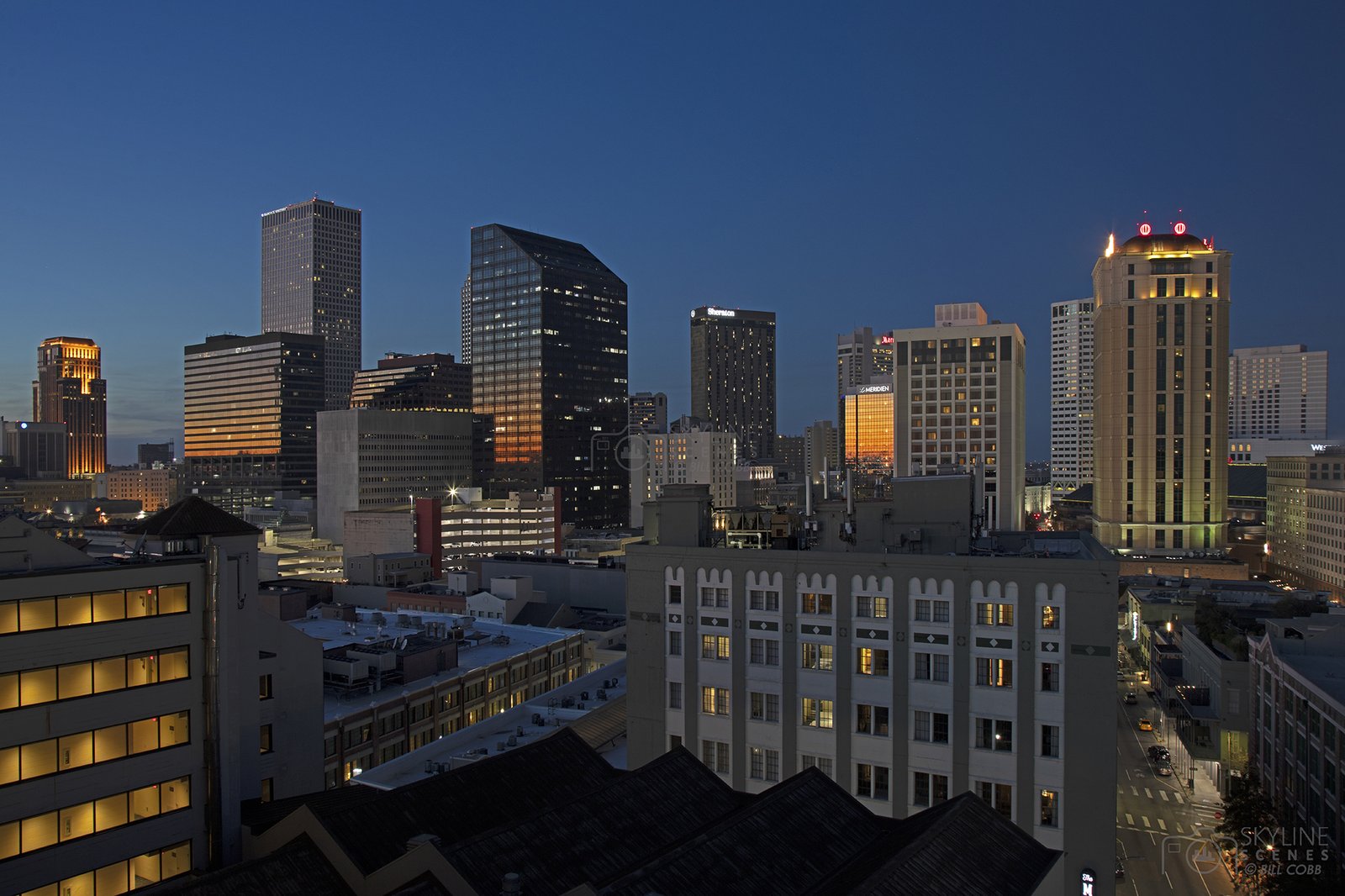
New Orleans commercial roofing
No American metro tests a commercial roof the way New Orleans does. The city sits low and wet on the Gulf, directly in the path of major hurricanes, and its roofs carry a workload of extreme heat and near-constant humidity punctuated by the most severe wind and rain events in the country. Gulf Coast summers are relentlessly hot and saturated, aging membranes and driving moisture into every assembly, while hurricane season brings the ever-present threat of catastrophic wind uplift, wind-driven rain, and the storm surge and flooding that define life below sea level. Owners here hold the port and industrial roofs along the Mississippi River and the Port of New Orleans, the medical and institutional stock around the downtown medical corridor and Tulane and LSU facilities, the hospitality and mixed-use inventory of the CBD and the wider metro, and the distribution growth toward Kenner, Elmwood, and the interstate corridors. We advise those owners, REITs, and asset managers on documented condition, funded capital plans, and vendor-neutral contractor oversight built for the Gulf.
Hurricanes, humidity, and life below sea level
The defining hazard is wind. When a hurricane or tropical system reaches New Orleans, the wind uplift on a low-slope roof is the difference between a building that stays dry and one that loses its membrane entirely, and edge metal, parapets, and rooftop equipment that were never properly attached become the first points of catastrophic failure. Wind-driven rain then exploits any breach the moment it opens, and in a city this low, a compromised roof combines with flooding and surge to produce losses far beyond the roof itself.
Between storms, the Gulf climate never lets up. Extreme, sustained heat and UV age membranes and coatings, while the near-total humidity drives constant condensation into assemblies and saturates insulation where vapor control was poorly detailed, leaving roofs vulnerable to mold and rot that inland climates rarely see. Salt-laden coastal air corrodes fasteners, edge metal, and rooftop equipment faster than owners moving here expect, and the heavy subtropical rainfall overwhelms drainage that debris and ponding have already compromised.
The owners and buildings we cover
New Orleans concentrates port, medical, and hospitality roofs in a uniquely exposed setting. The port and industrial fields along the river carry large roofs in a salt and surge environment, and the downtown medical corridor and university facilities carry roofs where interior environmental control and uptime are non-negotiable and a hurricane breach is a catastrophe. The CBD hospitality and mixed-use stock carries older, complex roofs loaded with equipment, and the newer distribution inventory toward Kenner and Elmwood adds single-ply fields. An owner spread across these profiles cannot manage them to a single assumption, and every one of them shares an existential dependence on wind performance.
An independent report before you approve a bid
After every named storm, the New Orleans market fills with roofing solicitations, most offering a free inspection that concludes with a replacement quote, and in the chaos following a hurricane the pressure and opportunity for inflated work are enormous. Because we sit only on the owner's side, our condition report is not built to sell a re-roof. We document membrane type and age, wind-uplift and edge-attachment condition, seam integrity, flashing and penetration detailing, drainage performance, insulation moisture, and realistic remaining service life, then photograph and locate every defect so pre-storm and post-storm condition can be compared directly. That baseline is decisive in a hurricane market: it lets an owner file a legitimate wind claim with real evidence, reject an inflated one, and prioritize genuine post-storm repairs over opportunistic replacement. It is part of our Louisiana commercial roof advisory coverage, and it keeps the decision with the owner carrying the capital risk.
Capital planning and warranty exposure
In a hurricane-exposed metro, capital planning centers on wind resilience and recovery readiness. We build multi-year forecasts that put every roof on a funded timeline and prioritize edge-attachment upgrades, equipment securement, and membrane condition on the assets most exposed to catastrophic loss, so an owner enters each season prepared rather than hoping. Disciplined maintenance also matters more here than almost anywhere, because the humidity and salt that never stop working will retire a neglected roof early even in a quiet storm year.
Warranty and insurance exposure is at its most severe in New Orleans. Manufacturer coverage on single-ply systems sets strict wind, ponding, and maintenance conditions, and Gulf roofs test all of them: hurricane damage that must be documented and filed within tight windows, ponding beyond warranty limits during heavy subtropical rains, salt corrosion and humidity damage that maintenance records must show were addressed, and unauthorized rooftop work that voids coverage on the affected areas. Insurance claims after a hurricane turn entirely on evidence and timing. We track warranty terms, expiration dates, and compliance obligations across the portfolio and maintain the documented condition record that determines whether the next storm becomes a covered claim or an uninsured loss.
New Orleans market coverage
We provide owner-side commercial roof advisory across New Orleans, Louisiana and the surrounding metro.