
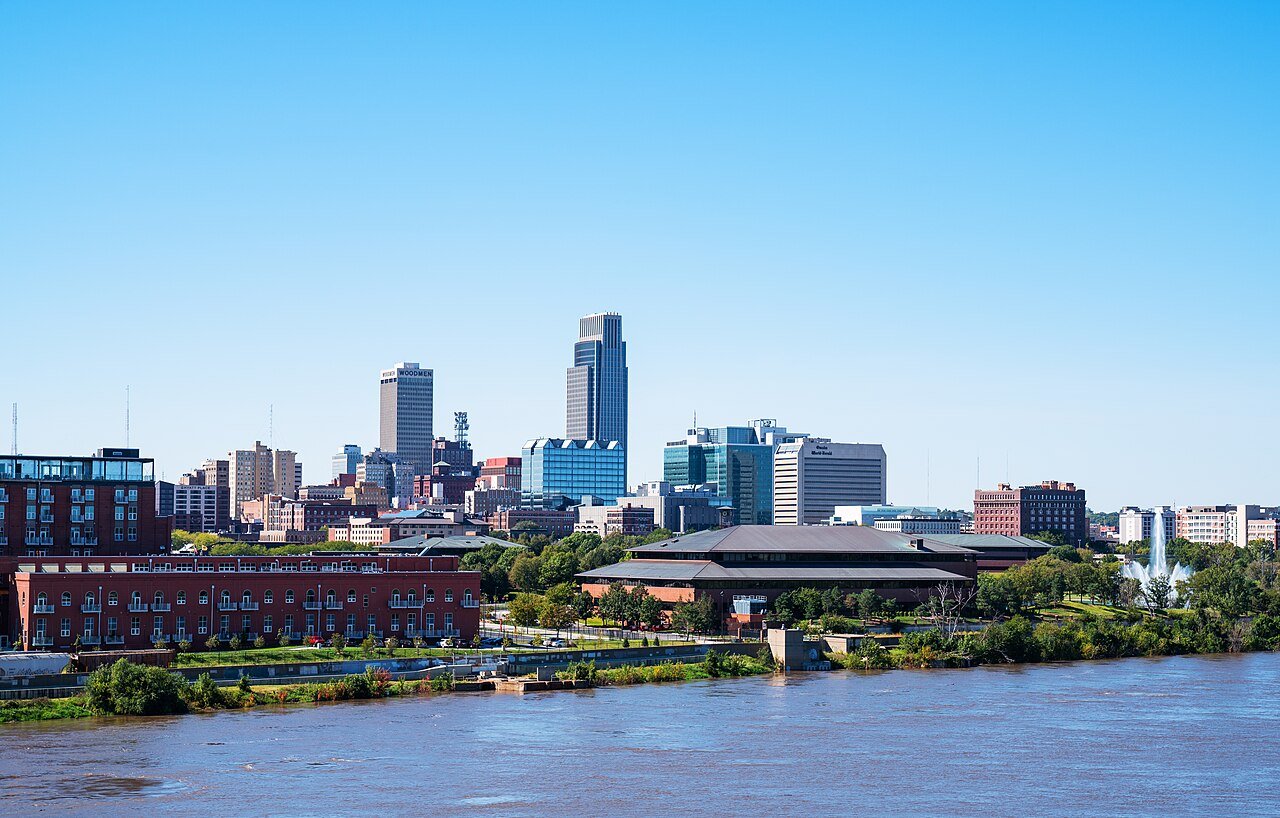
Omaha commercial roofing
Omaha sits squarely in hail country, and for a commercial roof owner that is the fact that shapes everything else. The low-slope membranes covering the distribution and manufacturing footprints of the I-80 and I-680 corridors, the office towers and insurance and financial campuses downtown and in Aksarben and along West Dodge, the medical buildings around UNMC, and the sprawling warehouse stock in Millard, La Vista, and Council Bluffs across the river all face a Great Plains storm season that reliably brings large hail, powerful straight-line wind, and the occasional tornado or derecho. Add a genuine continental swing — humid, storm-prone summers and hard, snowy winters with deep freeze-thaw cycling — and Omaha roofs age through extremes rather than a steady climate. We advise building owners, REITs, and asset managers on documented condition, capital planning, and contractor oversight built for that reality.
Hail, wind, and the freeze-thaw winter
Hail is the defining hazard here, and its damage is often invisible from the ground. Impacts bruise and fracture membranes, split aged coatings, and crack the surfacing of built-up and modified-bitumen roofs, and much of that damage does not leak immediately — it quietly shortens service life and shows up as failure a season or two later. Straight-line winds and the region's periodic derechos lift edges, parapets, and any perimeter attachment that was never verified, and can peel back membrane on buildings whose flashing had already been weakened by hail. Then winter brings its own work: snow, ice, and repeated freeze-thaw drive meltwater into any seam the storm season opened and back it up behind ice at drains and cold edges.
The practical consequence for an owner is that every significant hail or wind event is a decision point, not a non-event. Damage has to be documented and, where warranties apply, filed within the required window after the storm, or the owner absorbs a cost the manufacturer or insurer would otherwise have carried. A roof inspected only when it finally leaks has already passed the point where that filing was possible.
The buildings and owners we work with
Omaha's commercial base blends a heavy logistics and manufacturing presence with an unusually deep bench of corporate, insurance, and financial headquarters and a large medical and higher-education sector. A newer distribution roof of several hundred thousand square feet is mostly about protecting an existing investment through disciplined maintenance and post-storm documentation; older office, retail, and industrial roofs are about sequencing replacements before hail forces the timeline. We track these as distinct risk profiles for owners holding several buildings across the metro and into western Iowa as part of our Nebraska commercial roof advisory coverage, rather than treating Omaha as one roof.
Owner-side reporting and capital planning
The foundational deliverable is a standardized condition report for every roof an owner holds. We document membrane type and age, seam and flashing condition, hail and wind damage with photographs and locations, drainage performance, and realistic remaining service life, so reports are directly comparable year over year and after each storm. Because we sit on the owner's side of the table, our reporting is not built to sell a re-roof; a hail-bruised roof with serviceable life left should be documented and monitored, not torn off because a storm-chasing crew is in town.
From that baseline we build multi-year capital forecasts that put every roof on a funded timeline, and we track warranty terms and the storm-documentation deadlines that owners most often miss. When a Great Plains hail season sends a wave of solicitations across Omaha, an owner with documented condition data negotiates from a defensible baseline instead of a contractor's estimate, and when an asset is bought, sold, or refinanced, a current roof record removes a recurring point of friction from due diligence.
Omaha market coverage
We provide owner-side commercial roof advisory across Omaha, Nebraska and the surrounding metro.