
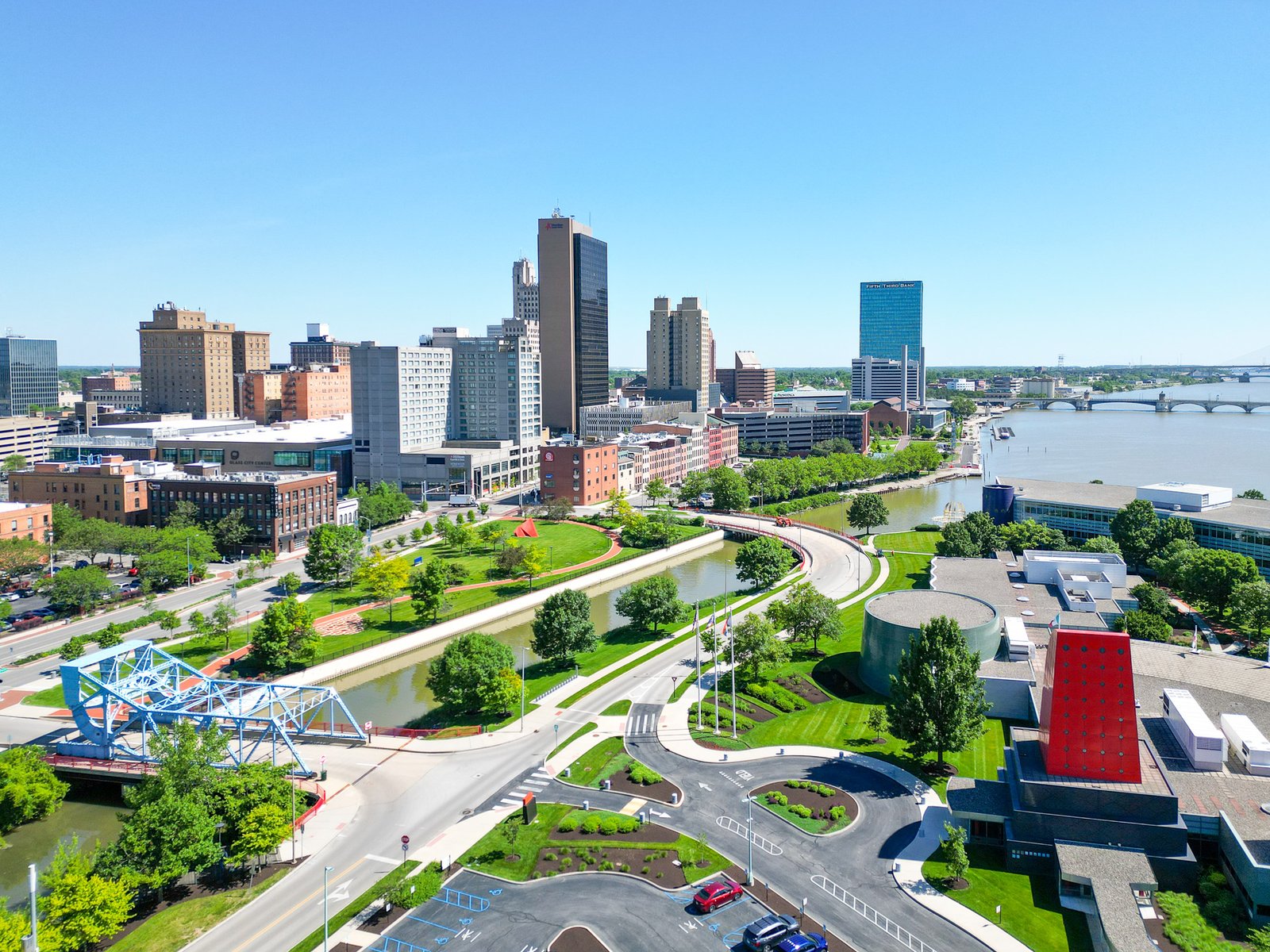
Toledo commercial roofing
Toledo sits at the western end of Lake Erie, and its commercial roofs face a Great Lakes climate that is genuinely hard on low-slope assemblies. Winters are cold and snowy, with lake-effect snow off Erie adding load and moisture, and the season delivers relentless freeze-thaw cycling that pries at any seam or flashing water reaches. Summers turn hot and humid with strong thunderstorms and a real risk of hail and damaging wind. The lake keeps humidity high year-round, which drives condensation and trapped moisture inside roof assemblies. For owners holding the manufacturing and automotive-supplier plants that define the regional economy, the glass and industrial heritage buildings, and the warehouse and distribution stock along the I-75 and I-80/90 corridors and near the Port of Toledo, that four-season punishment ages roofs unevenly and expensively.
Northwest Ohio building stock and what it needs
Toledo's commercial inventory is heavily industrial. Manufacturing and automotive-supplier plants carry large roofs with heavy rooftop equipment, process exhaust, and demanding service conditions, and the region's glass and metals heritage adds older industrial buildings whose roofs have been patched and modified across decades. Warehouse and distribution buildings along the interstate corridors and near the port bring large single-ply footprints, and downtown Toledo and the Warehouse District add office and institutional roofs. An owner holding across these categories faces a portfolio where a new distribution roof and a decades-old manufacturing roof require opposite strategies, all under the same Great Lakes climate.
The industrial footprints drive the economics. On a manufacturing or distribution building covering hundreds of thousands of square feet, a small unaddressed defect quietly compounds across acres of membrane before anyone inside notices, and a forced replacement can dominate a year's capital budget. Heavy rooftop equipment on industrial buildings adds penetrations and traffic that wear a roof's details faster than a quiet warehouse.
What actually drives roof failure here
Toledo's dominant failure driver is freeze-thaw combined with lake moisture. Water that reaches a seam or flashing during a winter thaw refreezes and expands, widening the opening cycle after cycle until a minor defect becomes a chronic leak. Snow and lake-effect accumulation stress structure and drainage, and ice damming backs water under edges. The lake's persistent humidity drives condensation within the assembly, and trapped moisture, common where insulation has taken on water, freezes and thaws inside the roof and destroys insulation value and deck out of sight. Summer then adds heat, UV, and hail from the thunderstorm season that bruises membranes and fractures aged coatings.
Because these mechanisms act slowly and out of sight, the trajectory matters more than any single inspection. Creeping seam failure and hidden wet insulation stay quiet until the deck is compromised or a tenant reports damage, and by then the cheap repair window has closed. Our role is to catch the trend early, before winter turns it into a replacement, a discipline we apply across our Ohio commercial roof advisory coverage.
Owner-side reporting and capital planning
For an owner or asset manager holding northwest Ohio industrial, the foundational deliverable is a standardized, honest condition report for every roof in the portfolio. We document membrane type and age, seam and attachment condition, flashing and penetration detailing, drainage performance, and insulation moisture where investigation is warranted, with attention to the freeze-thaw, snow-load, and condensation vulnerabilities a Great Lakes winter exposes. We photograph and locate every defect so this year's report compares directly to next year's, letting an owner watch a roof decline rather than learn one day that it has failed.
Because we sit on the owner's side of the table, our reporting is not written to sell a re-roof. A roof with serviceable life should be maintained and monitored, not replaced because a crew is available. Across a Toledo portfolio of mixed ages and types, that distinction separates a defensible multi-year capital plan from a reactive one, and over a hold period it is measured in real money.
Why an independent advisor protects owners here
Warranty exposure is where Toledo owners quietly lose the most. Manufacturer warranties on single-ply systems carry strict conditions, and this market puts them at risk: unauthorized rooftop equipment and process penetrations that void coverage, ponding and drainage conditions that exceed warranty limits during snowmelt and heavy rain, storm and hail damage that goes undocumented and unfiled within the required window, and missing maintenance records the manufacturer demands before paying a claim. We track warranty terms, expiration dates, and compliance obligations across the portfolio and flag the routine actions that keep coverage intact. When work genuinely needs doing, we scope it, competitively bid it, and hold the contractor to the documented condition rather than to their own estimate, so a high-value industrial or distribution asset stays understood, budgeted, and protected by the people who own the risk.
Toledo market coverage
We provide owner-side commercial roof advisory across Toledo, Ohio and the surrounding metro.