Mission Critical
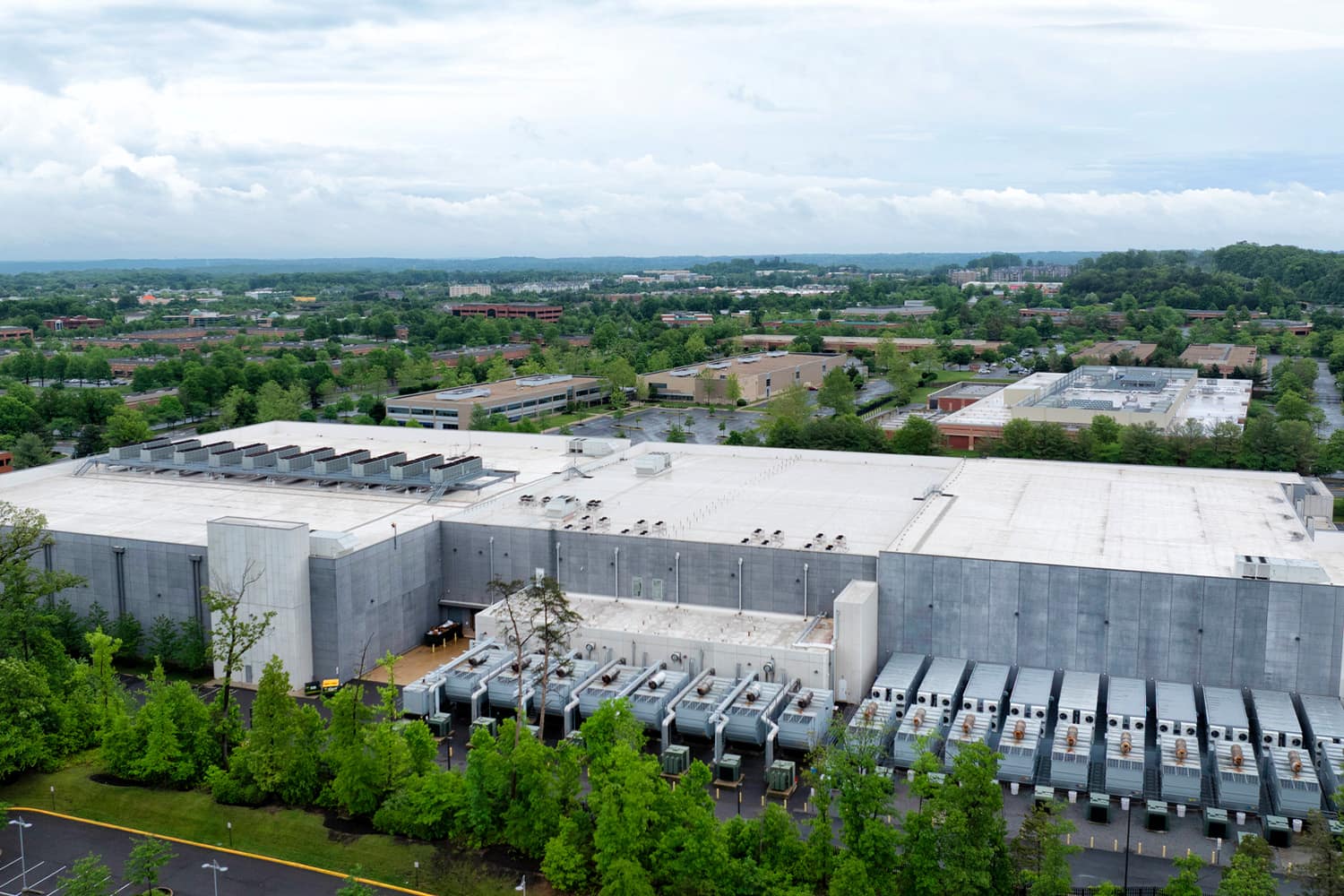
A data center roof protects assets that cannot get wet and cannot go offline. A single drip onto a switchgear lineup or a row of racks is not a maintenance event; it is an outage, an insurance claim, and a breach of the uptime commitments the facility was built to keep. We advise data center owners and operators on roofs where the tolerance for water intrusion is effectively zero, and where the cost of a roof failure is measured against the value of what runs underneath it rather than against the price of a repair. We install nothing, so every recommendation is driven by uptime and serviceability instead of a product to sell.
Zero Leak Tolerance Inverts the Maintenance Logic
Most building owners can absorb a minor leak while they schedule a repair around it. A data center cannot. The consequence of failure is so asymmetric, an outage and a possible cascade of liability against the modest savings of a deferred repair, that the entire maintenance philosophy inverts. The question is never whether a roof can run a little longer to save capital this cycle; it is whether any residual risk can be tolerated above critical white space at all.
That inversion is the single most important thing an owner-side advisor brings to a critical facility. In a conventional portfolio, deferring marginal roof work is often the financially correct call. In a data center, the same deferral is a bet against an event whose cost dwarfs the entire roof. We make that asymmetry explicit in the capital conversation, so the decision to retire a risk is weighed against the real downside rather than against the line item alone.
We help operators quantify that risk roof zone by roof zone, mapping condition directly onto what sits below. Membrane over a loading dock, membrane over electrical rooms, and membrane over a live data hall are three different risk profiles, and the capital response should reflect those differences rather than treating the whole roof as one undifferentiated surface measured only by its average age.
Detection Has to Lead Failure
On a zero-tolerance roof, finding water after it appears inside is already too late. Detection must run ahead of failure. Infrared moisture surveys and core verification let us find wet insulation while it is still trapped in the assembly, before it tracks laterally to a penetration and finds its way above live equipment. We recommend an inspection and survey cadence far tighter than the typical commercial schedule, because on these buildings the entire point is to retire risk on the owner's timeline, not to discover it during a storm.
Penetration discipline matters as much as the field of the roof. Data centers are dense with rooftop cooling units, generators, fuel lines, conduit, and increasingly evaporative and liquid-cooling infrastructure, and every one of those is a potential entry point. Most water intrusion on these buildings originates at curbs, flashings, and details rather than in open membrane, so that is where our assessment concentrates its attention and where the documentation has to be most exact.
- Risk-mapped assessments tying each roof zone to the criticality of the space beneath it
- Infrared and core surveys on a tightened cadence to catch trapped moisture early
- Penetration and curb audits around cooling units, generators, and conduit, where most leaks begin
- Warranty documentation review so rooftop trade work does not silently void coverage
- Capital forecasting that retires roof risk ahead of failure, not after it
Working Over Live, Energized Space
Roof work on a data center happens directly above operating, energized, irreplaceable equipment, and that fact governs everything about how the work is scoped and overseen. How penetrations are flashed, how hot work is controlled or eliminated, how debris and water are kept out of the assembly during construction, and how any tie-in is sequenced around critical operations all carry consequences that simply do not exist on an ordinary commercial roof.
We build the owner's scope and oversight so the act of maintaining the roof never becomes the cause of the outage it was meant to prevent. The contractor performs the work; our responsibility is to ensure the scope was written for a live critical facility, that the methods specified respect the equipment below, and that the sequence protects continuity at every step. A roof project that introduces risk to the white space has defeated its own purpose.
Controlling Rooftop Trade Access
Rooftop equipment changes constantly as capacity is added. New cooling units, new conduit runs, new fuel and refrigerant lines, and new penetrations are installed by trades who are not roofers, frequently without coordinating with the roof warranty or the manufacturer's detailing standard. Each uncoordinated penetration is a future leak path and a potential breach of warranty coverage. We help operators put a formal control around rooftop trade access, so the roof is not quietly compromised between scheduled inspections by work that no one tied back to the roofing system.
Warranty Exposure as Live Risk Management
A manufacturer warranty on a critical-facility roof is only as good as the record behind it. Most disputes after a leak turn on whether the assembly was maintained on schedule, whether unauthorized trade work voided coverage, and whether the inspection history exists in a form the manufacturer will accept. On a building where a single claim can run into the value of lost service, that paperwork is not administrative housekeeping; it is risk management with real money behind it.
We treat warranty documentation as a live asset rather than a file that gets opened only after something goes wrong. Coverage terms, inspection cadence, approved-contractor requirements, and every rooftop modification are tracked continuously, so the owner can actually enforce the warranty if it is ever needed instead of discovering at the worst possible moment that a curb installed by a mechanical contractor quietly nullified it months earlier.
- Centralized warranty terms, expiration dates, and approved-contractor conditions per facility
- A change log of every rooftop penetration and modification, tied to who performed it and when
- Inspection records kept in the format the manufacturer requires to honor a claim
Systems, Reflectivity, and Thermal Load
System selection on a critical facility favors proven, serviceable, and well-detailed assemblies. Single-ply membranes such as TPO and PVC with robust flashing details are common choices; fluid-applied systems can make sense where a continuous, monolithic surface and straightforward future repair carry weight. The selection criteria are uptime, serviceability, and the quality of the detailing, not the headline cost of the membrane, because the membrane is the cheapest thing in the building it protects.
Reflectivity also carries real weight here, more than on most building types. A high-albedo roof reduces the cooling load on a facility whose entire economics turn on thermal management, and that reduction compounds across the life of the roof and the energy bill beneath it. Because we install nothing, our recommendation weighs the system's longevity, its serviceability over the asset's life, and its energy profile against the building's actual cooling strategy, rather than steering the owner toward any particular product.
Capital Certainty Across a Portfolio
For owners running portfolios of facilities, the risk is that roof management is uneven from site to site, and the weakest building defines the exposure for the whole platform. We standardize how roofs are assessed, documented, and forecast across every site, so capital planning is consistent and comparable and no single facility becomes the unmanaged weak point. A standardized baseline lets an owner see the entire fleet on the same terms and direct capital to the roof that genuinely needs it first.
The deliverable for a data center owner is certainty: a roof program where risk is known zone by zone, retired deliberately on the owner's schedule, documented in a form that protects the warranty, and never the thing that takes a hall offline. We give operators and owners the evidence, the forecast, and the oversight to keep the most consequential surface on the building from ever becoming the story.