
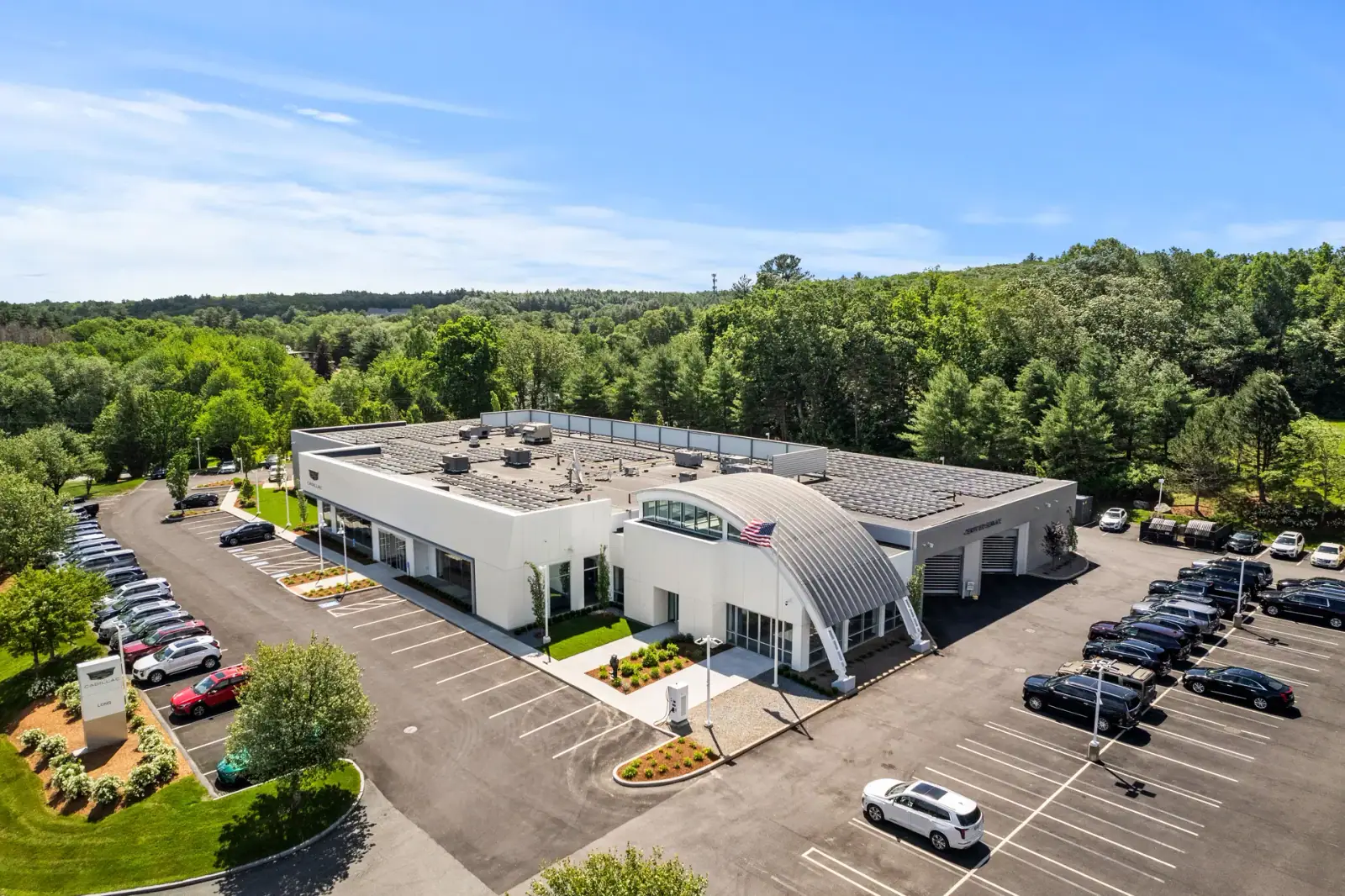
Parking & Decks
A parking structure or plaza deck is a roof that people drive on, walk on, and build on top of, which makes it the most punishing waterproofing assignment an owner faces. Unlike a conventional low-slope roof, the membrane here is buried under traffic coatings, pavers, planters, or vehicle loads, and a leak does not announce itself with a ceiling stain. It announces itself with corroding reinforcing steel and spalling concrete, structural damage that costs orders of magnitude more to repair than the waterproofing that should have prevented it. We advise owners, REITs, and asset managers on protecting these assets from the deck up, without holding the installation contract.
Why Deck Waterproofing Is Different
On a parking or plaza deck, the waterproofing is not the finished surface, it is the hidden layer protecting structural concrete and the rebar inside it. Water that penetrates a failed traffic coating or a breached plaza membrane carries chlorides from road salt and de-icing into the slab, where they drive corrosion of the reinforcing steel. Corroding steel expands, cracks and spalls the concrete around it, and the structure degrades from within while the surface still looks serviceable. By the time the damage is visible, the repair is concrete restoration, not waterproofing.
This is why we push owners to treat the deck membrane as a structural protection system, not a cosmetic surface. The economics are stark: maintaining the waterproofing is a fraction of the cost of the slab repairs, traffic disruption, and liability that follow when it fails. Our advice is matched to catching and correcting these systems before the water reaches the steel.
Systems for Decks That Carry Loads
Deck waterproofing splits broadly between exposed traffic-bearing surfaces and protected plaza assemblies, and the right system depends on what sits on top of the membrane:
- Vehicular and pedestrian traffic coatings, urethane or methyl-methacrylate elastomeric systems applied directly to exposed parking decks, where the wearing surface and the waterproofing are one and must be recoated on a maintenance cycle.
- Hot fluid-applied rubberized asphalt membranes for plaza decks and below-grade-style assemblies, valued for their monolithic, self-healing coverage under overburden.
- Protected membrane (inverted) roof assemblies on plaza decks, where insulation and pavers or ballast sit above the membrane, shielding it from UV, foot traffic, and thermal shock.
- Modified bitumen and sheet membranes in plaza and split-slab configurations where a redundant, proven assembly is warranted.
- Expansion-joint, drain, and penetration detailing, the points where nearly every deck leak actually originates, regardless of the field membrane chosen.
Finding Leaks Buried Under Traffic
Diagnosing a deck leak is harder than diagnosing a roof leak, because water travels laterally between the membrane and the topping before it appears below, and the entry point is rarely above the stain. We help owners get to the real source rather than chasing symptoms with sealant. Our investigative approach combines electronic leak detection and flood testing to locate breaches, inspection of expansion joints and drains where failures concentrate, and assessment of the concrete itself, sounding for delamination and evaluating chloride intrusion, to gauge how far damage has already progressed.
The goal is to separate the two questions owners conflate: where is the membrane failing, and how much structural harm has the water already done. The answers drive very different scopes, and confusing them leads either to wasted coating over a compromised slab or to deferring repairs while corrosion accelerates.
The Owner's Real Exposure
For a building owner or asset manager, a failing deck is a liability on several fronts at once. There is the structural exposure of corroding steel and spalling concrete. There is the life-safety and tenant exposure of falling concrete fragments, water on driving surfaces, and damage to vehicles and units below the plaza. And there is the asset-value exposure, because a structure with deferred deck waterproofing carries that deficiency straight into any appraisal, refinancing, or sale. We help owners see and quantify all three, so deck investment competes for capital on its true terms rather than being deferred as mere maintenance.
Capital Planning and Maintenance Cycles
Traffic coatings and deck membranes are not install-and-forget systems, they live on maintenance cycles, and the owners who treat them that way avoid the expensive failures. We build capital plans that schedule recoats and topcoat renewals before the wearing surface fails into the membrane, prioritize joint and drain rehabilitation where most leaks begin, and pair waterproofing with any needed concrete restoration so the two are sequenced correctly rather than fighting each other. Where a deck can be renewed with a recoat instead of a full membrane replacement, we say so; where the slab has taken on damage that a coating would only hide, we make that visible too. The result is an owner-side program that protects the structure, the budget, and the asset's value over its full life.