
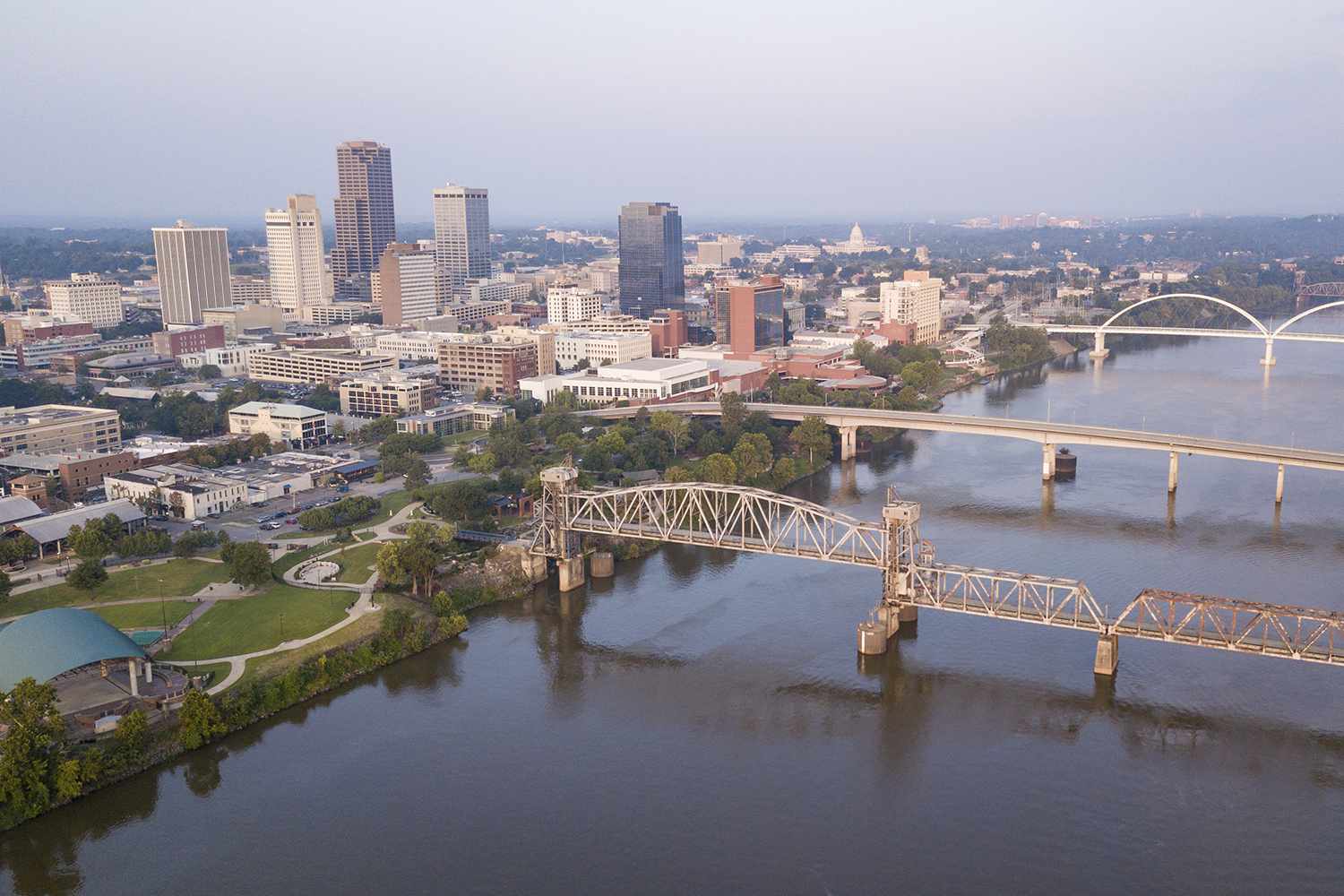
Arkansas statewide
Arkansas sits squarely in the path of spring hail and the kind of straight-line wind and tornado activity that batters low-slope membranes across Little Rock, Fayetteville, and the warehouse corridors along I-40 and I-30. Summers bring heavy heat and humidity that punish single-ply and bake bitumen, while winter delivers occasional ice storms that load and flex roof systems built for warmer norms. Much of the state's commercial stock is distribution, poultry processing, and retail under aging TPO and built-up roofs, where hail bruising often hides until a leak appears. We help building owners, REITs, and asset managers in Arkansas read storm damage honestly, time recover-versus-replace decisions, and align capital reserves with the next severe-weather season rather than the last claim.
Commercial roofing markets we serve in Arkansas
Explore owner-side commercial roof advisory in these Arkansas cities:
The Arkansas markets we cover
Arkansas concentrates its commercial building stock in two distinct zones. The Little Rock-North Little Rock-Conway metro is the state's government, healthcare, and distribution hub, with large hospital campuses, state office buildings, and warehouse space clustered along the I-30 and I-40 corridors and around the Port of Little Rock. Northwest Arkansas is the other engine: Bentonville and Rogers anchor a dense retail and corporate footprint centered on Walmart's headquarters, Springdale carries one of the country's heaviest concentrations of poultry and food-processing plants for Tyson and others, and Fayetteville layers in university and medical facilities.
Fort Smith on the Oklahoma border and Jonesboro in the northeast add regional manufacturing and agricultural-logistics roofs to the mix. These are the structures we are typically asked to manage across an Arkansas portfolio:
- Single-ply membrane (TPO and EPDM) on big-box retail, distribution centers, and warehouses along the interstate corridors.
- Metal roof systems on poultry, food-processing, and light-manufacturing plants concentrated in Northwest Arkansas and the river valley.
- Built-up and modified bitumen on older downtown commercial and institutional buildings in Little Rock and Fort Smith.
- Hospital, university, and government roofs with complex rooftop mechanical equipment and strict uptime requirements.
The weather that drives roof failure here
Arkansas sits at the southern edge of a severe-storm belt, and hail is the dominant threat to commercial roofs statewide. Spring supercells routinely drop large hail across the central and northwest counties, bruising single-ply membranes, fracturing the granule surface on modified bitumen, and denting metal panels and rooftop units in ways that are easy to miss from the ground but compromise the system over time. The same storm systems bring straight-line wind and the occasional derecho that can peel edge metal, lift poorly fastened membrane perimeters, and turn loose flashing into a tear-off in progress.
The second driver is the Mid-South climate itself. Long, humid summers push rooftop temperatures and thermal cycling hard, while the state's heavy rainfall finds every weak seam, clogged drain, and failed penetration detail. Arkansas also catches winter freeze-thaw swings that work at flashing and masonry on parapet walls. Tornado risk is real across the state, but for the day-to-day life of a roof, it is hail and water intrusion that quietly run down the asset. Our condition reports are built to catch hail bruising and moisture migration early, before either becomes a deck-replacement conversation.
Geography sharpens these risks in different ways across the state. The Arkansas River Valley and the central counties around Little Rock see frequent severe-storm activity, while the Delta region in the east funnels heavy rainfall onto flat-roofed agricultural and distribution buildings where drainage capacity is everything. In Northwest Arkansas, the dense cluster of poultry and food-processing plants means roofs carry heavy mechanical loads, constant interior moisture, and corrosive washdown environments that attack fasteners and panel seams from below as well as above. We weigh those local conditions when we assess a roof rather than treating an Arkansas portfolio as a single uniform exposure.
Condition reporting and due diligence
Every engagement starts with knowing what you actually own. We produce roof condition assessments that document membrane and flashing condition, drainage performance, hail and storm impact, rooftop-equipment penetrations, and remaining service life, with photo evidence tied to a roof plan. For owners buying or refinancing Arkansas assets, we deliver acquisition due-diligence reports that flag deferred maintenance and near-term capital needs before they become a post-closing surprise.
After a hail or wind event, that same documentation becomes the backbone of an insurance claim. Because initial adjuster estimates frequently understate true repair scope on commercial roofs, having an independent, dated condition record and a clear damage assessment puts the owner, not the carrier's first number, in control of the conversation. A roof we have already baselined lets us separate genuine new storm damage from pre-existing wear, which is exactly the distinction that determines what a claim is worth and whether a warranty still applies.
For owners who manage Arkansas buildings from out of state, this reporting also closes the distance. Rather than relying on a local contractor's word that a roof needs replacement, an asset manager in another market gets an independent, evidence-backed assessment of every roof in the portfolio, on the same standard, and can make repair and capital decisions without traveling to each site.
Capital planning across a portfolio
Owners and asset managers do not need a roof fixed; they need a roof budget they can defend. We translate field condition into multi-year capital forecasts, so a fund holding distribution centers near the Port of Little Rock and retail boxes in Rogers can see which roofs need attention this year, which can be extended with targeted repair or restoration, and which should be reserved for full replacement.
That planning is where the leverage is. Specific actions we manage on the owner's behalf include:
- Prioritizing repair-versus-restore-versus-replace decisions by remaining life and risk, not by whichever roof leaked last.
- Building reserve schedules and replacement-cost estimates that hold up in budget and lender reviews.
- Sequencing work to limit operational disruption at occupied retail, healthcare, and food-processing sites.
- Scoping and bidding projects competitively, then overseeing the contractor so the installed system matches the specification.
Warranty exposure and ongoing oversight
Manufacturer and contractor warranties are only as good as the paperwork and the workmanship behind them, and most owners discover the gaps at the worst possible moment. We track warranty terms, registration, and exclusions across your Arkansas roofs, confirm that repairs are performed in a way that keeps coverage intact, and document the storm and maintenance history that carriers and manufacturers ask for when a claim is filed. The exclusions are where owners lose money: many manufacturer warranties are voided by unauthorized repairs, by ponding water left unaddressed, or by improperly sealed equipment penetrations added after installation. We watch for the specific conditions that put coverage at risk:
- Repairs made by an unapproved contractor that quietly void a manufacturer's labor-and-materials warranty.
- Lapsed inspection or maintenance requirements that carriers later cite to reduce or deny a claim.
- Rooftop equipment, solar, or signage installed without proper flashing details that breach the membrane and the warranty at once.
- Storm damage left undocumented past a filing deadline, which forecloses recovery the owner was entitled to.
From there, we manage the roofs on an ongoing basis: scheduled inspections timed to Arkansas's spring storm season, drain and seam maintenance before the summer rains, post-event assessments after hail and high wind, and a single accountable point of contact who answers to the owner rather than to a roofing contractor's sales goals. The result is a portfolio whose roofs are documented, budgeted, and defended, so the asset is protected and the surprises are few.