
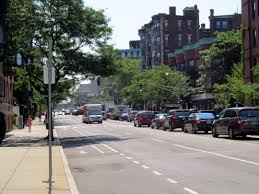
Boston commercial roofing
Boston's commercial roofs work through a New England winter that few markets can match for sheer punishment. Nor'easters drive deep, wet snow and coastal wind onto flat roofs, the harbor's salt air corrodes edge metal and fasteners, and a relentless freeze-thaw cycle pries open seams and flashing between storms. The building stock spans four centuries: the brick-and-beam warehouses of the Seaport and Fort Point, the Financial District's office towers, the world-leading life-sciences and lab clusters in Kendall Square, Longwood's medical campuses, and the industrial and distribution footprints reaching out along I-93 and the Route 128 belt. Many of these roofs sit within blocks of the water, where wind uplift and salt exposure compound everything the cold does — and many carry the specialized rooftop equipment that lab and hospital buildings demand.
Nor'easters, salt air, and freeze-thaw
Snow load is the headline, but the slow damage comes from cycling and salt. Nor'easter snow lingers on low-slope roofs, and the daily thaw-and-refreeze at drains and parapets forms ice dams that back water under the membrane. The coastal wind that comes with those storms lifts edges and corners on buildings whose perimeter attachment was never verified, while salt air corrodes fasteners, edge metal, and rooftop units faster than any inland city. On Boston's older brick-and-beam buildings, roof assemblies rebuilt in layers over generations fail unevenly, so no two areas are the same age or system.
The stakes are highest on the lab and hospital roofs. Over a Kendall Square research floor or a Longwood clinical space, an interior leak is not a maintenance ticket — it is a threat to sensitive equipment and continuous operations, and the dense rooftop mechanical loads on those buildings multiply the penetrations where failure can start.
Life sciences, institutions, and long horizons
Boston commercial ownership is dominated by sophisticated institutional players — REITs, major landlords, and university, hospital, and life-sciences owners — holding high-value assets on long horizons under real budget scrutiny. Their roofs range from aging assemblies on converted historic buildings to newer single-ply and specialized systems on recent lab and office construction. Those extremes demand opposite strategies, and the cost of a mismanaged roof over a research or clinical tenant is steep enough that getting the condition read and the capital timeline right matters more here than almost anywhere.
An independent baseline for high-value assets
We give owners and asset managers a standardized, vendor-neutral record — membrane type and age, seam and flashing condition, drainage, insulation moisture where warranted, and realistic remaining service life — with every defect photographed and located so reports are comparable year over year. As part of our Massachusetts commercial roof advisory coverage, we track the warranty conditions that snow-load ponding, unauthorized rooftop work, and undocumented storm damage quietly void, and we competitively bid and oversee the work a roof genuinely needs. In a market where every hard winter brings a wave of roofing solicitations, an owner with documented condition data decides on evidence, not on the estimate of whoever is selling a replacement after the thaw.
Boston market coverage
We provide owner-side commercial roof advisory across Boston, Massachusetts and the surrounding metro.