
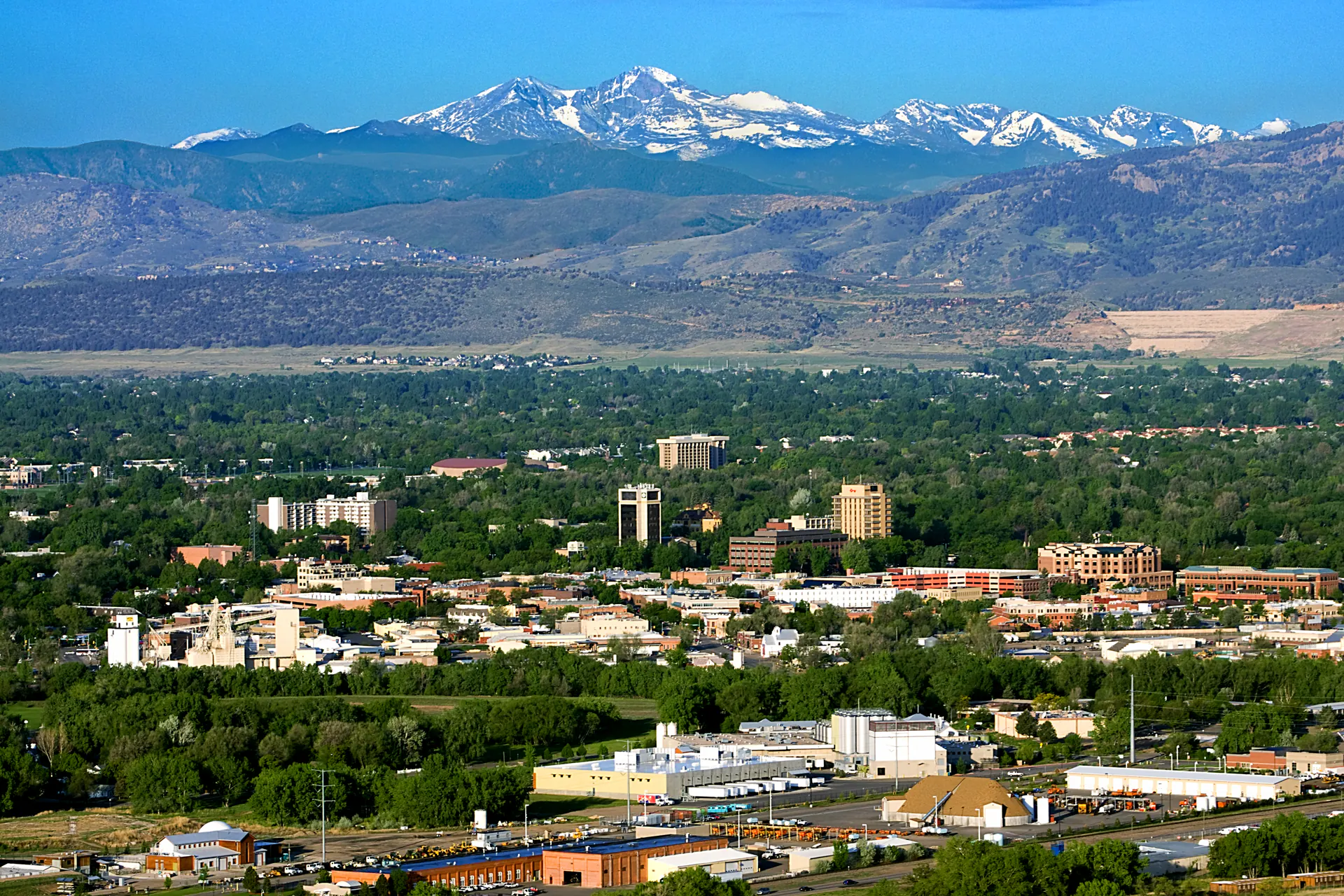
Fort Collins commercial roofing
Fort Collins sits at the northern edge of Colorado's Front Range hail alley, roughly a mile above sea level, and its commercial roofs pay for both facts. The breweries and food-processing plants along the Mulberry and Prospect corridors, the tech and light-manufacturing tenants in the Harmony Road and Timberline business parks, the retail and office stock around Old Town, and the research facilities tied to Colorado State University all carry low-slope membrane that absorbs some of the most intense ultraviolet load in the country, then gets hammered by the spring and summer storms that roll off the foothills. Thin high-altitude air offers little UV filtering, so membranes chalk, shrink, and lose flexibility years ahead of schedule, and a single supercell can dent, split, or fracture an aging roof across a whole building in minutes. We advise Fort Collins owners and asset managers on documented condition and capital planning built for that combination.
Hail and altitude are the defining stressors
The Front Range is one of the most hail-prone regions in North America, and Larimer County takes its share every season. Hail bruises single-ply membranes, cracks brittle coatings, and drives fracture points into roofs that were already stiffened by years of high-elevation UV. The damage is rarely obvious from the ground; a roof can look intact while its membrane has been compromised across thousands of square feet, and the leaks that follow show up months later as interior staining. An owner who has documented condition before a storm season is in a far stronger position to prove and scope damage than one starting from nothing after the fact.
Altitude compounds every other factor. The UV exposure at 5,000 feet ages adhesives and membranes faster than the manufacturer's brochure assumes, and the wide daily temperature swings common to the high plains drive constant expansion and contraction that works seams and flashings loose. Winter adds freeze-thaw cycling that opens the details summer UV already fatigued, and periodic heavy snow that loads flat roofs and stresses drainage as it melts and refreezes.
The owners and buildings we serve here
Fort Collins carries a distinctive commercial mix for a metro its size. Craft breweries and beverage producers operate large process facilities with rooftop equipment and demanding humidity loads; CSU-adjacent research and lab space carries specialized ventilation penetrations; and the industrial and distribution stock along the I-25 corridor toward Loveland and Windsor spans wide low-slope footprints where a deferred repair is never a small line item. Each type ages differently under Northern Colorado's climate, so we track each roof as its own risk profile rather than applying one assumption across a portfolio. This work is part of our Colorado commercial roof advisory coverage, and the Front Range hail exposure shapes it heavily.
Owner-side reporting and capital planning
The foundational deliverable is a standardized, honest condition report for every roof you hold. We document membrane type and age, seam and attachment condition, flashing and penetration detailing, drainage performance, and hail-impact evidence, then locate and photograph defects so this year's report is directly comparable to next year's. Because we sit on the owner's side of the table, that report is not built to sell a re-roof. A roof with serviceable life left should be maintained and monitored, not replaced because a crew showed up after the last storm.
From that baseline we build a multi-year capital forecast that sequences replacements deliberately and reflects the real condition of the stock instead of last year's surprises. We also track warranty terms and the hail-documentation and maintenance-record conditions that quietly void coverage in a hail belt. After a major storm passes over a portfolio, we inspect, scope, and competitively bid the work that genuinely needs doing, and hold contractors to the documented condition rather than to their own estimate. In a market that reliably draws a wave of storm-chasing roofing solicitations every summer, an owner with real condition data and a standing plan protects their capital far better than one fielding reactive bids with no baseline of their own.
Fort Collins market coverage
We provide owner-side commercial roof advisory across Fort Collins, Colorado and the surrounding metro.