
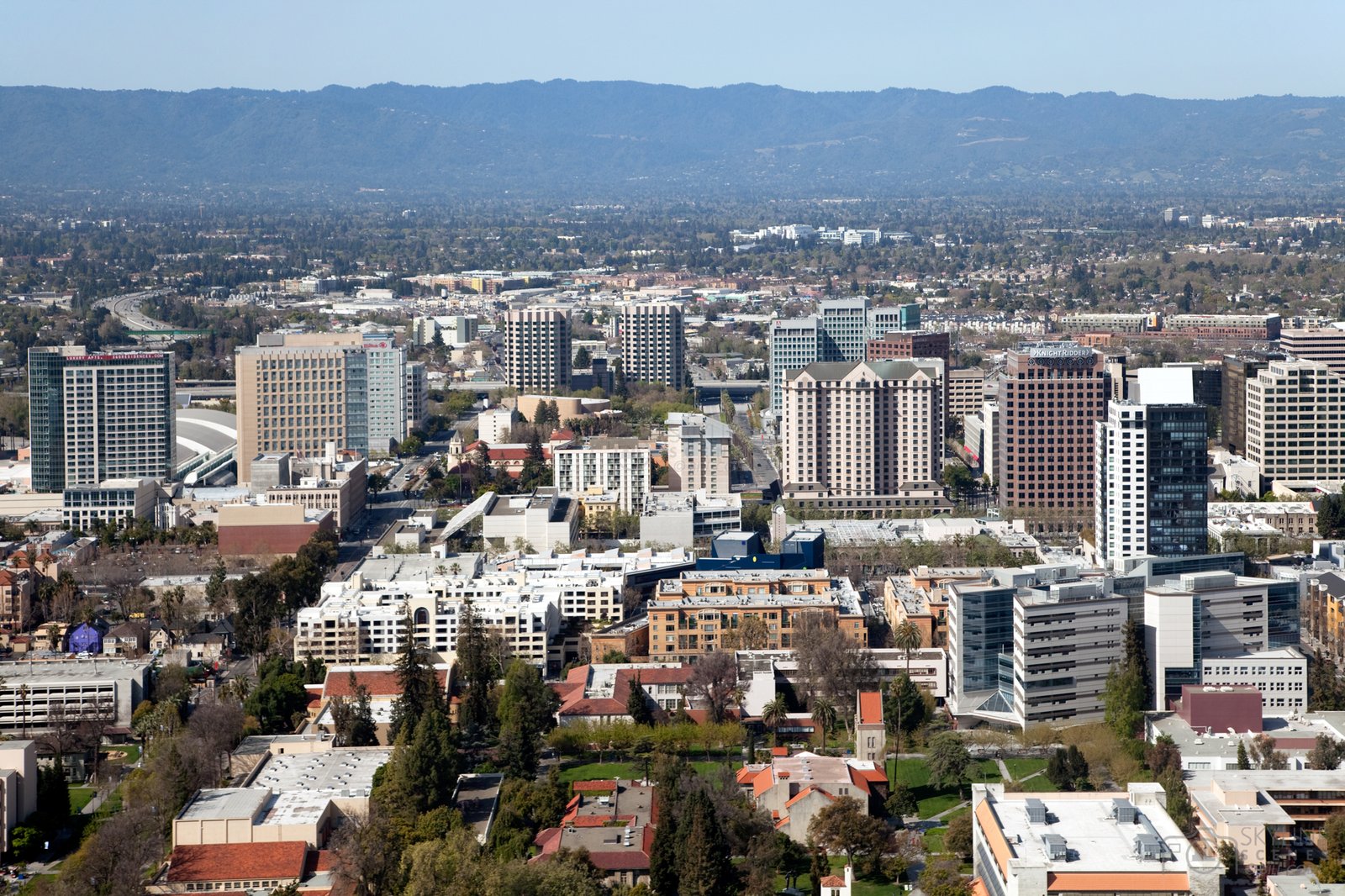
San Jose commercial roofing
San Jose sits at the warm, dry inland end of the Bay Area, and its roofs are worked harder by sun and heat than the fog-cooled coast to the north. The Santa Clara Valley runs long, hot, cloudless summers that deliver sustained ultraviolet exposure and high rooftop temperatures, aging membranes and chalking coatings while the winters stay mild and mostly dry until the atmospheric-river storms arrive. The commercial stock is defined by the tech economy: the sprawling R&D and office campuses of North San Jose and the Golden Triangle, the flex and light-industrial product along the Highway 101 and I-880 corridors, the semiconductor and cleanroom manufacturing facilities, the Downtown office core, and the logistics buildings south toward Morgan Hill. These roofs are typically large, flat, and dense with sophisticated mechanical, lab, and process equipment, which means many penetrations and low tolerance for interior water. For owners, REITs, and asset managers, we advise on documented condition, capital planning, and contractor oversight built for this specific inland climate.
Heat, UV, and the dry-then-wet cycle
The primary stressor in San Jose is thermal. Long summers of intense sun drive rooftop surface temperatures high and hold them there, oxidizing single-ply membranes, hardening and cracking older coatings, and shortening the realistic service life of any dark or unreflective roof. Because the valley's weather is so benign for most of the year, owners routinely defer attention until aging is well advanced and the membrane is brittle. Daily temperature swings between hot afternoons and cool nights also cycle the assembly, working seams and details loose over time.
The valley's pronounced dry season sets up the drainage trap that catches many owners. Months pass with no rain, debris settles into drains and low points, and then a winter storm arrives and tests a drainage system that has sat dormant since spring, exposing any ponding the dry months hid. Seismic movement is the constant background load: the South Bay is earthquake country, and ground and structural movement work roof-to-wall and roof-to-parapet junctions and shift the curbs and flashings around the heavy equipment these tech roofs carry. Those junctions and equipment penetrations are where we concentrate.
The building stock we cover
San Jose's commercial inventory is dominated by technology real estate, and each subtype carries a distinct roof risk. The R&D and campus product of North San Jose, the Golden Triangle, and the corridors toward Santa Clara runs dense rooftop mechanical and process loads, where every curb and penetration is a potential leak and downtime is costly. The semiconductor and manufacturing facilities add cleanroom exhaust and vibration-sensitive equipment. The Downtown office core, the flex and warehouse product along the freeways, and the logistics buildings to the south each add their own profile. We treat these as separate environments rather than one San Jose average, as part of our broader California commercial roof advisory coverage.
Owner-side reporting and capital planning
The foundational deliverable for an owner here is a standardized condition report on every roof: membrane type and age, seam and attachment condition, flashing and penetration detailing around dense equipment, coating condition and remaining reflectivity, drainage and evidence of ponding, and a realistic remaining service life. We photograph and locate every defect so this year's report is directly comparable to next year's, which is what turns slow, invisible UV aging into something an owner can see and budget against.
Because we sit on the owner's side of the table, our reporting is not built to sell a re-roof. A valley roof with life left is a candidate for a restorative coating and disciplined maintenance, not a tear-off recommended by a crew that happened to be available. Across a San Jose portfolio, where large tech and industrial roofs of different ages compete for the same capital, we build multi-year forecasts that put each roof on a funded timeline, track warranty terms and the maintenance obligations that keep single-ply and coating coverage intact, and hold contractors to documented condition rather than to their own free inspection, so the owner's capital decisions stay with the owner.
San Jose market coverage
We provide owner-side commercial roof advisory across San Jose, California and the surrounding metro.
Commercial Roof Maintenance in San Jose
San Jose commercial roofs work through long, bright, dry seasons followed by concentrated winter rain. Heat and ultraviolet exposure age membranes and coatings, while months without significant rainfall allow debris, drains, and low points to go untested until the first atmospheric-river storm. Seismic movement adds another concern at parapets, curbs, equipment supports, and roof-to-wall transitions. These conditions matter across the technology, research, manufacturing, office, flex, and logistics buildings that define the South Bay market.
Our San Jose condition reports document membrane and coating condition, seams, flashings, penetrations, rooftop equipment, drainage, ponding evidence, access, and prior repair history. For buildings with sensitive interiors or dense mechanical systems, we connect the roof findings to operational risk and the cost of a preventable leak. Owners can then compare maintenance, restoration, and replacement paths against actual roof condition rather than a generic age assumption.
San Jose Roof Planning for Commercial Portfolios
A San Jose roof plan is most useful when it can be compared with the owner's other California assets. Standardized reporting supports warranty tracking, seasonal maintenance, capital forecasting, and contractor accountability across a portfolio while still reflecting the valley's heat, UV, seismic, and storm profile. That is how commercial roofing in San Jose becomes a managed asset decision instead of a recurring leak response.
Heat, UV, and Dense Rooftop Equipment
San Jose roofs often carry more rooftop equipment and more penetrations than a typical low-slope commercial building. HVAC units, process exhaust, conduits, solar readiness, and service routes create a busy roof surface where foot traffic and small flashing failures can become chronic interior problems. A condition review should map those details, check the membrane and coating around them, and record whether access routes protect the roof from tools, carts, and repeated service visits.
The dry season creates a useful maintenance window, but it can also encourage deferral. Drainage problems and brittle sealants may remain hidden until the first major winter rain. Owners can use the dry months to clear drains, verify edge conditions, review warranty requirements, document repairs, and test restoration candidates before weather makes access more difficult. The result is a more reliable roof performance baseline for office, research, manufacturing, and logistics properties.
A San Jose Roof Record That Supports Capital Decisions
For a single building or a broader Bay Area portfolio, the report should connect observed condition to remaining service life, repair cost, operational disruption, warranty exposure, and the owner's hold period. That gives the decision maker a defensible way to prioritize a roof in San Jose against other California assets and to explain why maintenance, coating, recover, or replacement is the appropriate next step.
It also protects institutional owners from treating a dense technology property as a generic warehouse roof. The report can prioritize sensitive interiors, critical equipment, cleanroom or lab operations, and the access controls needed for recurring service.