
San Francisco commercial roofing
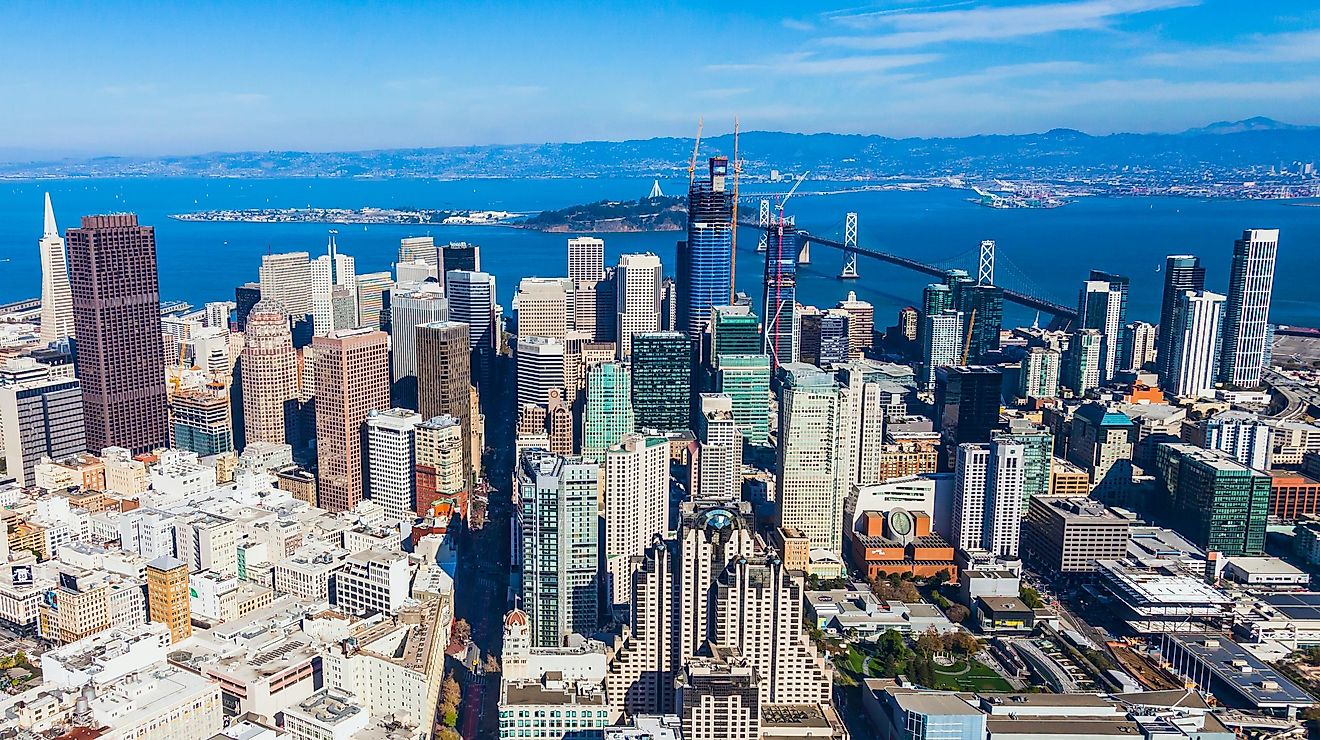
San Francisco's climate is deceptively demanding on commercial roofs. The city sits in near-constant marine influence: fog and damp keep roofs from drying, salt off the bay corrodes metal, and the strong, persistent winds that funnel through the peninsula drive uplift on any edge or parapet that was never properly attached. Winter atmospheric rivers then deliver wind-driven rain that finds every marginal flashing and seam. The commercial stock is unusually vertical and dense: the high-rise and mid-rise office towers of the Financial District, the older brick and concrete buildings of SoMa and the Mission, the tech and biotech product of Mission Bay and the Design District, and the port and industrial buildings along the eastern waterfront. Many of these roofs are small, complex, and crowded with mechanical equipment, so a square foot of roof here carries more detailing and more risk than a wide-open warehouse elsewhere. For owners, REITs, and asset managers, we advise on documented condition, capital planning, and contractor oversight built for this environment.
Wind, fog, salt, and seismic load
Wind is the stressor owners here underestimate most. San Francisco's exposed roofs face sustained gusts that pull at perimeter edge metal, parapet coping, and any loose-laid or under-fastened membrane, and once wind gets under an edge it works it open storm by storm. Because so many buildings are tall and their roofs sit high above sheltering structures, this uplift load is real even on days that feel merely breezy at street level. The persistent fog and marine damp compound the problem by keeping the assembly wet and encouraging corrosion and biological growth in the shaded, congested spaces around rooftop equipment.
Seismic movement is the other defining load. In an earthquake-prone city built largely of masonry and concrete, roof-to-wall and roof-to-parapet junctions are worked constantly by ground and structural movement, and those junctions are where leaks begin. On the older SoMa and Mission building stock, unreinforced masonry parapets and their flashings deserve particular scrutiny. Add wind-driven winter rain to those stressed junctions and the failure path is obvious. The bay-front and port buildings carry salt corrosion on top of everything else.
The building stock we cover
San Francisco's commercial inventory is dominated by dense, high-value, mechanically complex roofs rather than large simple footprints, and that changes how they must be managed. The Financial District and SoMa office towers carry small roofs packed with HVAC, elevator overruns, and screening, where every penetration is a potential leak and access is difficult. The tech and life-science campuses of Mission Bay and the eastern neighborhoods add heavy equipment and low tolerance for downtime. The historic brick and timber buildings of the Mission, Jackson Square, and the older commercial corridors carry aging assemblies over structural decks re-roofed many times. We track each as its own risk environment, as part of our broader California commercial roof advisory coverage.
Why owners need an independent record here
The foundational deliverable is a standardized condition report on every roof: membrane type and age, perimeter and edge attachment, seam condition, flashing and penetration detailing around dense rooftop equipment, corrosion of metal components, drainage and ponding, and a realistic remaining service life. We photograph and locate every defect so this year's report is directly comparable to next year's, which on a crowded urban roof is the only practical way to track a slow failure among dozens of penetrations.
Because we sit on the owner's side of the table, our reporting is not built to sell a re-roof. A complex urban roof with life left is a candidate for targeted repair, re-flashing, and disciplined maintenance, not a full replacement that would mean shutting down rooftop mechanical for a tenant tower. Across a San Francisco portfolio, where high-value roofs of different ages and configurations compete for constrained capital and access windows, we build multi-year forecasts that put each roof on a funded timeline, track warranty terms and the maintenance obligations that keep coverage intact, and hold contractors to documented condition rather than to their own free inspection, so the owner's capital and the owner's building stay under the owner's control.
San Francisco market coverage
We provide owner-side commercial roof advisory across San Francisco, California and the surrounding metro.