
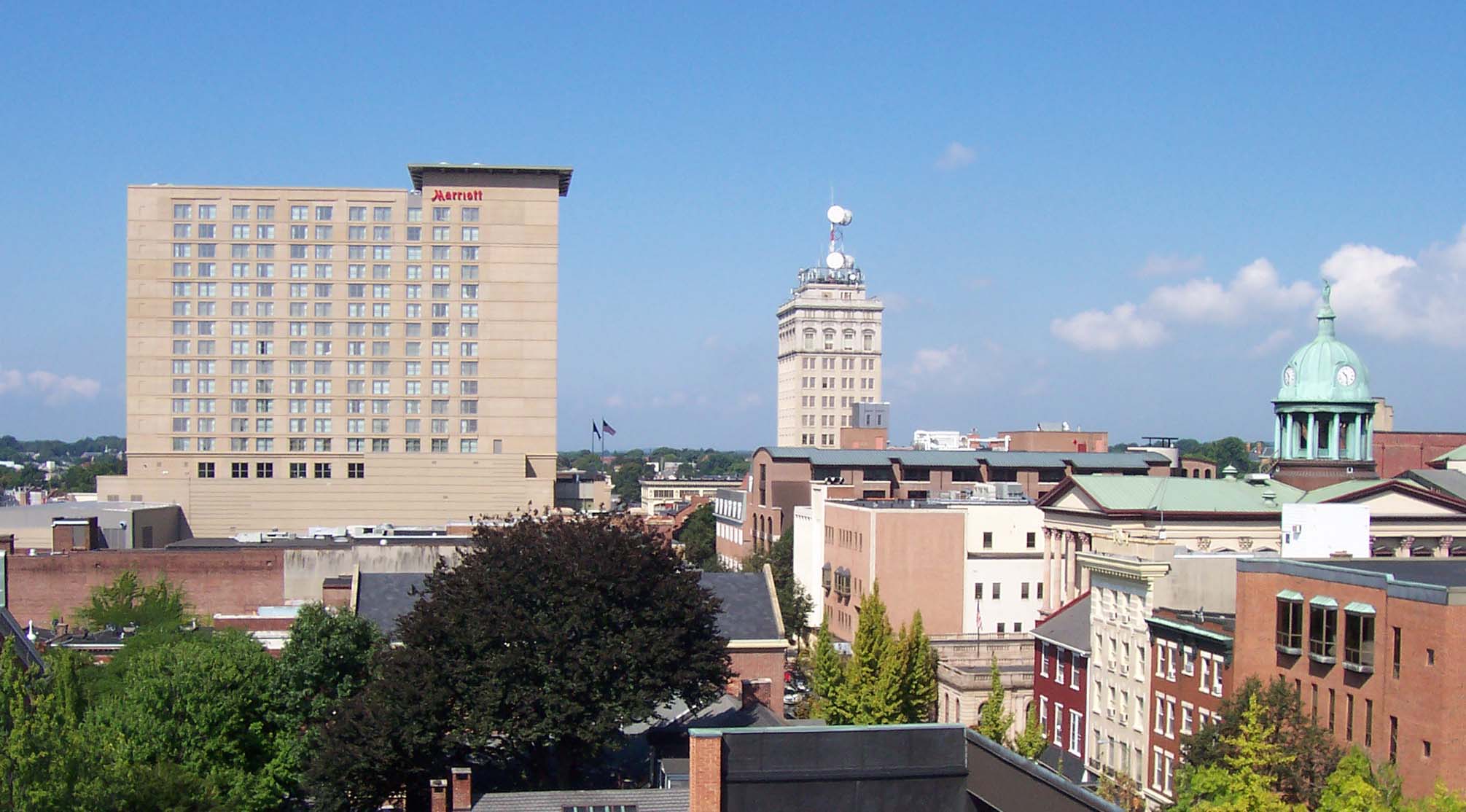
Lancaster commercial roofing
Lancaster County pairs one of the most productive agricultural economies in the country with a dense base of food processing, manufacturing, and distribution, and its commercial roof stock carries the specialized demands that come with it. Food and beverage plants, cold-storage facilities, and packaging operations spread across the industrial corridors around the city and out toward Manheim, Ephrata, and the Route 30 and 283 spines; distribution and warehouse buildings serve the same freight geography that feeds nearby Harrisburg; and the medical, retail, and office stock around downtown Lancaster fills out the market. These are overwhelmingly low-slope membrane roofs, and food-processing roofs in particular carry heavy rooftop mechanical loads, dense penetrations, and interior humidity that make their detailing and their vapor performance critical. Add a Central Pennsylvania climate of humid summers, freeze-thaw winters, and periodic heavy snow, and the margin for a neglected detail is thin. We advise Lancaster owners and asset managers on documented condition and capital planning built for that reality.
What the climate and the building type demand here
The four-season workload starts with freeze-thaw. Meltwater seeps into laps, seams, and flashing details during winter thaws, freezes and expands overnight, and pries those details apart across the season, while snow accumulation loads flat roofs and ice dams back water beneath the membrane during melt. But Lancaster's food-processing and cold-storage roofs add a stressor most buildings don't face: high interior humidity and refrigeration loads that drive vapor toward the assembly, so any weakness in vapor control or insulation can trap moisture and degrade the roof from the inside as well as the outside.
Summer brings heat, UV, and heavy convective thunderstorms that overwhelm undersized or clogged drainage and expose flashing weaknesses, and the wide seasonal swing drives continual expansion and contraction across the whole assembly. On a roof crowded with condensers, exhaust, and process equipment, every curb and penetration is a potential leak path, and the sheer density of those details is what makes disciplined condition tracking matter here.
The owners and buildings we serve here
Lancaster's commercial stock is unusually process-heavy. Food and beverage manufacturers and cold-storage operators carry penetration-dense, humidity-loaded roofs where a leak can threaten product and production; distribution and warehouse owners hold wide low-slope footprints where a deferred repair is never minor; and medical, retail, and office buildings add their own aging profiles. Each type ages differently under Central PA's climate, so we track each roof as its own risk profile rather than applying one assumption across a portfolio. This work is part of our Pennsylvania commercial roof advisory coverage, and the freeze-thaw exposure combined with process-roof humidity shapes it heavily.
Owner-side reporting and capital planning
The foundational deliverable is a standardized, honest condition report for every roof you hold. We document membrane type and age, seam and attachment condition, flashing and penetration detailing, drainage performance, and trapped moisture where investigation is warranted — which on food-processing roofs is often the decisive question — then locate and photograph defects so this year's report is directly comparable to next year's. Because we sit on the owner's side of the table, that report is not built to sell a re-roof. A roof with serviceable life left should be maintained and monitored, not replaced because a crew is available.
From that baseline we build a multi-year capital forecast that puts every Lancaster roof on a funded timeline and sequences replacements deliberately instead of as emergencies. We also track warranty terms and the drainage, maintenance-record, and unauthorized-rooftop-work conditions that quietly void coverage — a real risk on process roofs where tenants and trades add equipment frequently. After heavy weather passes over a portfolio, we inspect, scope, and competitively bid the work that genuinely needs doing, and hold contractors to the documented condition rather than to their own estimate. For an owner whose roofs sit over food production, that independence protects both the asset and the operation beneath it.
Lancaster market coverage
We provide owner-side commercial roof advisory across Lancaster, Pennsylvania and the surrounding metro.