
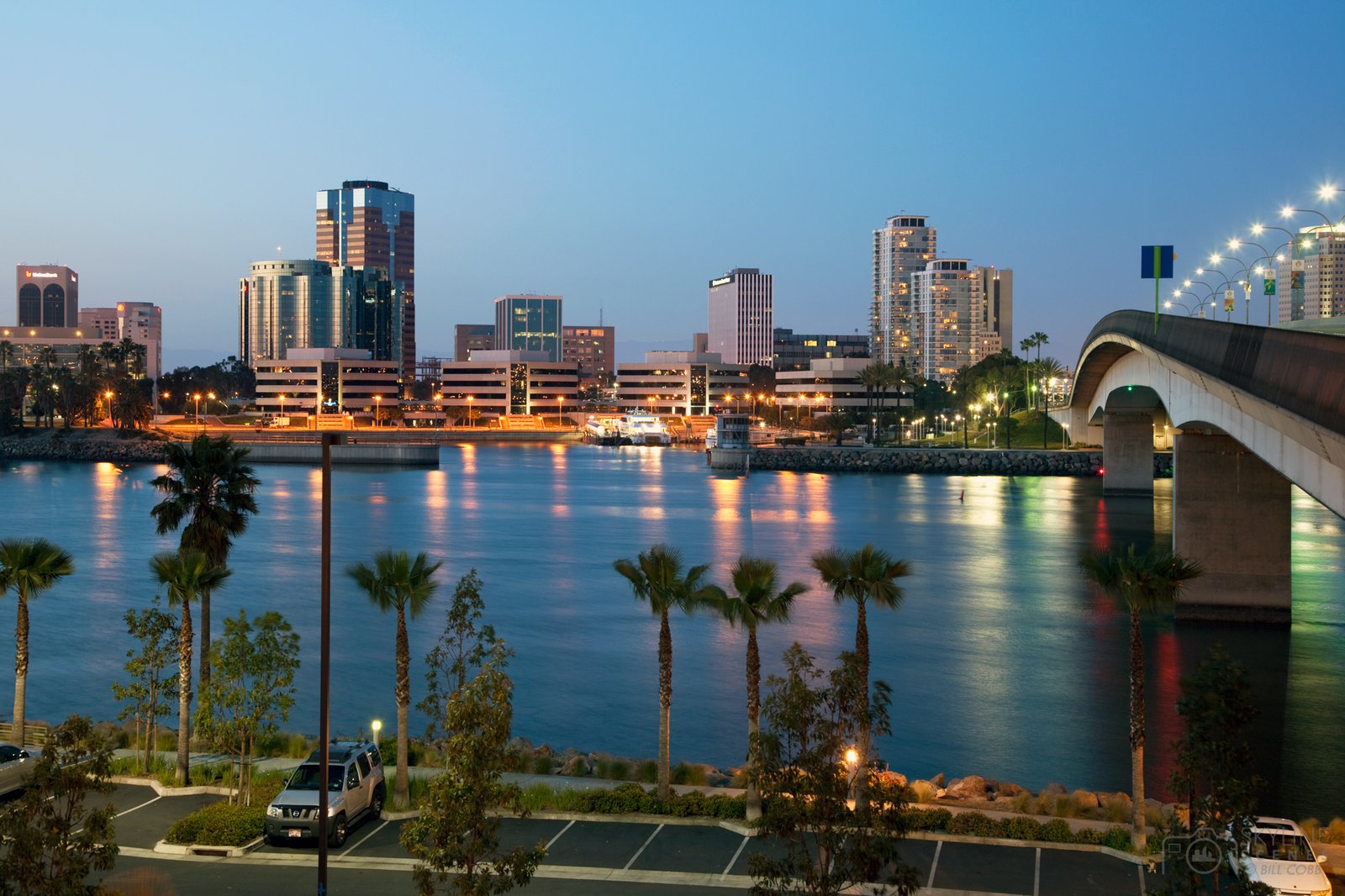
Long Beach commercial roofing
Long Beach is built around one of the busiest container ports in the hemisphere, and its commercial roofs live in the corrosive, salt-laden air that comes with a working waterfront. Salt carried off the harbor and the open Pacific attacks fasteners, edge metal, and rooftop equipment across the city, and the marine layer that grays the mornings keeps roofs damp and slow to dry. When the sun does break through, coastal UV ages the exposed membrane. The commercial stock is heavily logistics and industrial: the enormous port-adjacent warehouse and distribution product serving the San Pedro Bay complex, the refining and petrochemical facilities along the harbor, the aerospace and manufacturing legacy near the airport, the Downtown office and mixed-use core, and the medical and institutional campuses inland. For owners, REITs, and asset managers holding roofs in this environment, we advise on documented condition, capital planning, and contractor oversight built for a heavy-industrial coastal setting.
Salt, marine damp, and industrial exposure
The defining stressor in Long Beach is corrosion. Salt-laden air is relentless and unforgiving on metal: it eats at the fasteners and edge metal that hold a roof's perimeter down, pits flashings and equipment curbs, and degrades every metal component faster than an inland roof ever experiences. Because this damage concentrates at the details rather than the open field of the membrane, it is easy to miss from the ground and easy for a routine inspection to underweight, which is exactly why perimeter attachment, edge metal, and penetration detailing are where we focus on port-area buildings. The marine layer compounds it by holding moisture against the assembly and feeding biological growth in shaded low points.
The port and refining environment adds loads a typical commercial roof never sees. Airborne particulates, industrial fallout, and chemical exposure from the harbor's heavy activity can accelerate membrane and coating breakdown, and the constant truck and rail vibration around the logistics corridors works fasteners and details over time. Coastal storms and Santa Ana winds drive uplift on any edge the salt has already weakened. On the large flat warehouse roofs that dominate the market, the combination of corroded perimeter attachment and wind uplift is a failure mode we plan around directly.
The building stock we cover
Long Beach's commercial inventory is dominated by the port economy, and each subtype carries a distinct roof risk. The distribution and warehouse product serving the San Pedro Bay ports carries vast single-ply roofs on enormous footprints, where a small corroded detail or failed seam spreads across acres before anyone inside notices. The refining and petrochemical facilities along the harbor add chemical and thermal exposure. The aerospace and manufacturing buildings near Long Beach Airport, the Downtown office and mixed-use core, and the inland medical campuses each present their own profile. We treat these as separate environments rather than one Long Beach average, as part of our broader California commercial roof advisory coverage.
Owner-side reporting and capital planning
The foundational deliverable is a standardized condition report on every roof: membrane type and age, the corrosion state of fasteners, edge metal, and flashings, perimeter and penetration attachment, seam condition, drainage and evidence of ponding, and a realistic remaining service life. We photograph and locate every defect so this year's report is directly comparable to next year's, which is the only reliable way to track slow salt corrosion before it becomes wind uplift or interior damage.
Because we sit on the owner's side of the table, our reporting is not built to sell a re-roof. A coastal industrial roof with life left is a candidate for targeted metal and flashing replacement, coating, and disciplined maintenance, not a full tear-off recommended by a crew that happened to be available. Across a Long Beach portfolio, where large port-area roofs of different ages compete for the same capital, we build multi-year forecasts that put each roof on a funded timeline, track warranty terms and the maintenance records that keep coverage intact in a corrosive environment, and hold contractors to documented condition rather than to their own free inspection, so the owner's capital stays under the owner's control.
Long Beach market coverage
We provide owner-side commercial roof advisory across Long Beach, California and the surrounding metro.