
Nevada statewide
Nevada concentrates an unusually large share of its commercial roof area into two markets and a single freeway spine, which makes the state both straightforward to plan around and unforgiving of neglect. We advise building owners, REITs, and asset managers across the Las Vegas Valley, the Reno-Sparks corridor, and the warehouse belt stretching east along Interstate 80 — representing owner interests on roofs we do not install, so the guidance you receive is shaped by the asset's life cycle rather than by a crew's backlog. Roofs in this state fail differently than they do almost anywhere else, and the capital plans that work here are matched to heat, ultraviolet exposure, and a short but violent monsoon season rather than around snow.
Commercial roofing markets we serve in Nevada
Explore owner-side commercial roof advisory in these Nevada cities:
The markets we cover across Nevada
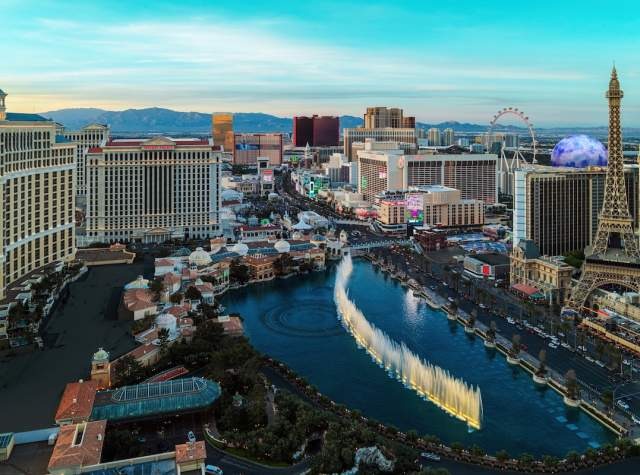
Roughly three-quarters of Nevadans live in Clark County, and the commercial roof inventory follows them. Las Vegas, Henderson, and North Las Vegas hold the gaming and resort properties, the convention and hospitality stock along the Strip and Paradise corridor, and a fast-growing distribution base in the North Las Vegas industrial parks and the Apex area near Interstate 15. These are large, low-slope membrane roofs — single-ply TPO and PVC on the newer big-box warehouses, modified bitumen and older built-up assemblies on the resorts and back-of-house structures — and many of them carry heavy mechanical loads from rooftop HVAC serving casino floors, kitchens, and data halls.
In the north, the Reno-Sparks corridor and the Tahoe-Reno Industrial Center in Storey County have made northern Nevada one of the densest logistics hubs in the western United States, rooted in the I-80 freight route to California and the Tesla manufacturing complex east of Sparks. The buildings here are predominantly Class A warehouse and light-manufacturing space with expansive single-ply roofs, and the climate is meaningfully different from the south — higher elevation, real freeze-thaw cycling in winter, and a genuine, if light, snow load that the desert valleys never see. The region's growth as a data-center destination also matters for roofing: those facilities concentrate heavy, heat-rejecting mechanical equipment on the roof and carry near-zero tolerance for water intrusion over critical infrastructure, which raises the stakes on flashing detail and drainage well above an ordinary warehouse. We plan for both climates and both building types, because owners frequently hold portfolios that span them.
What actually drives commercial roof failure in Nevada
The dominant stressor statewide is solar and thermal. Southern Nevada receives among the most intense ultraviolet exposure and the highest cumulative cooling demand in the country, and that radiation degrades membrane surfaces, embrittles seams, and accelerates the breakdown of bituminous flashings and sealants long before a roof reaches the end of its warranted life on paper. Surface temperatures on a dark or aged membrane in July routinely exceed what the assembly was designed to tolerate, and the daily swing between scorching afternoons and cool desert nights cycles every lap seam and penetration thousands of times a year.
The second driver is the North American Monsoon. From roughly July through September, the desert receives short, high-intensity downpours that overwhelm undersized or debris-clogged drains, and the flat roofs that define Nevada's warehouse and resort stock are exactly where that water ponds. The failure pattern we document repeatedly is not gradual leakage but sudden intrusion at a drain, scupper, or wind-lifted seam during a single storm. Wind is also a real exposure: gusts from monsoon outflow and spring frontal systems lift edge metal and unadhered membrane, and a roof that has baked in UV all year has the least margin precisely when the storms arrive. The recurring problems we plan around include:
- UV embrittlement and seam separation on aged single-ply and modified-bitumen membranes
- Ponding and flash-flood intrusion at drains and scuppers during monsoon downpours
- Wind uplift at perimeter edge metal and parapet flashings
- Cracked, sun-degraded sealants and pitch pans around the heavy HVAC and refrigeration penetrations common on resort and cold-storage roofs
- Thermal-cycling fatigue from extreme day-to-night temperature swings
Condition reporting and capital planning for owners
For an owner or asset manager, the value of advisory work is turning a portfolio of roofs into a defensible capital forecast. We produce condition assessments that document each roof's assembly, age, remaining service life, and active deficiencies, then translate that into a multi-year reserve plan keyed to acquisition, hold, and disposition timelines. In a market where a Las Vegas distribution center and a Reno cold-storage facility in the same fund can be on entirely different climate clocks, that distinction matters: the southern roof is usually constrained by UV and membrane chemistry, while the northern roof is constrained by freeze-thaw and drainage detailing.
We also align inspection cadence with the events that actually cause loss here — a post-monsoon walk to catch storm damage before it becomes interior loss, and a pre-summer check so a roof enters its hardest season with sound seams and clear drains. For owners assembling or repositioning Nevada industrial assets, we provide pre-acquisition roof due diligence so the capital liability is priced into the deal rather than discovered after closing. The output is meant to be portfolio-level: a roll-up that shows which roofs threaten near-term capital calls, which can be extended with targeted repair, and which should be slated for full replacement before a sale, so that spend is sequenced deliberately rather than dictated by whichever roof leaks first.
Reflectivity, energy load, and rooftop solar in the desert
Nowhere is the relationship between the roof and the building's operating cost more direct than in Nevada. Cooling dominates energy use across the state's commercial stock, and the roof is the largest surface absorbing the sun's heat — so membrane color, reflectivity, and insulation are not aesthetic choices but levers on both utility spend and the rate at which the assembly degrades. A reflective single-ply surface that stays cooler in the July sun ages more slowly and reduces the cooling load beneath it, which is why we treat surface condition and reflectivity as part of the asset's financial picture, not merely its weatherproofing.
Rooftop solar adds a second layer to that calculus. Nevada's irradiance makes warehouse and distribution roofs attractive hosts for photovoltaic arrays, but mounting a solar system onto an aging or near-end-of-life membrane is a common and expensive mistake — once the panels are installed, replacing the roof beneath them means removing and reinstalling the array at significant cost. For owners weighing solar, we advise sequencing the roof first: confirm or replace the membrane so its remaining service life matches the solar system's, and document the installation so it does not quietly void the roof warranty. Getting that order right protects both investments.
Warranty exposure and roofs across a Nevada portfolio
Manufacturer warranties on single-ply systems are common across Nevada's newer warehouse stock, but they are also where owners carry the most hidden risk. UV exposure, ponding water beyond a stated duration, and unauthorized rooftop modifications — solar arrays, added HVAC curbs, telecom equipment — are routine grounds for a denied claim, and Nevada roofs accumulate all three faster than the national average. We review warranty terms against actual field conditions, flag the modifications and maintenance lapses that void coverage, and keep the documentation an owner needs to enforce a claim when a system genuinely fails prematurely.
Managing roofs across a Nevada holding means treating the asset as a system with a known climate clock rather than a line item that surfaces only when it leaks. Whether you hold resort and hospitality structures in the Las Vegas Valley, distribution and manufacturing space along the I-80 corridor, or a mix across both, our role is to give you an accurate picture of condition, a credible plan for spend, and protection of the warranties already on the books — owner-side, every time.