
Pittsburgh commercial roofing
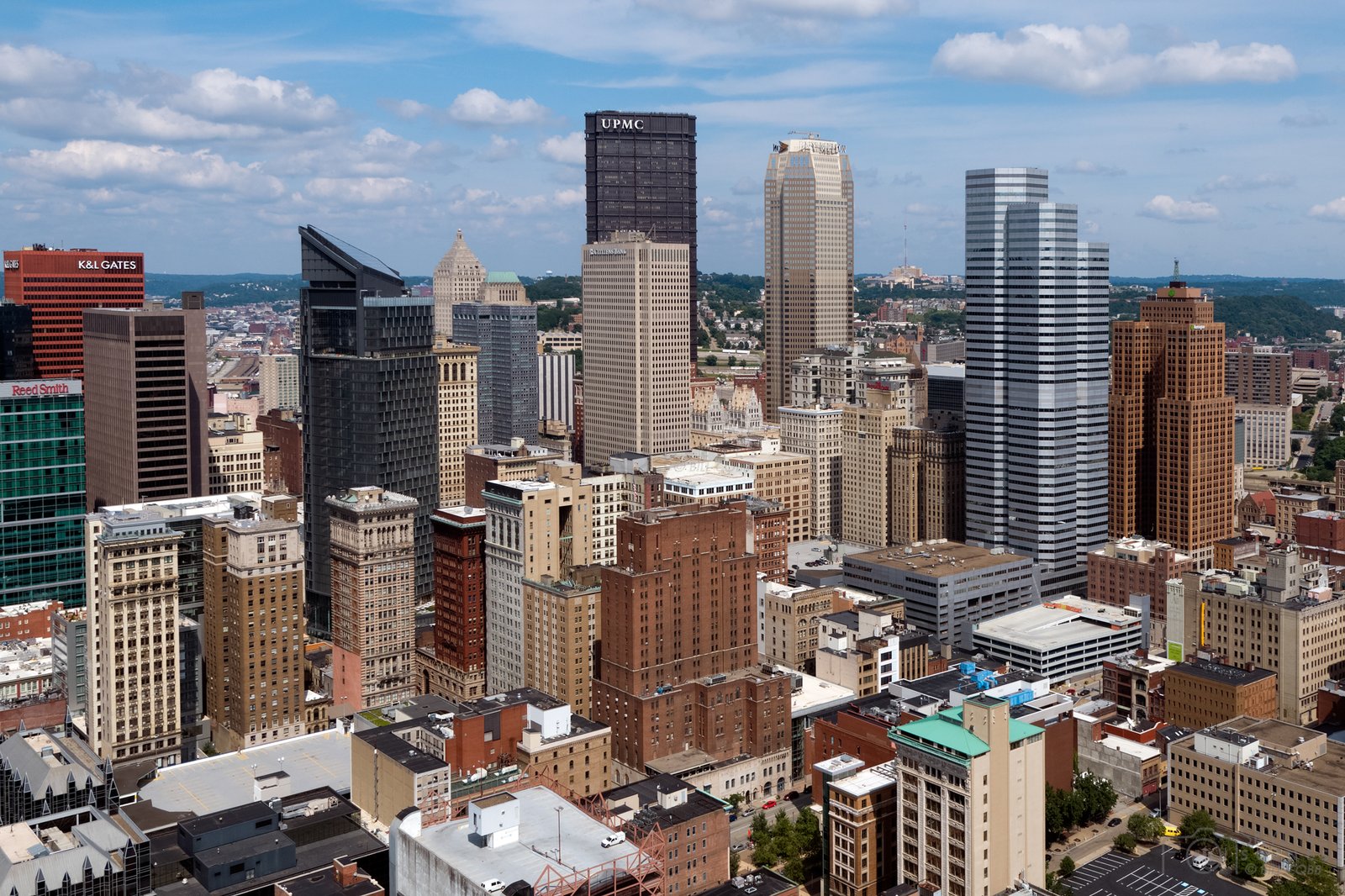
Pittsburgh's commercial roofs carry the legacy of a heavy-industry city through one of the more demanding freeze-thaw climates in the region. Winters bring real snow load and a grinding cycle of thaw and refreeze, gray and damp for weeks at a stretch, while humid summers add heat, UV, and heavy thunderstorm rainfall. The building stock reflects the city's reinvention: the converted mills and industrial buildings of the Strip District, Lawrenceville, and the South Side riverfronts, the downtown Golden Triangle office core, the medical and university campuses of Oakland driven by UPMC and the region's health systems, the technology and robotics firms clustered in the East End, and the distribution and industrial footprints spread across the river valleys and out toward the airport corridor. Much of it is aging built-up and single-ply membrane on flat footprints, layered over decades of a demanding climate.
Freeze-thaw, snow, and river-valley damp
The defining hazard in Pittsburgh is winter cycling on already-aged assemblies. Snow lingers on flat roofs through long, cloudy stretches, and the repeated thaw-and-refreeze at drains and parapets forms ice that backs water under the membrane and loads drainage well beyond its summer capacity. Water that enters a seam during a thaw expands as it refreezes, prying flashing and details apart a fraction at a time. The region's persistent humidity and the damp of the river valleys drive condensation and trapped moisture within assemblies where vapor control was poorly detailed.
On the city's older converted-industrial buildings, roofs have often been rebuilt in layers over generations, so no two areas are the same age or system, and the damage is uneven and hidden until an interior leak reaches a tenant below.
Eds, meds, and converted industrial
Pittsburgh's commercial ownership is anchored by its "eds and meds" economy — the UPMC and university campuses of Oakland — alongside the developers and institutional owners reinventing the riverfront mill sites and the operators of the region's distribution and light-industrial stock. Their roofs run the gamut from aging built-up systems on historic plants to newer single-ply on recent lab, office, and warehouse construction. Those extremes need opposite strategies: extend and maintain the newer roofs, sequence the older ones into a deliberate capital plan. An owner-side condition report is built to separate them.
An independent read on aging stock
We give owners, REITs, and asset managers a standardized, vendor-neutral record — membrane type and age, seam and flashing condition, drainage, insulation moisture where warranted, and realistic remaining service life — with every defect photographed and located so this year's report compares directly to next year's. As part of our Pennsylvania commercial roof advisory coverage, we track the warranty conditions that snow-load ponding, unauthorized rooftop work, and undocumented storm damage quietly void, and we competitively bid only the work a roof genuinely needs. On a portfolio of aging Pittsburgh assets, that independence keeps roof capital tied to documented condition rather than to whoever is next to pitch a replacement.
Pittsburgh market coverage
We provide owner-side commercial roof advisory across Pittsburgh, Pennsylvania and the surrounding metro.