
Portland commercial roofing
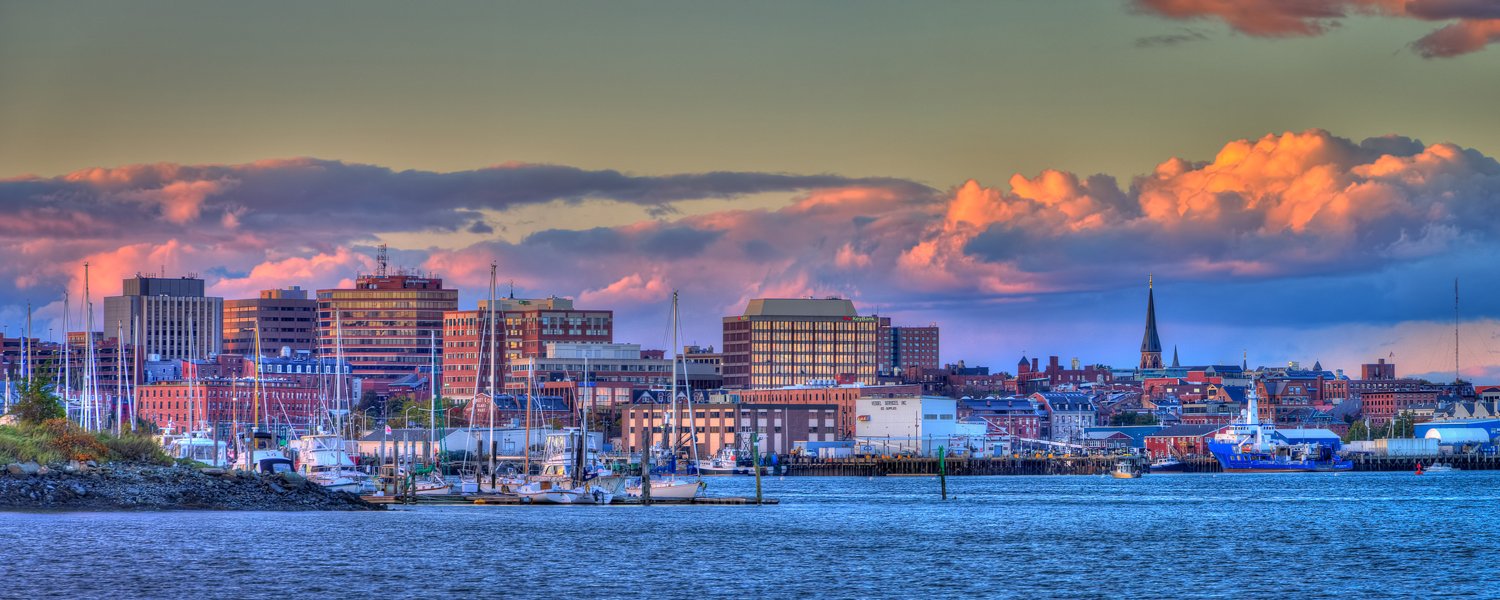
Portland's commercial roof stock sits right on Casco Bay, and the sea shapes every part of the load it carries. The Old Port's dense inventory of nineteenth-century brick warehouses and mixed-use buildings, the working waterfront and marine terminals, the downtown office and government core on Congress Street, and the newer medical, office, and light-industrial property spread out toward the jetport and along the I-295 corridor all face a coastal-Maine climate. That means humid but short summers with UV, and long hard winters bringing heavy snow, coastal nor'easters, aggressive ice damming, and freeze-thaw cycling, all of it accompanied by salt-laden marine air that corrodes fasteners and edge metal faster than any inland site. For the owners, developers, and institutions holding this property, that combination ages roofs unevenly and largely out of sight. We advise the owner's side with documented condition, capital planning, and independent contractor oversight.
Coastal winters and salt air
Portland's hazard profile pairs deep-winter snow and ice with a corrosive marine environment. Heavy snow adds structural load, and the long melt-refreeze cycle drives ice damming and standing meltwater that backs up behind parapets and against drains, prying open any compromised seam a little more with each freeze. Nor'easters push wind uplift onto roof edges and parapets and drive salt spray across the whole assembly. That salt is the quiet difference from inland cities: it attacks fasteners, edge metal, and rooftop equipment steadily, so a coastal roof's metal components age faster than its membrane. On the Old Port's older masonry buildings, meltwater working into aged brick-adjacent flashings compounds the problem.
Because most of this happens slowly and under snow, an owner commonly discovers it only when spring melt sends water inside, by which point it is a capital-scale repair.
Old Port owners and the waterfront
Portland's property leans toward long-term holders: developers and institutions managing Old Port conversions and mixed-use buildings, marine and industrial operators on the waterfront, and facility teams running downtown offices and medical space. Those owners need to keep older roofs serviceable as long as they safely can and to sequence replacements deliberately. We track membrane type, age, and remaining service life for every roof, and for coastal assets we pay particular attention to the corrosion state of fasteners and edge metal, so the owner sees the whole portfolio on one honest timeline.
Why owner-side reporting matters
A contractor's free inspection is a sales call that ends in a recommendation to buy; an owner-side condition report does not. We document what is actually on the roof, photograph and locate every defect so each year's report is directly comparable to the last, and separate the roofs that need work from the ones that need only maintenance and monitoring. When work is warranted we scope it, competitively bid it, and hold the contractor to the documented condition rather than to their own estimate. This is part of our Maine commercial roof advisory coverage, serving owners across Portland and the southern Maine coast.
Portland market coverage
We provide owner-side commercial roof advisory across Portland, Maine and the surrounding metro.