
Portland commercial roofing
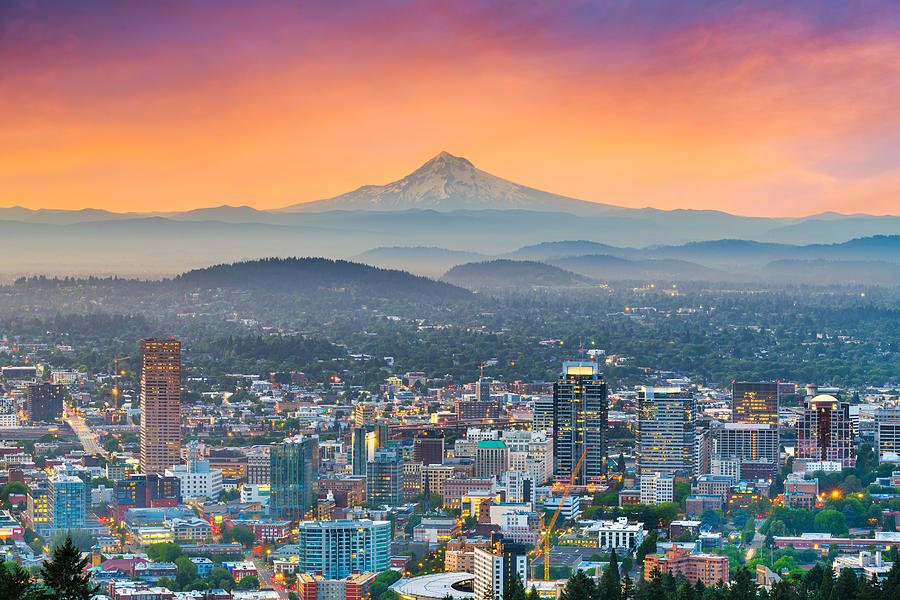
Portland's commercial roofs work under one of the longest wet seasons in the country, and the defining challenge is persistent moisture with very little chance to dry. Months of steady Pacific Northwest rain keep roofs damp from autumn well into spring, feeding moss and biological growth, holding water against seams and flashings, and finding marginal details through sheer repetition rather than any single dramatic storm. Winter brings occasional ice storms and cold snaps that add freeze-thaw to an already saturated assembly, and the region's rare snow events can drop meaningful load on flat roofs unaccustomed to it. The commercial stock spans the office and mixed-use core of Downtown and the Pearl District, the industrial and distribution product of the Columbia Corridor and Rivergate near the port and airport, the tech and manufacturing presence in the surrounding metro, the medical campuses on the west side, and the older brick and timber commercial buildings across the close-in neighborhoods. For owners, REITs, and asset managers, we advise on documented condition, capital planning, and contractor oversight built for this climate.
Wet season, moss, and freeze-thaw
The primary stressor in Portland is the same as the wider Pacific Northwest: duration, not intensity. Roofs stay wet for months, and constant moisture with minimal drying drives the region's characteristic failures. Moss and algae colonize shaded, damp areas and north-facing slopes, working under and separating membranes while trapping still more water. Persistent dampness keeps seams and flashings from curing dry and corrodes fasteners and edge metal. On the flat and low-slope roofs that dominate the commercial stock, clogged drainage in this climate means not an occasional puddle but months of standing water steadily degrading the assembly.
Portland adds a sharper winter edge than Seattle in some years. The Columbia River Gorge can funnel cold east winds that produce ice storms, and those events glaze roofs and drains with ice, then thaw and refreeze, levering open any seam or detail that water had already infiltrated. The occasional heavy snow event drops load on roofs built to a modest snow assumption. Because the mild, gray weather offers no obvious alarm, damage accumulates unseen until a cold snap or a spring inspection reveals it. Moss control, drainage, and the resilience of seams and flashings through freeze-thaw are where we concentrate here.
The building stock we cover
Portland's commercial inventory blends dense urban office with substantial industrial and logistics, and each carries a distinct roof risk. The Downtown and Pearl District office and mixed-use product runs a mix of older assemblies and mechanically complex roofs. The Columbia Corridor and Rivergate distribution and industrial buildings near the port and airport carry large low-slope roofs on big footprints, where a small failure spreads across acres before it surfaces. The tech and manufacturing facilities, the west-side medical campuses, and the older brick and timber buildings of the close-in eastside each add their own profile. We treat these as separate environments, as part of our broader Oregon commercial roof advisory coverage.
Owner-side reporting and capital planning
The foundational deliverable is a standardized condition report on every roof: membrane type and age, seam and attachment condition, flashing and penetration detailing, drainage and evidence of chronic ponding, moss and biological growth, corrosion of metal components, and a realistic remaining service life. We photograph and locate every defect so this year's report is directly comparable to next year's, which in a climate where damage builds silently through a long wet season is the only reliable way to catch a failing roof before water reaches the deck.
Because we sit on the owner's side of the table, our reporting is not built to sell a re-roof. A wet-climate roof with life left is a candidate for moss remediation, drainage correction, targeted repair, and disciplined maintenance, not a tear-off recommended by a crew that happened to be available. Across a Portland portfolio, where office, industrial, and logistics roofs of different ages compete for the same capital, we build multi-year forecasts that put each roof on a funded timeline, track warranty terms and the maintenance obligations that keep coverage intact, and hold contractors to documented condition rather than to their own free inspection, so the owner's capital stays under the owner's control.
Portland market coverage
We provide owner-side commercial roof advisory across Portland, Oregon and the surrounding metro.