
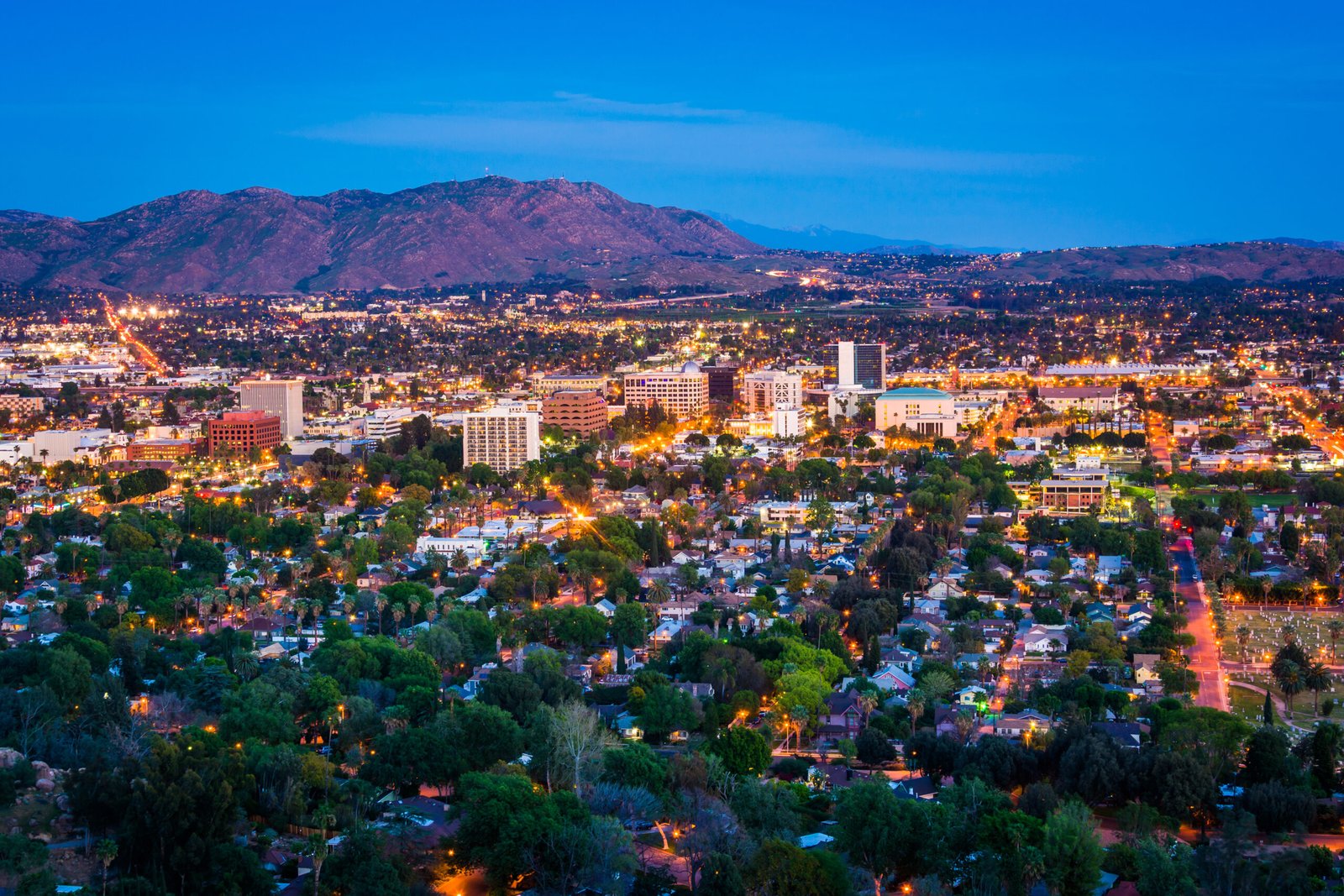
Riverside commercial roofing
Riverside anchors an Inland Empire logistics market that has become one of the densest concentrations of low-slope industrial roof in the country, and the climate those roofs live under is unforgiving in a very particular way. This is high-desert-adjacent inland Southern California: brutal summer heat that regularly pushes past 100 degrees, relentless ultraviolet exposure at elevation, and wide day-to-night temperature swings that expand and contract a membrane thousands of times a year. Add the region's chronic wind events funneling through the passes, wildfire smoke and ash settling on rooftops, and the occasional violent monsoon-fed downpour that hits drainage designed for a bone-dry norm, and the result is an assembly that ages fast and fails at the details. For owners holding fulfillment centers along the 60 and 215, industrial parks in Moreno Valley and Jurupa Valley, and older commercial stock downtown, that punishment shortens service life unevenly and expensively.
The building stock we advise on here
The Inland Empire's defining asset is the big-box distribution building, and Riverside sits at the center of it. Enormous single-ply roofs cover fulfillment and cross-dock facilities from the March Air Reserve corridor out through Perris and Moreno Valley, many built in the last two decades to house e-commerce and third-party logistics tenants. On a footprint of several hundred thousand square feet, a small unaddressed defect quietly compounds across acres of membrane before anyone inside notices, and a forced replacement can consume a full year of a building's capital budget by itself.
Riverside is not only warehouses, though. The downtown core around the Mission Inn district carries older masonry commercial and institutional buildings with aging roofs, the University of California campus and the medical corridor add institutional stock, and the retail and office along Magnolia and University present a different roof-management problem than a new tilt-up. We track these as distinct risk environments rather than treating the whole metro as one climate.
What actually drives roof failure in the Inland Empire
The dominant stressor here is thermal. Intense, sustained heat and elevated UV degrade membranes and bake adhesives and seams, while the enormous daily temperature swing between a 105-degree afternoon and a cool desert night drives constant expansion and contraction that fatigues laps, fasteners, and edge metal. Reflective membranes and coatings age more slowly, but only if they are kept clean; wildfire ash and the region's chronic particulate settle on a roof and dull its reflectivity, quietly raising rooftop temperatures and accelerating breakdown. When the summer monsoon or a winter atmospheric river finally arrives, drainage sized for an arid year is tested hard, and any ponding, clogged drain, or weak flashing detail shows itself at the worst possible moment.
Because these mechanisms act slowly and out of sight, the trajectory matters more than any single inspection. Trapped moisture and creeping seam failure rarely announce themselves until a tenant reports interior damage, and by then the conversation has moved from a cheap repair to a replacement. Our role is to catch that trajectory early, while the fix is still inexpensive, which is a discipline we apply across our California commercial roof advisory coverage from the Inland Empire to the coast.
Owner-side reporting and capital planning
For an owner or asset manager holding Inland Empire industrial, the foundational deliverable is a standardized, honest condition report for every roof in the portfolio. We document membrane type and age, seam and attachment condition, flashing and penetration detailing, drainage performance, insulation moisture where investigation is warranted, and the realistic remaining service life of each system. We photograph and locate every defect so this year's report is directly comparable to next year's, which is what lets an owner watch a roof deteriorate rather than simply learn one day that it has failed.
Because we sit on the owner's side of the table, our reporting is not written to sell a re-roof. A roof with serviceable life left should be maintained and monitored, not replaced because a crew is available. Across a multi-building Inland Empire portfolio, where young logistics roofs and older commercial roofs compete for the same capital, that distinction is the difference between a defensible multi-year plan and a reactive one, and over a hold period it is measured in millions.
Why an independent advisor protects your capital
Warranty exposure is where Inland Empire owners quietly lose the most money. Manufacturer warranties on single-ply systems carry strict conditions, and the realities of this market put them at risk: rooftop solar and equipment additions that penetrate the membrane and void coverage on affected areas, ponding that exceeds warranty limits after a rare heavy storm, and missing maintenance records the manufacturer requires before honoring a claim. We track warranty terms, expiration dates, and compliance obligations across the portfolio and flag the routine actions that keep coverage intact. When work genuinely needs doing, we scope it, bid it competitively, and hold the contractor to the documented condition rather than to their own estimate, so a six- or seven-figure asset is understood, budgeted, and protected by the people who own the risk.
Riverside market coverage
We provide owner-side commercial roof advisory across Riverside, California and the surrounding metro.