
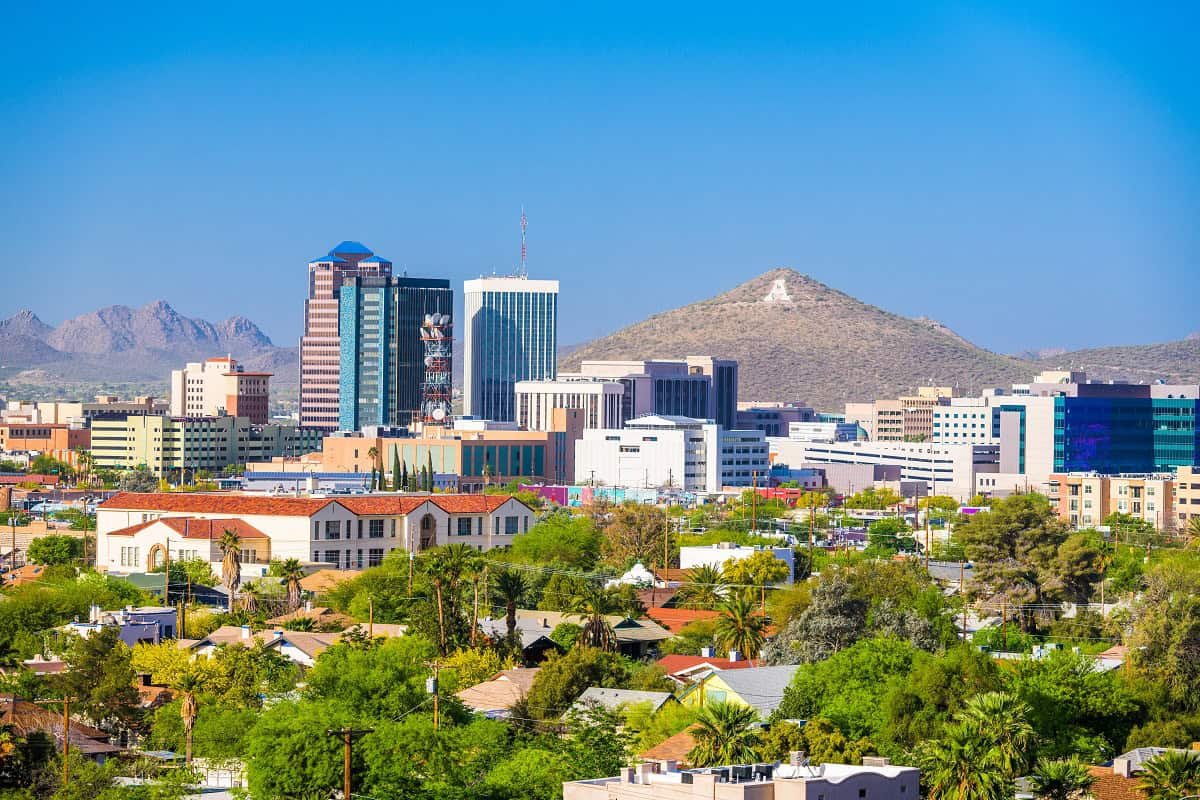
Tucson commercial roofing
Tucson's commercial roofs live under one of the harshest ultraviolet loads in the country, and that single fact drives most of the risk an owner here carries. The low-slope membranes and coated systems that cover warehouses along the Interstate 10 freight corridor, the office and medical buildings near the University of Arizona and Banner UMC, the aerospace and defense plants clustered around Tucson International and the Aerospace Parkway, and the light-industrial stock in the Park Avenue and South Tucson belts all bake through long, cloudless summers before the July and August monsoon arrives with sudden, violent rainfall and blowing dust. That combination — relentless solar aging punctuated by short, intense storm loading — ages a Sonoran Desert roof on a schedule that owners from wetter climates consistently underestimate. We advise building owners, REITs, and asset managers on documented condition, capital planning, and contractor oversight tuned to it.
What the desert actually does to a roof here
UV is the quiet, constant expense in Tucson. Membrane surfaces chalk and embrittle, coatings lose reflectivity and thin out, and adhesives and sealants at seams and penetrations dry and crack years earlier than the same products would elsewhere. The monsoon then tests every one of those aged details at once: two or three inches of rain can fall in an afternoon onto a roof whose drainage was designed for the desert's usual dryness, and any parapet, scupper, or flashing weakness that summer opened becomes an active leak. Blowing dust and grit scour surfaces and pack into drains and low points, and the enormous daily temperature swing — often forty degrees between a summer afternoon and the following dawn — flexes the assembly through a thermal cycle every single day.
The practical result is that reflective coatings and cool-roof surfacing are not cosmetic in Tucson; they are the front line of service life. A coating program that is inspected, recoated on schedule, and kept intact can add years to an existing membrane, and letting it lapse quietly forfeits that investment. Owners who treat coatings as a one-time purchase rather than a maintained system are usually the ones facing early replacement.
The buildings and owners we work with
Tucson's commercial stock skews toward large, flat industrial and logistics footprints, aerospace and defense facilities with sensitive rooftop and interior equipment, and a substantial institutional base in healthcare and higher education. Each carries a different roof risk. On a distribution roof measured in acres, a small unaddressed detail compounds silently across a huge membrane before anyone inside notices. On an aerospace or lab building, a single monsoon leak over the wrong bay is a far larger event than the repair itself. We track these as distinct risk environments rather than treating the metro as one roof type, which matters for owners holding several buildings across the Tucson and Pima County market as part of our Arizona commercial roof advisory coverage.
Owner-side reporting and capital planning
The foundational deliverable is a standardized, honest condition report for every roof an owner holds. We document membrane and coating type and age, seam and flashing condition, penetration and equipment-curb detailing, drainage performance against monsoon loading, and realistic remaining service life, with defects photographed and located so this year's report is directly comparable to next year's. Because we sit on the owner's side of the table, our reporting is not built to sell a re-roof: a coated membrane with serviceable life left should be maintained and recoated on schedule, not torn off because a crew is available.
From that baseline we build multi-year capital forecasts that put every roof on a funded timeline and sequence recoating and replacement deliberately rather than as emergencies. When the monsoon delivers a wave of storm-chasing roofing solicitations, an owner with documented condition data and a standing plan negotiates from strength instead of reacting to a leak. That same current record removes friction when a Tucson asset is bought, sold, or refinanced — the roof stops being an open question in due diligence and becomes a documented, budgeted line the people who own the risk actually control.
Tucson market coverage
We provide owner-side commercial roof advisory across Tucson, Arizona and the surrounding metro.