
Vermont statewide
Vermont's commercial roofs spend a third of the year under heavy snowpack and the rest of it cycling through freeze and thaw, and a meaningful share of the state's building stock is old enough that the original roof design never accounted for either well. We advise building owners, REITs, and asset managers on those roofs directly: what condition each system is actually in, what it will cost over the holding period, and whether the warranties on file will hold up through a hard New England winter. We do not run a crew or bid the work. We work for the owner, and our recommendations are written to protect the asset rather than to sell a re-roof.
Commercial roofing markets we serve in Vermont
Explore owner-side commercial roof advisory in these Vermont cities:
The markets we cover
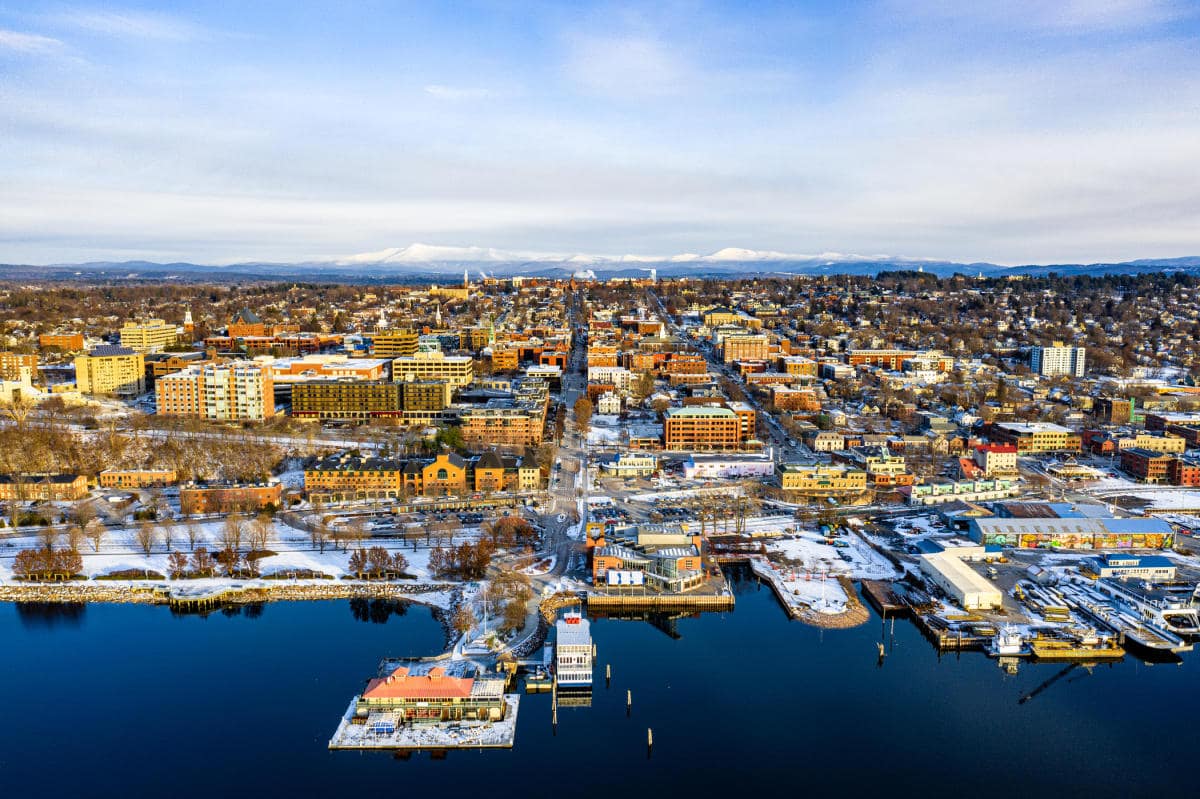
Greater Burlington carries the densest concentration of commercial roof area in the state. Burlington and South Burlington anchor the Chittenden County market, which supports close to a third of Vermont's manufacturing employment, with a long electronics and advanced-manufacturing base, the headquarters of several banks, and the captive-insurance industry the state is known for. South Burlington adds substantial hospitality, retail, light-manufacturing, and shipping and logistics space along the Williston Road and Interstate 89 corridors.
Beyond Burlington, Vermont's commercial activity concentrates in a handful of sectors that shape the roof inventory: healthcare and the institutions tied to it, higher education, clean energy, and manufacturing, with tourism and hospitality driving the resort and lodging stock in the mountain towns. Rutland and the Montpelier-Barre area add regional commercial and government building stock, and the ski-country corridors around Stowe, Killington, and the Mad River Valley carry lodging and resort properties under the heaviest snowfall in the state. The result is a mix of flat and low-slope membrane roofs on warehouses, medical buildings, and retail, alongside older sloped and built-up roofs on the mill buildings, downtown blocks, and institutional properties that define much of the state. Each ages differently, and each carries its own winter exposure, which is why a single statewide maintenance assumption is the wrong way to manage a Vermont portfolio.
What actually fails roofs in Vermont
Snow and ice do the work here. Vermont sees annual snowfall ranging from roughly 60 inches in the valleys to well over 120 inches in the higher elevations, along with prolonged sub-freezing stretches and frequent freeze-thaw swings. The damage owners actually pay for follows a predictable pattern:
- Ice dams at eaves and low points, where heat escaping the building melts the snowpack, the meltwater refreezes at the colder edge, and water backs up under the roof and into the interior.
- Snow load that strains structure, particularly when a midwinter rain-on-snow event adds significant weight to an already loaded roof.
- Freeze-thaw cycling that opens seams, cracks flashings, and works fasteners loose over repeated winters.
- Interior consequences that compound quickly, including ceiling damage, saturated insulation, and mold, when an ice-dam leak goes undetected for weeks.
Much of this traces back to heat loss and air leakage warming the roof from below, which is why a roof problem in Vermont is often an insulation and envelope problem in disguise. Reading the roof correctly means understanding what is happening underneath it, not just what shows on the surface. On low-slope commercial roofs, the failure mode is slightly different but no less expensive: snow accumulates and meltwater has nowhere to drain quickly, so it refreezes in the field of the roof and at the drains, ponds, and works its way through tired seams. A roof that performs perfectly through a mild autumn can begin leaking the week the snowpack sets in, and the owner discovers it through stained ceilings rather than a roof inspection.
Condition reporting owners can act on
Our condition reports document the membrane or roof covering, the flashings, the drainage, and the insulation, and they specifically grade the details Vermont winters attack first: edge and eave conditions for ice-dam risk, seams and laps for freeze-thaw separation, and signs of heat loss driving uneven melt. For the state's older mill and downtown buildings, we account for the realities of aged decking and legacy assemblies rather than scoring them as if they were new construction. The owner gets a ranked defect list and an honest read on how many more winters the roof has in it.
Across a portfolio spread between Burlington, the institutional markets, and the resort towns, we score every roof on the same scale, so an asset manager can compare a South Burlington warehouse against a downtown commercial block on common terms instead of reconciling a stack of inconsistent contractor bids.
That documentation also does real work at two pressure points. On an acquisition, we inspect before close and price the roof exposure into the deal, so a buyer is not taking on an aged built-up roof or an under-insulated assembly that will leak through its first owned winter. And after an ice-dam or heavy-load event, we assess the actual damage against the recorded baseline, giving the owner an independent basis for the insurance claim and keeping the repair scoped to what the winter did rather than to what a contractor proposes. In a small market where the same crews work most of the buildings, that independent read protects the owner's interest specifically.
Capital planning across the holding period
An emergency roof repair in a Vermont February is among the most expensive and disruptive events an owner can face, and it is usually avoidable. We build capital plans that phase repair, restoration, and replacement against each roof's real condition and the owner's hold horizon, so reserves are funded and work is scheduled into the building season before a hard winter forces the timing. Vermont's working window for major roof work is short and weather-dependent, and a replacement pushed one season too late can mean another full winter of patching, interior repairs, and tenant disruption, so we plan the sequence deliberately rather than letting the calendar dictate it.
- Remaining service life graded section by section, weighted for snow load and ice-dam exposure.
- Budgets sequenced around acquisition, refinance, or disposition timing.
- Repair-versus-replace analysis that weighs envelope and insulation upgrades against recurring winter leak costs.
Warranty exposure and ongoing oversight
Manufacturer warranties on commercial roofs carry conditions that Vermont weather routinely tests, and ice-dam intrusion, snow-load damage, and undocumented maintenance are common grounds for a denied claim. We review the warranty on every roof against the system actually installed and the exposure it faces, flag the gaps before they matter, and keep sound coverage intact by managing the inspection and maintenance record the warranty requires. The gap that catches Vermont owners most often is the mismatch between a warranty written for a generic climate and a roof that lives under a hundred-plus inches of snow with months of standing ice at the eaves. A coating or membrane that carries a strong paper warranty can still be the wrong specification for a steep northern roof or an exposed mountain site, and we say so plainly when the data supports it, before an owner commits capital to a system that will not last the term in this climate. Whether the need is a pre-winter inspection program, acquisition due diligence, or response after an ice-dam or heavy-load event, we give Vermont owners and asset managers one owner-side advisor accountable for the condition, the cost, and the coverage of every roof they hold.