
Washington commercial roofing
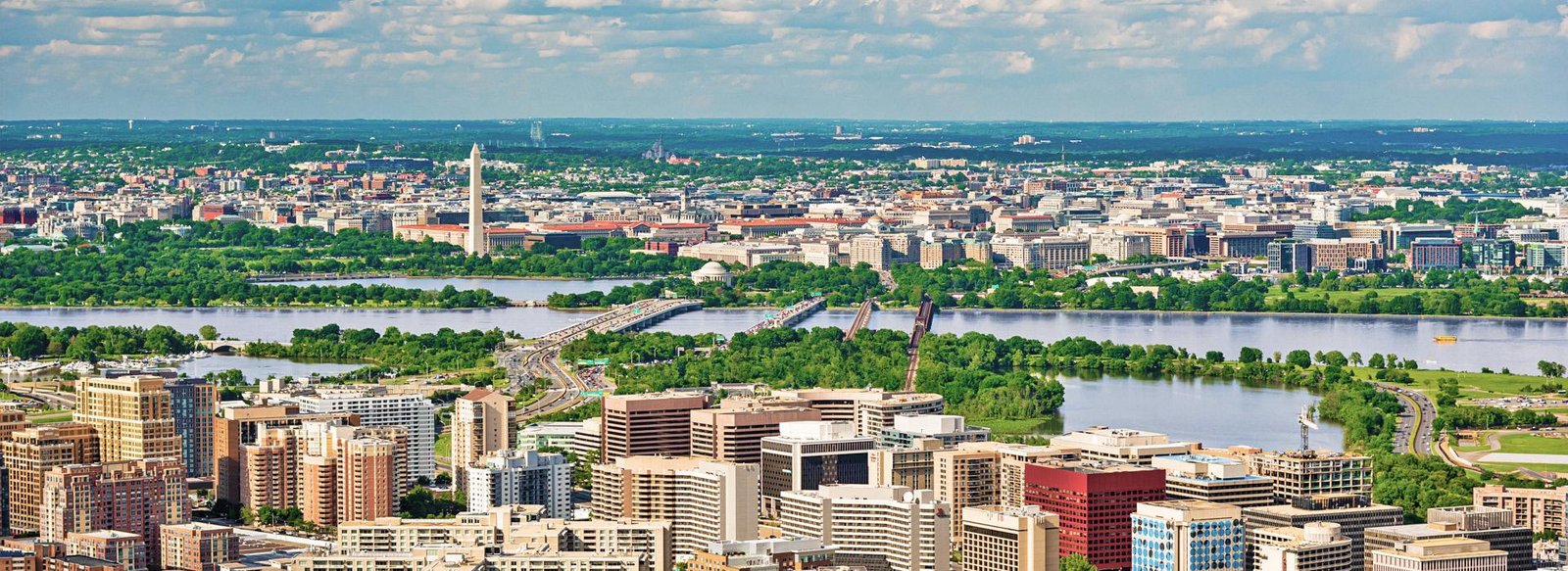
Washington, D.C. holds one of the densest concentrations of flat, low-slope commercial roofing in the country, shaped by a height limit that pushed the city out rather than up. The result is block after block of wide, flat-roofed office buildings across downtown, the East End, and the K Street corridor, alongside the federal and institutional stock that defines the District, the fast-growing mixed-use and lab space of NoMa and the Capitol Riverfront, and the trophy office towers that trade among the nation's largest institutional owners. The climate that works these roofs is a humid Mid-Atlantic mix: hot, muggy summers with intense UV and heavy convective thunderstorms, the occasional tropical remnant tracking up the coast, and winters that cycle through just enough freeze-thaw to open what the summer baked loose.
Flat roofs, humid heat, and thunderstorm drainage
The dominant hazard in the District is water that cannot get off the roof fast enough. On the vast flat footprints of D.C.'s office stock, drainage is everything — and the region's heavy summer thunderstorms and tropical-remnant rainfall overwhelm undersized or clogged systems, turning minor ponding into chronic standing water that degrades membranes from above. Prolonged summer heat and UV age those membranes and dry out adhesives, and the winter freeze-thaw cycle then pries open the seams and flashing that summer weakened. Rooftop mechanical equipment on these large buildings adds penetrations and curbs where leaks concentrate.
Because so many of these roofs are broad, uniform expanses, a single detail failure — a lifted seam, a failing drain, a compromised parapet — can spread quietly across a large area before anyone on the tenant floors below notices.
Trophy office, federal, and institutional stock
D.C. commercial ownership is dominated by large institutional players — national and international REITs, major landlords, and the federal and quasi-governmental tenants that anchor the market — holding high-value assets on long horizons under close budget scrutiny. For these owners the roof is a significant capital line on a significant asset, and the difference between a defensible, funded capital plan and a reactive one is measured in real money over a hold period. Getting the condition assessment right, and separating roofs that genuinely need replacement from those a contractor would prefer to sell, protects that capital directly.
A vendor-neutral record on a dense portfolio
We give owners and asset managers a standardized baseline — membrane type and age, seam and flashing condition, drainage performance, insulation moisture where warranted, and realistic remaining service life — with every defect photographed and located so this year's report compares directly to next year's. This work is part of our nationwide commercial roof advisory coverage, and in the District it means tracking the warranty conditions that ponding, unauthorized rooftop work, and undocumented storm damage quietly void, and competitively bidding only the work a roof genuinely needs. Across a dense D.C. portfolio, that independence keeps roof capital tied to documented condition rather than to whoever holds the maintenance contract.
Washington market coverage
We provide owner-side commercial roof advisory across Washington, Washington, D.C. and the surrounding metro.