Roof Systems
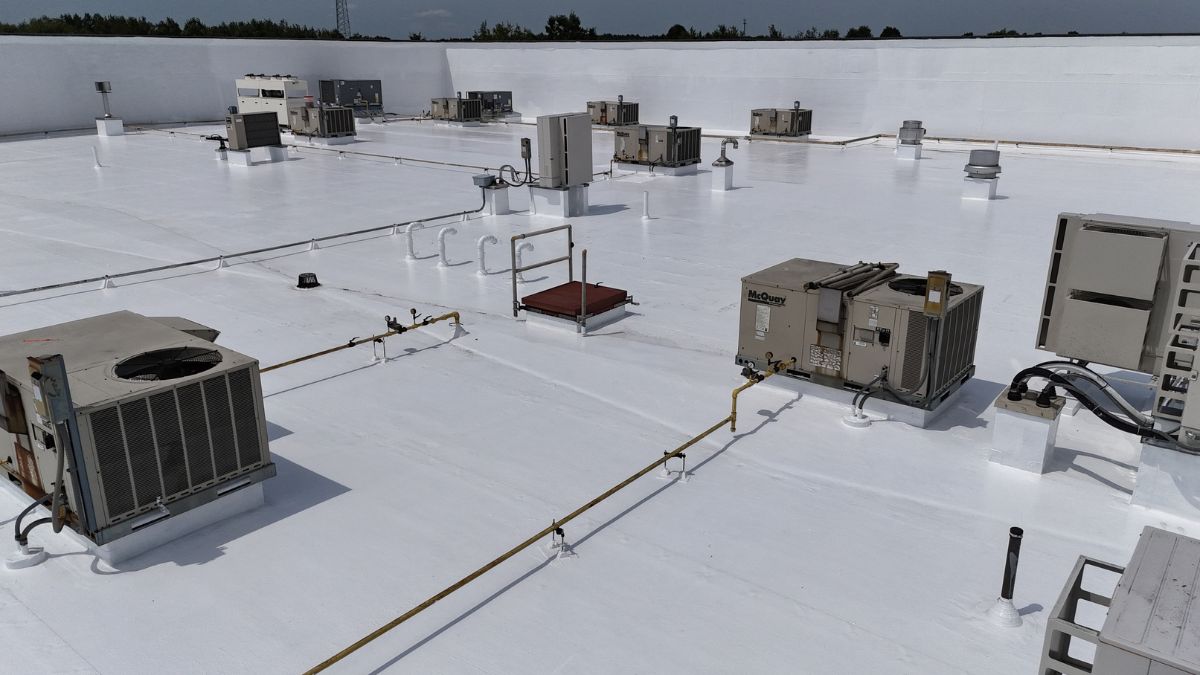
An acrylic roof coating is a water-based, fluid-applied membrane rolled or sprayed over an existing low-slope roof to restore and protect it. It is one of the most widely used and economical coating options, and for many owners it is the entry point into roof restoration as an alternative to replacement. The value is real, but acrylic has clear boundaries: it is excellent in some conditions and the wrong choice in others. We advise owners to understand those boundaries first, because the same property that makes acrylic affordable and easy to apply also limits where it should be used.
What an Acrylic Coating Is and How It Works
Acrylic coatings are water-based elastomeric products that cure by evaporation. As the water carrier evaporates, the coating forms a flexible, seamless film that bonds to the roof below, sealing seams, small cracks, and penetrations within a continuous membrane. They are applied over a range of low-slope substrates, including aged single-ply, modified bitumen, built-up roofs, metal, and certain previously coated surfaces, usually in two or more coats to reach a specified thickness.
Because acrylic cures by drying, weather at the time of application is critical. It needs warm temperatures and a dry window long enough to cure before rain, dew, or freezing, which constrains the installation season in cooler climates and makes scheduling a genuine project variable. Once cured, the film is highly reflective and durable under normal weathering, but its water-based chemistry shapes both its strengths and its key limitation.
Lifespan and Performance
A properly applied acrylic system over a sound roof typically provides about 10 to 15 years of added service life, with the result driven by coating thickness, climate, and the condition of the substrate beneath it. As a restoration system rather than a new roof, its longevity is partly inherited from what it covers; it cannot outlast wet insulation or a failing membrane.
Where acrylic performs strongly is reflectivity and weather resistance under normal drainage. Its bright, reflective surface can meaningfully reduce rooftop temperatures and cooling load, and many acrylics are formulated to hold reflectivity better and stay cleaner than some alternatives. Its defining limitation is water tolerance: acrylic does not handle standing water well. On a roof with chronic ponding, an acrylic film can soften, re-emulsify, and break down over time, which is the single most important fact for an owner to absorb before choosing it.
Where Acrylic Fits Best
Acrylic is at its best in these conditions:
- Roofs with positive drainage and good slope, where water does not pond after a storm.
- Reflectivity-driven projects where reducing cooling load and rooftop heat is a priority.
- Cost-sensitive restorations where extending roof life economically is the goal.
- Metal roofs and weathered single-ply or built-up roofs that are sound and dry.
- Warm, dry climates and installation seasons that give the coating a reliable cure window.
It is a poor fit on flat roofs that hold standing water, on roofs with active leaks or trapped moisture, and on projects that must be coated during cold or wet weather. For ponding-prone roofs specifically, silicone is usually the more appropriate choice, and we say so plainly when that is the case.
Strengths and Limitations for an Owner
The honest tradeoffs from an owner's perspective:
- Strength: typically the most economical coating option, with broad substrate compatibility.
- Strength: high, durable reflectivity that can reduce cooling costs and rooftop temperatures.
- Strength: water-based and low-odor, easier to apply and clean up, and well suited to occupied buildings.
- Strength: easily recoated in the future, keeping a renewable restoration path open.
- Limitation: poor tolerance of ponding water, which can degrade the film over time.
- Limitation: weather-dependent installation; needs warmth and a dry cure window, limiting the season.
- Limitation: as a restoration, it depends entirely on a sound, dry substrate and honest surface prep.
Warranty and Maintenance Realities
Acrylic coating warranties come from the coating manufacturer and are conditional on the same fundamentals as other restoration systems: an approved and inspected substrate, a documented minimum dry-film thickness, and application by a recognized contractor. Because acrylic is sensitive to ponding, warranties often explicitly exclude or limit coverage in areas of standing water, so owners should read the ponding language carefully rather than assume blanket coverage. Acrylic systems are generally renewable, meaning the roof can be cleaned and recoated at the end of the term to extend protection.
Maintenance is straightforward but should not be skipped. The roof should be inspected at least annually, with attention to drainage, penetrations, and any thinning or wear, and ponding areas should be watched closely because that is where acrylic will show distress first. As with any coating, the most common cause of premature failure is not the product but the prep: a roof coated over dirt, moisture, or an unrepaired membrane will disappoint regardless of the brand.
How We Advise Owners on Acrylic
When an owner asks us about acrylic, our first question is about drainage. We assess slope and ponding, check for trapped moisture, and confirm the substrate is sound and dry. If the roof drains well and the substrate is healthy, acrylic is often the most cost-effective restoration available and a sensible way to add reflectivity and a decade of life. If the roof ponds, we redirect the owner toward silicone or address the drainage before coating at all.
We also plan around the cure window, scheduling application into a reliable warm, dry stretch rather than forcing it late in the season, and we hold the contractor to the specified number of coats and total thickness, since under-application is a frequent and invisible shortcut. Properly matched to a well-draining roof and applied to spec, acrylic delivers strong value; the discipline is in being honest about where it does not belong, and we would rather tell an owner that up front than watch a coating fail in the low spots a few years later.