
Restoration Guide
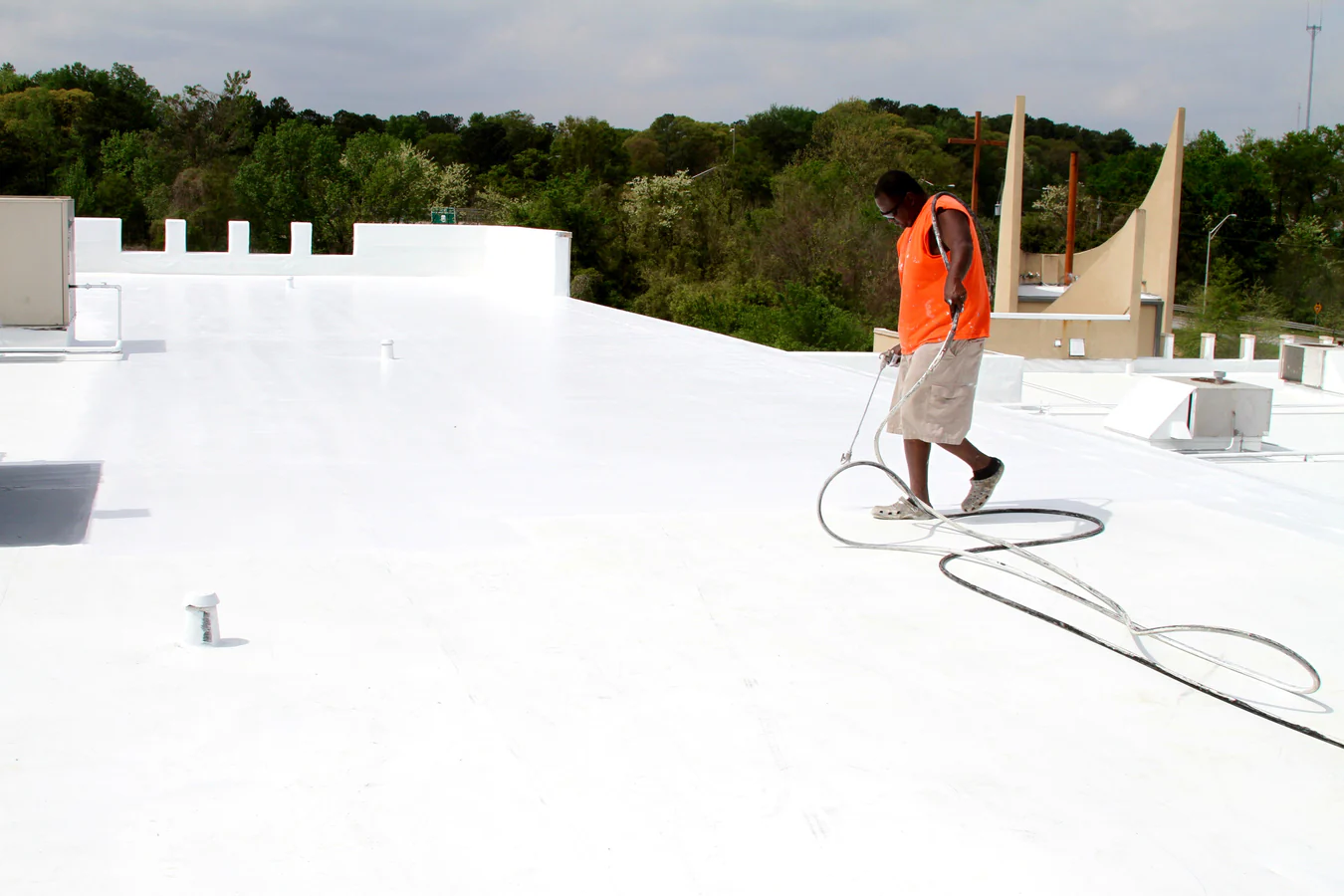
A roof coating is a fluid-applied membrane rolled or sprayed over an existing roof to restore its surface, seal seams and penetrations, and extend service life without a full tear-off. Done on the right roof at the right time, a coating defers a large capital expense and renews the warranty clock for a fraction of replacement cost. Done on the wrong roof, it traps moisture, masks failing insulation, and wastes capital that should have gone toward reroofing. The difference is almost entirely about candidate selection and substrate condition. This guide explains the coating systems available, the conditions under which each makes sense, and how an owner should evaluate a coating proposal before signing it.
What a Coating Actually Does
A coating is a maintenance and restoration measure, not a structural repair. It re-establishes a monolithic, reflective surface over a roof that is fundamentally sound but weathering, sealing the seams and flashings that are the usual points of water entry on an aging membrane. On a metal roof it arrests surface corrosion and seals fastener penetrations; on an aging single-ply or modified bitumen roof it renews UV protection and watertightness.
What a coating cannot do is fix wet insulation, structural deflection, or a substrate that has already failed. Coating over saturated insulation seals the moisture in, accelerates deck deterioration, and produces a roof that looks renewed while rotting underneath. This is why the moisture survey, not the coating chemistry, is the most important part of the decision.
The Three Coating Chemistries
Most commercial coating work uses one of three chemistries, each with a distinct strength and a distinct weakness:
- Acrylic - water-based, reflective, and the lowest cost per square. Strong UV resistance and easy recoat, but it is not suited to ponding water and erodes faster in standing moisture. Best on sloped roofs with positive drainage.
- Silicone - the standard for roofs that pond. It tolerates standing water without breaking down and holds reflectivity, but it attracts dirt over time and is difficult to recoat because little adheres to cured silicone except more silicone. Best on flat roofs with drainage problems you cannot economically correct.
- Polyurethane - the toughest of the three against foot traffic, hail, and mechanical abuse. Often used as a topcoat over silicone or over spray polyurethane foam (SPF) where impact resistance matters. Higher cost, but the right choice on high-traffic roofs.
Aliphatic and aromatic polyurethane formulations differ in color stability, and silicone systems vary in solids content, which directly affects how many mils go on the roof. The chemistry name in a bid tells you less than the specified dry-film thickness and the manufacturer's system.
When Restoration Beats Reroofing
The economic case for coating depends on the condition of what lies beneath the membrane. A coating makes sense when the substrate and insulation are dry, the membrane is weathering but intact, and the building owner wants to extend service life and defer replacement. We treat a roof as a coating candidate only after a moisture survey confirms the field is dry. The decision favors restoration when:
- An infrared or capacitance moisture survey shows the insulation is dry across the field.
- The existing membrane is adhered, with no widespread blistering, splitting, or seam failure.
- Drainage is adequate, or the chemistry chosen tolerates the drainage you have.
- The hold period justifies a ten-to-fifteen-year extension rather than a thirty-year replacement.
When the moisture survey finds wet areas, those sections must be cut out and replaced before any coating goes down. A proposal that skips the moisture survey is not a restoration plan; it is a cosmetic treatment that defers nothing and risks the deck.
Reading a Coating Proposal
Coating bids are easy to manipulate because the failure mode is invisible for years. The two levers a contractor can pull to win on price are thickness and surface prep, and both are exactly what determine whether the system lasts. We hold coating proposals to specifics:
- Specified dry-film thickness in mils, not gallons promised, since coverage rate and solids content determine how much membrane actually cures on the roof.
- Surface preparation scope: power-washing, primer, and seam reinforcement with embedded fabric at penetrations and transitions.
- A documented moisture survey with wet-area remediation priced as part of the work, not as a surprise change order.
- The manufacturer's renewable warranty terms, including the recoat obligation that keeps it in force.
Coating warranties are typically renewable, which is a genuine advantage over reroofing: at the end of the term a recoat refreshes the system and extends coverage again. But that renewal depends on maintaining the roof to the manufacturer's terms, which is an owner obligation worth tracking.
The Owner's Decision Framework
Treat coating as a capital-timing tool. On a sound roof, a restoration coating buys you a decade or more and keeps a replacement off the current budget cycle, which is often exactly what an asset on a defined hold period needs. On a roof with wet insulation or structural problems, no coating is worth buying, and the honest answer is to plan the reroof. The moisture survey resolves which situation you are in, and it should precede any coating decision rather than follow a contractor's recommendation.
Documented properly, a coating program across a portfolio smooths capital spending and extends the average roof age you carry without a wave of simultaneous replacements. The discipline is in candidate selection: coat the roofs that qualify, replace the ones that do not, and never let a low coating bid substitute for the survey that tells you which is which.
Put the system choice into an owner decision
Before approving a roof system, align field condition, moisture findings, drainage, attachment, warranty terms, operational constraints, and hold period. Commercial Roofing Advisors can review those inputs without tying the recommendation to one material or contractor.