
New Hampshire statewide
New Hampshire's commercial building stock is concentrated in a narrow southern corridor and built for a hard northern winter, and both facts shape how its roofs should be managed. We advise building owners, REITs, and asset managers across the Manchester-Nashua metro, the Seacoast around Portsmouth, and the Merrimack Valley manufacturing belt — representing the owner's interest on roofs we do not install, so the counsel you receive is governed by the asset's service life and your capital plan rather than by an installer's schedule. In this state the controlling variables are snow load, freeze-thaw cycling, and ice damming, and a roof plan that ignores any of the three will fail on a January thaw.
Commercial roofing markets we serve in New Hampshire
Explore owner-side commercial roof advisory in these New Hampshire cities:
The markets we cover across New Hampshire
The commercial center of gravity sits in the south. Manchester is the state's largest city and densest concentration of manufacturing and office stock, with Nashua close behind along the Massachusetts line; together with Salem and the Route 3 and Everett Turnpike spine, they form the Merrimack Valley corridor where most of New Hampshire's industrial and warehouse roof area is found. This is the home of the state's advanced manufacturing base — aerospace components, defense electronics, and precision machining — along with a growing cluster of software, cybersecurity, and biotech operations that have spilled north from Greater Boston into the Manchester and Nashua office and flex markets.
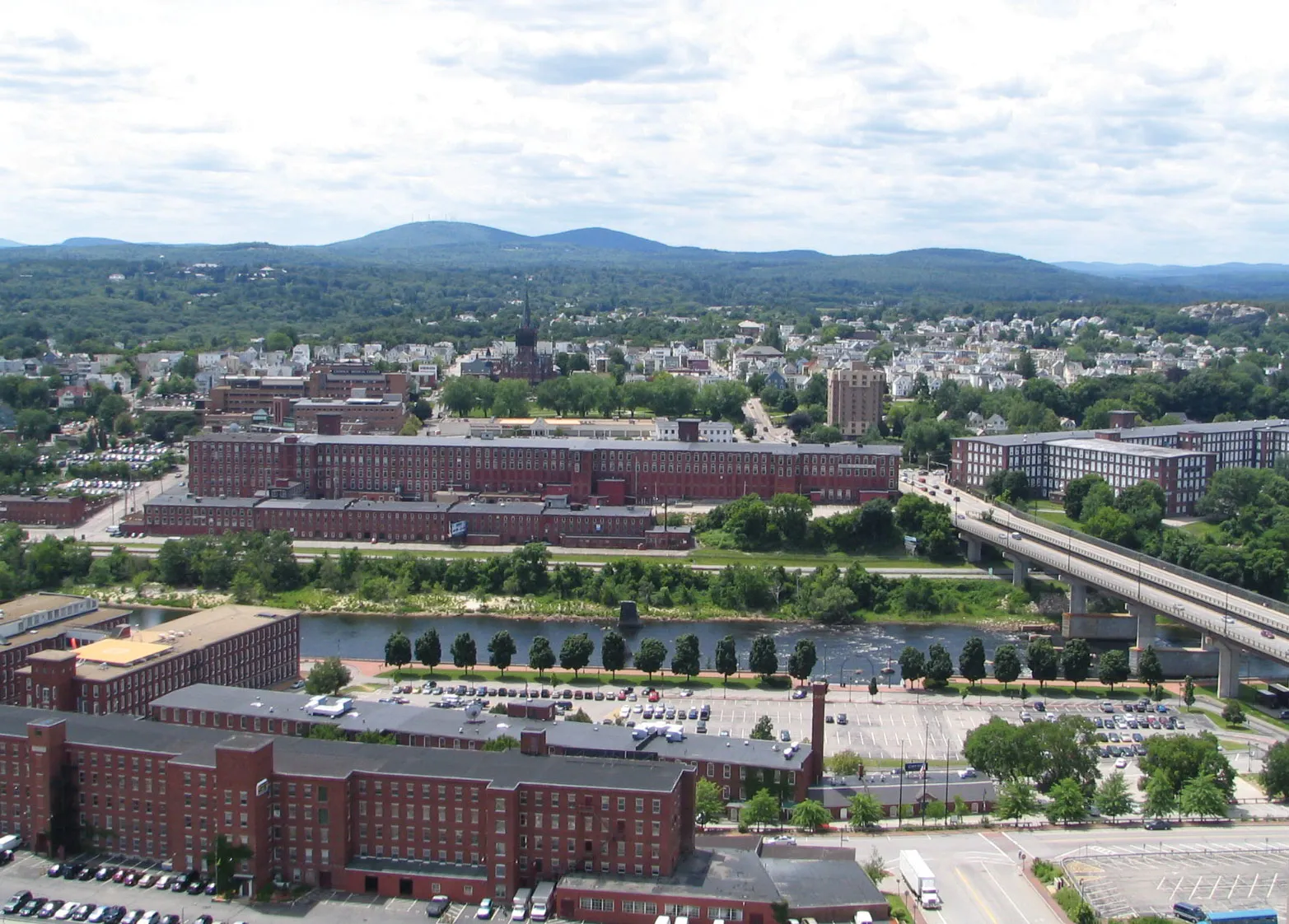
On the Seacoast, Portsmouth and the former Pease air base anchor a distinct submarket of office, life-science, and logistics buildings, with the added complication of salt-laden coastal air that accelerates corrosion of metal edge details, fasteners, and rooftop equipment. North and west of the corridor — Concord as the state capital and government-office hub, Dover and the Seacoast-adjacent towns, and the smaller mill cities like Manchester's own Millyard — the stock thins out and skews older, with more low-slope built-up and modified-bitumen assemblies on converted brick mill buildings. These older roofs carry their own challenges: irregular structural framing, multiple roof levels and the valleys between them where snow and ice collect, and decades of patched repairs that obscure the true condition of the assembly underneath. We plan across all of it, because a single New Hampshire portfolio commonly mixes a modern Nashua distribution roof with a century-old mill roof in the same fund.
What actually drives commercial roof failure in New Hampshire
Winter is the controlling season. New Hampshire roofs must carry sustained snow and ice load through long cold spells, and the structural and drainage detailing has to be sound before the first major storm — not patched after it. The more insidious damage comes from freeze-thaw: water that enters a seam, lap, or flashing during a thaw and then freezes expands and pries the assembly apart, and over a New England winter that cycle repeats relentlessly, widening every small defect into a path for intrusion.
The third driver is ice damming. On low-slope and transitional roofs, heat loss melts the underside of the snowpack, meltwater runs to a cold eave or drain and refreezes, and the resulting ice ridge backs water up under the membrane or beneath the edge metal. Nor'easters add wind-driven snow and rain that finds any compromised flashing, and the Seacoast's salt exposure quietly corrodes the metal components that hold the system's edges down. The recurring problems we plan around include:
- Snow and ice load on low-slope membrane and built-up roofs through extended cold periods
- Freeze-thaw cycling that widens seam, lap, and flashing defects into active leaks
- Ice dams backing meltwater under membranes and edge metal at eaves and drains
- Wind-driven moisture intrusion during nor'easters
- Coastal salt corrosion of fasteners, edge metal, and rooftop equipment in the Portsmouth and Seacoast submarket
- Aging built-up and modified-bitumen assemblies on converted mill buildings reaching end of service life
Condition reporting and capital planning for owners
For an owner or asset manager, our work converts a set of roofs into a capital forecast you can defend to a lender, a board, or a buyer. We document each roof's assembly, age, insulation and drainage condition, and active deficiencies, then build a multi-year reserve plan keyed to your hold period and the realities of working in a short construction season — major roof work in New Hampshire is effectively constrained to the warmer months, which means deferred repairs identified in autumn often cannot wait until they are convenient. Timing the spend to the season is part of the plan, not an afterthought.
We set inspection cadence around the events that actually cause loss here: a fall assessment so a roof enters winter with sound flashings and clear drains, and a spring walk to catch the freeze-thaw and ice-dam damage the winter inflicted before it reaches interior finishes or sensitive manufacturing and lab space. For owners acquiring or repositioning New Hampshire industrial and flex assets, we provide pre-acquisition roof due diligence so the capital liability is priced into the transaction. Because the construction window is narrow, we also build contingency into the plan — identifying which roofs could realistically be triaged with a temporary repair if a defect surfaces in deep winter, and which represent enough downside risk to justify reserving for replacement at the first opening in spring.
Protecting the operations under the roof
A great deal of New Hampshire's commercial roof area sits over operations where a leak is far more costly than the repair itself. Aerospace and defense-electronics manufacturers, precision machine shops, and the biotech firms clustered in the Manchester-Nashua corridor run sensitive equipment, controlled environments, and inventory that water intrusion can damage or shut down outright — and a winter leak that drips onto a cleanroom or a production line is a business-continuity event, not a maintenance ticket. For these owners and their tenants, the roof's reliability is part of the building's value proposition, and we weight the capital plan accordingly.
In practice that means prioritizing roofs not only by their physical condition but by what they protect. A flat membrane over a distribution bay and the same membrane over a tenant's lab carry very different consequences if they fail in February, and the reserve plan should reflect that difference rather than treating every square foot as equal. We help owners map that exposure across a portfolio, so the roofs guarding the highest-value operations are the first to be hardened against the winter — and so a tenant's continuity concerns are answered with a documented plan rather than a reaction after the ceiling tiles are already stained.
Warranty exposure and roofs across a New Hampshire portfolio
Manufacturer warranties on single-ply and modified systems are common on the corridor's newer stock, and New Hampshire's winters create specific ways to forfeit them. Ice-dam damage is frequently treated as a maintenance failure rather than a covered defect, unrepaired freeze-thaw splits can be deemed neglect, and rooftop modifications — added mechanical units, solar arrays, snow-retention hardware installed without authorization — routinely void coverage. We read warranty terms against field conditions, flag the lapses and alterations that put coverage at risk, and maintain the documentation an owner needs to enforce a claim when a system fails before its time.
Managing roofs across a New Hampshire holding means treating each roof as a system on a winter clock rather than a line item that surfaces only after a thaw. Whether you hold manufacturing and flex space in the Merrimack Valley, office and life-science buildings on the Seacoast, or older mill structures in the smaller cities, our role is to give you an accurate read on condition, a capital plan that respects the season, and protection of the warranties already in place — owner-side, throughout.